8 Min Read
Discovering an unusual change inside your mouth, like a stubborn ulcer or a strange patch on your tongue, is all too simple to dismiss as a minor irritation. However, because these early warning signs frequently mimic common issues like canker sores or friction from a sharp tooth, many individuals delay seeking a medical evaluation. While these changes are not always cancerous, recognising them early can make a significant difference to treatment outcomes and long-term health.
The good news is that advances in diagnosis and treatment have considerably improved survival rates, especially when the condition is identified at an early stage. Understanding the warning signs, knowing who is at risk, and learning what happens during testing can help reduce uncertainty and empower you to seek timely care. This blog explores the key risk factors, the early mouth cancer symptoms to watch for, how a biopsy confirms the diagnosis, and the treatment options available today.
Synopsis
Understanding Mouth Cancer
Oral cancer refers to cancer that develops in the tissues of the mouth, including the lips, tongue, gums, inner cheeks, floor of the mouth, hard palate, and the area behind the wisdom teeth. It usually begins in the thin, flat cells lining these structures and can spread deeper into nearby tissues if left untreated.
One of the challenges with mouth cancer is that it often starts quietly. Early changes may seem minor and can easily be mistaken for common dental or oral health problems. This is why persistent symptoms deserve attention, even when they appear harmless at first.
Risk Factors of Mouth Cancer
Most cases develop because of a combination of lifestyle, environmental, and biological factors rather than a single cause. Understanding these risks can help you make informed decisions about your health.
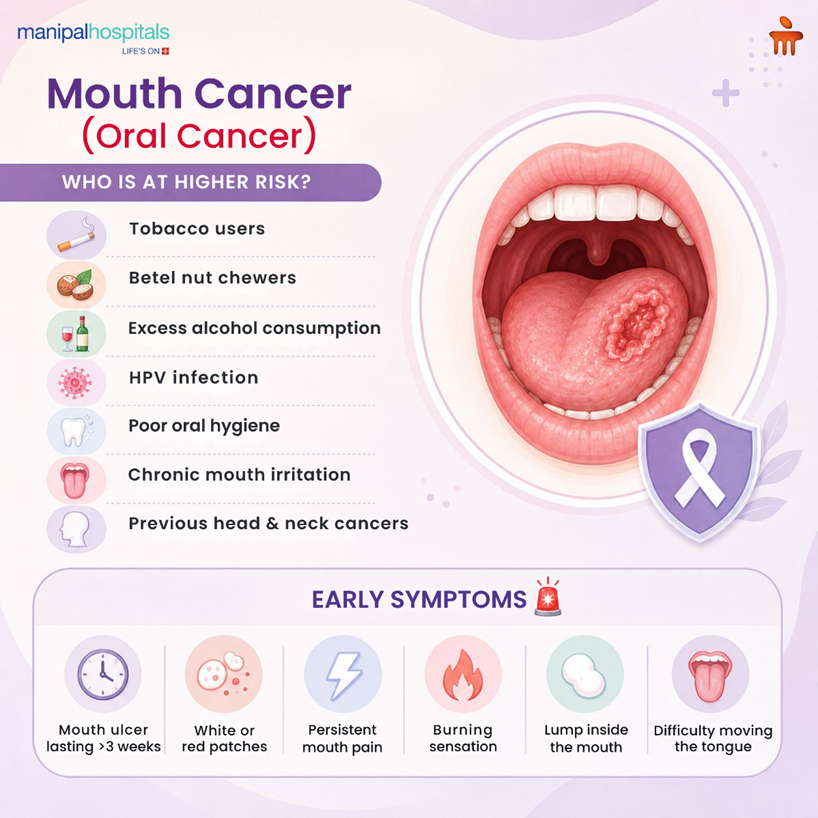
The most significant risk factors include:
-
Tobacco use in any form, including smoking, chewing tobacco, and betel nut products
-
Regular and excessive alcohol consumption
-
Human papillomavirus (HPV) infection, particularly certain high-risk strains
-
Long-term exposure to sunlight affects the lips
-
Poor oral hygiene and chronic irritation from sharp teeth or ill-fitting dentures
-
A diet lacking fruits and vegetables
-
Previous history of head and neck cancers
-
Weakened immune function due to certain medical conditions or treatments
While having one or more risk factors does not mean you will develop cancer, the likelihood increases when several factors occur together.
Early Symptoms You Should Never Ignore
Many people delay seeking help because the symptoms seem minor. Unfortunately, this can allow the disease to progress before treatment begins.
Some of the most common early symptoms of mouth cancer include:
-
A mouth ulcer that does not heal within three weeks
-
White, red, or mixed-coloured patches inside the mouth
-
Persistent pain or burning sensation
-
A lump or thickened area in the mouth or neck
-
Difficulty moving the tongue normally
-
Unexplained loose teeth
-
Persistent bad breath despite good oral hygiene
-
Changes in speech clarity
As the disease advances, additional mouth cancer symptoms may develop, including difficulty swallowing, jaw stiffness, ear pain, and unexplained weight loss. If any symptom persists beyond a few weeks, a healthcare professional should assess it.
How a Biopsy Confirms the Diagnosis
When a doctor finds a suspicious area, a biopsy is the most reliable way to determine whether cancer cells are present. While scans and examinations provide valuable information, only a tissue sample can confirm the diagnosis.
During a biopsy, a small piece of tissue is removed from the abnormal area and examined under a microscope by a pathologist. Depending on the location and size of the lesion, this may be performed under local or general anaesthesia.
Doctors may recommend:
-
Incisional biopsy, where a portion of the abnormal tissue is removed
-
Excisional biopsy, where the entire small lesion is removed
-
Fine needle aspiration for enlarged lymph nodes in the neck
-
Image-guided biopsy for deeper tissues when required
The biopsy report helps determine the cancer type, grade, and other characteristics that guide treatment planning.
Important Diagnostic Tests Beyond Biopsy
A confirmed diagnosis is only the beginning of the evaluation process. Doctors also need to understand the extent of the disease before deciding on treatment. The table below outlines the commonly used investigations and the information they provide:
|
Diagnostic Test |
Purpose |
Information Provided |
|
CT Scan |
Detailed cross-sectional imaging |
Tumour size and involvement of nearby structures |
|
MRI Scan |
High-resolution soft tissue assessment |
Depth of tumour invasion and spread to surrounding tissues |
|
PET-CT Scan |
Detects areas of increased metabolic activity |
Identification of distant spread and hidden disease |
|
Ultrasound Neck |
Evaluation of neck lymph nodes |
Detection of suspicious nodal enlargement |
|
Dental Assessment |
Oral health evaluation before treatment |
Identification of dental issues that may affect recovery |
|
Nutritional Assessment |
Baseline nutritional status |
Helps plan supportive care during treatment |
These investigations allow specialists to stage the cancer accurately and develop an individualised treatment strategy.
Mouth Cancer Treatment Options
Treatment depends on the tumour's size, location, stage, and overall health status. Modern care often involves a multidisciplinary team working together to achieve the best possible outcome.
Surgery
For many individuals, surgery is the primary treatment. The goal is to remove the tumour completely while preserving as much function and appearance as possible.
Depending on the extent of disease, surgery may involve:
-
Removal of the tumour with a margin of healthy tissue
-
Neck dissection to remove affected lymph nodes
-
Reconstructive procedures using tissue from other parts of the body
Advances in reconstructive techniques have significantly improved speech, swallowing, and cosmetic outcomes.
Radiotherapy
Radiotherapy uses high-energy beams to destroy cancer cells. It may be used after surgery to reduce recurrence risk or as the main treatment when surgery is not suitable.
Treatment is carefully planned to minimise damage to surrounding healthy tissues while effectively targeting the tumour.
Chemotherapy and Targeted Therapy
Drug treatments are commonly used for advanced disease or alongside radiotherapy. Chemotherapy works by destroying rapidly dividing cancer cells.
Targeted therapies focus on specific molecular pathways involved in cancer growth. These treatments can sometimes provide benefits with fewer side effects than conventional chemotherapy.
Recovery and Life After Treatment
Recovery involves much more than removing the cancer. Many people need support with eating, speaking, emotional well-being, and returning to daily activities.
A comprehensive recovery plan may include:
-
Speech and swallowing therapy
-
Nutritional guidance
-
Dental rehabilitation
-
Smoking and alcohol cessation support
-
Regular surveillance appointments
-
Psychological counselling when needed
Healing takes time, but ongoing support can make a significant difference to long-term recovery and confidence.
Conclusion
Awareness remains one of the strongest tools in the fight against oral cancer. Recognising persistent oral changes, seeking evaluation early, and following through with recommended investigations can dramatically improve outcomes. Modern mouth cancer treatment approaches continue to evolve, offering better cure rates and improved quality of life than ever before.
At Manipal Hospital Jayanagar, expert cancer specialists provide comprehensive diagnosis and advanced mouth cancer surgery in Jayanagar, Bangalore, tailored to your needs.
FAQ's
Yes. Although tobacco and alcohol are major risk factors, some people develop the disease without either exposure. HPV infection, genetic factors, immune suppression, and certain environmental influences may also contribute to cancer development.
No. Many early cancers are painless. This is one reason diagnosis is sometimes delayed. A painless ulcer, patch, or lump that persists should still be evaluated by a healthcare professional.
Yes. Dentists are often among the first healthcare providers to notice suspicious oral changes. Regular dental examinations can play an important role in identifying abnormalities before symptoms become severe.
Follow-up schedules vary based on the stage and treatment received. Most people require more frequent visits during the first few years after treatment, when the risk of recurrence is highest.
Yes. Pain, swallowing difficulties, altered taste, and reduced mouth opening can affect food intake. Early nutritional support helps maintain strength and can improve treatment tolerance and recovery outcomes.
Share this article on: