6 Min Read
A sudden feeling of pressure, tightness, or discomfort in the chest can be alarming. Many people immediately worry about a heart problem, yet in some cases, the culprit is something much less dangerous - trapped gas within the digestive tract. Even so, chest discomfort should never be dismissed without understanding what is causing it.
Gas trouble can create sensations that feel surprisingly intense, ranging from bloating and fullness to sharp pains that seem to radiate through the chest. The challenge is that digestive symptoms and certain medical emergencies can occasionally feel similar, making it important to recognise the differences. Understanding what is normal, what deserves attention, and what requires urgent care can help you respond with confidence rather than fear.
This blog explains the common symptoms, underlying causes, practical relief measures, warning signs that need medical evaluation, and ways to reduce future episodes of gas trouble.
Synopsis
What is Gas Trouble in the Chest?
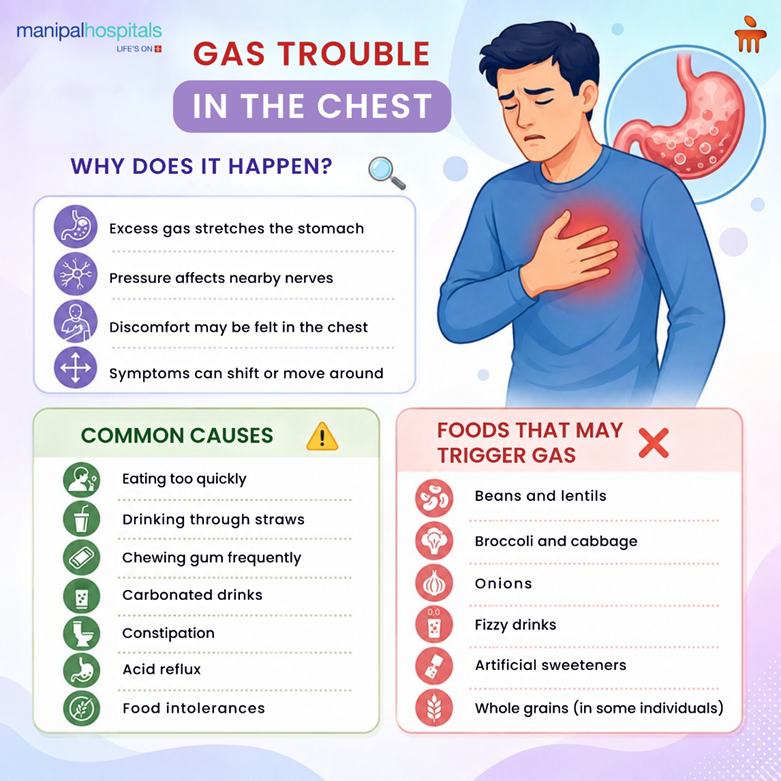
Although gas itself does not accumulate inside the chest cavity, excess gas in the stomach or upper intestine can create discomfort that is felt in the chest area. This happens because the digestive organs sit close to the diaphragm, the muscle separating the chest and abdomen.
When the stomach becomes distended with air or gas, it can stimulate nearby nerves and create discomfort that is perceived in the chest. For many people, the discomfort improves after burping, passing gas, or having a bowel movement.
Common Symptoms You May Notice
The symptoms of gas trouble in the chest can vary from person to person. Some episodes are mild and short-lived, while others can feel surprisingly uncomfortable.
Common signs include:
-
A feeling of pressure or fullness in the chest
-
Sharp, stabbing, or cramp-like pain
-
Frequent burping
-
Abdominal bloating
-
Excessive flatulence
-
Gurgling sensations in the stomach
-
A sensation of trapped air
-
Mild nausea
-
Discomfort that changes with body position
One important characteristic is that gas-related discomfort often fluctuates. It may move from one area to another or improve after releasing gas. This pattern differs from many cardiac conditions, which tend to produce persistent symptoms.
Conditions That Mimic Gas Symptoms
Chest discomfort should always be interpreted carefully. While digestive issues are common, several medical conditions can produce similar sensations. The following table highlights key differences that may help you understand the possible source of symptoms.
|
Condition |
Typical Features |
What Makes It Distinct |
|
Gas-related discomfort |
Bloating, burping, shifting pain |
Often improves after passing gas |
|
Burning behind the breastbone |
Frequently worsens after meals or lying down |
|
|
Costochondritis |
Tenderness along the chest wall |
Pain increases when pressing the affected area |
|
Anxiety-related chest tightness |
Chest pressure with rapid breathing |
Commonly accompanied by feelings of panic |
|
Gallbladder disease |
Upper abdominal pain after fatty meals |
May spread to the right shoulder |
|
Heart disease |
Pressure, heaviness, or squeezing sensation |
Can occur with sweating, breathlessness, or arm pain |
This comparison should not be used for self-diagnosis. Persistent or severe symptoms always require professional assessment.
Effective Ways to Find Relief
Many episodes can be managed with simple measures at home. The right gas trouble in the chest remedy often depends on what triggered the discomfort.
Helpful approaches include:
-
Walking for 10 to 15 minutes after meals
-
Drinking adequate water throughout the day
-
Eating smaller portions
-
Avoiding carbonated drinks
-
Identifying foods that consistently trigger symptoms
-
Maintaining regular bowel habits
-
Practising slower, mindful eating
Over-the-counter remedies containing simethicone may help break up gas bubbles in some individuals. However, frequent symptoms should not be managed solely with medication without understanding the underlying cause.
When Should You Seek Medical Help?
Most episodes of gas trouble symptoms in chest are harmless. However, there are situations where immediate medical attention is essential.
Seek urgent care if chest discomfort is accompanied by:
-
Shortness of breath
-
Sweating without an obvious reason
-
Pain spreading to the jaw, neck, shoulder, or arm
-
Dizziness or fainting
-
Severe nausea or vomiting
-
Sudden onset of intense chest pain
Even if you suspect digestive gas, it is safer to seek emergency evaluation when these symptoms occur. You should also schedule a medical consultation if:
-
Symptoms recur frequently
-
Bloating becomes progressively worse
-
Unexplained weight loss develops
-
Difficulty swallowing occurs
-
Symptoms interfere with daily activities
-
Home measures no longer provide relief
Preventing Future Episodes
Reducing the frequency of symptoms often depends on understanding your body's triggers. Small lifestyle adjustments can make a noticeable difference over time.
Consider these preventive strategies:
-
Keep a food diary to identify problem foods
-
Eat meals at consistent times
-
Stay physically active
-
Limit the excessive intake of fizzy drinks
-
Manage stress levels
-
Avoid lying down immediately after eating
-
Address chronic constipation promptly
Many people find that a combination of dietary awareness and healthy digestive habits significantly reduces recurrent episodes.
Conclusion
Experiencing chest discomfort can be unsettling, but not every episode signals a serious heart condition. In many cases, gas trouble is responsible for the pressure, bloating, and pain that can develop when excess gas becomes trapped within the digestive system. Understanding the warning signs, recognising potential triggers, and knowing when symptoms require medical evaluation in Jayanagar can help you make informed decisions about your health.
If chest discomfort is persistent, severe, or causing concern, seek professional medical advice without delay. For expert evaluation and personalised care, consult the specialists at Manipal Hospital Jayanagar to help identify the cause and receive appropriate treatment.
FAQ's
Yes. Stress can affect digestive function by altering gut motility and increasing sensitivity to abdominal pressure. Some people swallow more air when anxious, while others experience slower digestion, both of which can contribute to increased discomfort.
It can be. Large evening meals, lying down soon after eating, and reduced physical activity during the night may increase bloating and trapped gas. Certain digestive conditions may also become more noticeable when you are resting.
Indirectly, yes. Inadequate fluid intake can promote constipation, which slows the movement of waste through the intestines. This allows more time for fermentation by gut bacteria, which increases gas production.
Some individuals benefit from probiotics because they help support a healthier balance of gut bacteria. The effectiveness varies depending on the cause of symptoms and the specific probiotic strain being used.
Yes. Changes in cabin pressure during flights can cause gas within the digestive tract to expand. This may lead to bloating, abdominal fullness, and temporary chest discomfort in susceptible individuals.
Share this article on: