7 Min Read
People with kidney disease often feel uncertain about what foods they can eat safely. Even fruits and vegetables that are normally considered healthy may suddenly require careful portion control because of their potassium content. After all, when the kidneys are not working efficiently, potassium can accumulate in the blood and interfere with how muscles and the heart function.
While your kidneys usually keep potassium levels in check by removing any extra from the blood, potassium can build up and cause health problems if your kidneys are not working well. As such, understanding how potassium works in the body can make daily food choices much easier and safer. In this blog, a top nephrologist in Hebbal, Bangalore, discusses how potassium works in your body, how it impacts your kidney health, and how to make a meal plan that fits your needs.
Synopsis
- What Is Potassium and Why Does It Matter?
- Why Kidney Patients Need a Potassium-Controlled Diet
- Low Potassium Foods for Kidney Patients
- Potassium-Less Vegetables for Kidney Patients
- Low Potassium Fruits for Kidney Patients
- Foods High in Potassium to Limit
- Sample One-Day Meal Plan with Low Potassium Foods
- Helpful Tips for Managing Potassium Intake
- When to Call a Doctor
- Conclusion
What Is Potassium and Why Does It Matter?
Potassium is an essential mineral that performs several critical functions in the body, with the normal levels regarded as 3.5-5.0 mEq/L. In addition to sodium and other electrolytes, it helps in maintaining fluid balance, aiding in muscle movements, and transmitting nerve signals. Fruits, vegetables, dairy products, and legumes are some food items that contain potassium.
Kidney dysfunction affects the body's ability to control potassium levels, leading to hyperkalemia, which is an increase in blood potassium levels. Such conditions can further affect the heartbeat and muscle function.
Potassium has many health benefits, including helping nerves and muscles work, keeping the heart's rhythm steady, balancing fluids, and lowering blood pressure. Although potassium is essential, individuals with kidney disease are advised to limit their intake. Healthcare providers often recommend low-potassium diets for these patients.
Why Kidney Patients Need a Potassium-Controlled Diet
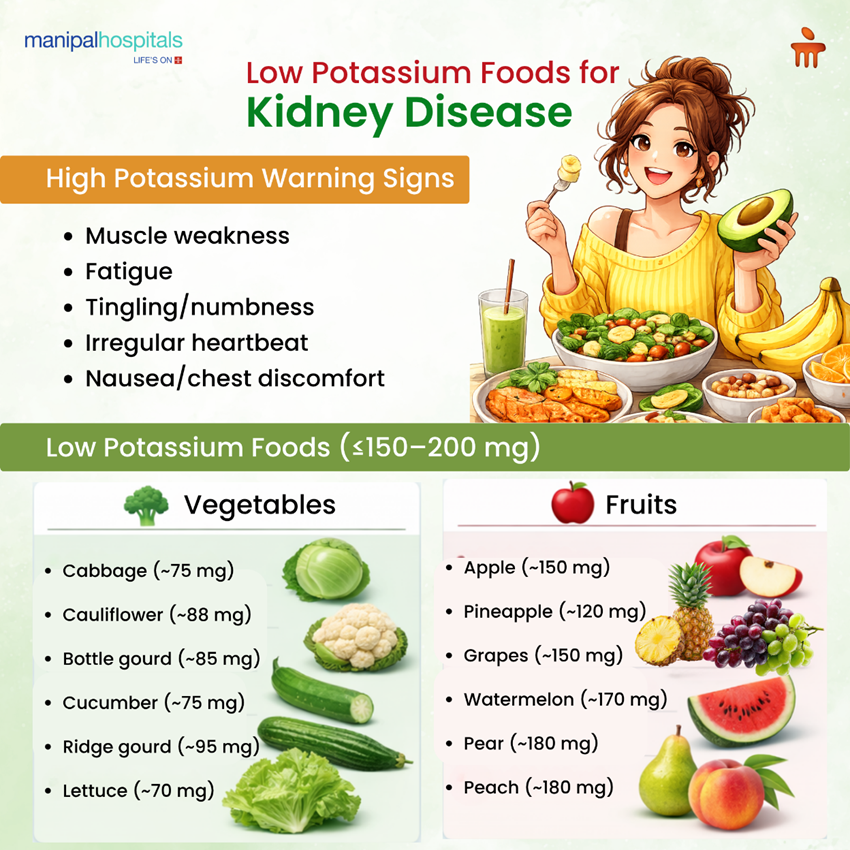
Potassium can build up in the blood when the kidneys don't filter it out properly. While a fully potassium-free diet is usually unnecessary, reducing potassium intake and choosing low-potassium foods has proven to be effective for some people. Accordingly, if blood tests show high potassium levels or advanced kidney disease, doctors may recommend a low-potassium diet. Signs that you might have high potassium levels:
-
Muscle weakness
-
Fatigue
-
Numbness or tingling
-
Chest discomfort
Because symptoms may not appear until levels are very high, regular blood tests are essential for monitoring potassium.
Low Potassium Foods for Kidney Patients
Foods containing less than about 150 mg of potassium per serving are generally considered low-potassium foods, while those containing 150–200 mg are considered moderate. When consumed in appropriate portions, both these ranges are generally safe as low-potassium foods for kidney patients.
Potassium-Less Vegetables for Kidney Patients
Vegetables form an integral component of a healthy meal, and for those suffering from kidney diseases, it is crucial to include vegetables in their meals. However, it is essential to select vegetables that have lower potassium content. There are many vegetables used in daily meals, and they can be included in meals for patients suffering from kidney diseases. Below is a list of vegetables with low potassium content:
-
Cabbage (~75 mg)
-
Cauliflower (~88 mg)
-
Bottle gourd / Lauki (~85 mg)
-
Cucumber (~75 mg)
-
Ridge gourd (~95 mg)
-
Lettuce (~70 mg)
Here are some tips for eating vegetables with kidney disease:
-
Select fresh vegetables instead of processed variants.
-
Opt for steaming, sautéing, or boiling rather than deep-frying.
-
Monitor portion sizes to prevent excessive potassium intake.
-
Consider leaching vegetables to reduce potassium content further.
Low Potassium Fruits for Kidney Patients
Fruits are a wonderful source of nutrients, but a lot of them have high levels of potassium. You can check potassium levels and select the appropriate fruits.
These are some fruits that are low in potassium and beneficial for people with kidney problems.
-
Apple (~150 mg)
-
Pear (~180 mg)
-
Pineapple (~120 mg)
-
Watermelon (~170 mg)
-
Grapes (~150 mg)
-
Peach (~180 mg)
If your healthcare provider has recommended a low-potassium diet, these fruits can be included as snacks or incorporated into meals.
Foods High in Potassium to Limit
Some foods have a lot of potassium in them, and you may need to limit them depending on how well your kidneys work. The table below shows some common foods that are high in potassium:
-
Banana (~420 mg)
-
Avocado (~485 mg)
-
Potato (~450 mg)
-
Sweet potato (~440 mg)
-
Spinach (~420 mg)
-
Coconut water (~600 mg)
-
Tomato puree (~500 mg)
While most individuals can consume these foods, those following a low-potassium diet for kidney disease may need to limit or avoid them.
Sample One-Day Meal Plan with Low Potassium Foods
Maintaining a nutritious diet with kidney disease is achievable. A meal plan featuring low-potassium foods can support both health and satiety.
|
Meal |
Example Menu |
|
Breakfast |
Oats with apple slices and a hard-boiled egg |
|
Mid-morning snack |
A small bowl of grapes |
|
Lunch |
Rice with grilled chicken and stir-fried cabbage |
|
Evening snack |
Pineapple slices |
|
Dinner |
Chapati with bottle gourd curry and cucumber salad |
This easy plan includes a wide range of fruits and vegetables that don't have potassium while still getting the right amount of nutrients.
Helpful Tips for Managing Potassium Intake
Effective potassium management involves mindful eating, portion control, and regular consultations with healthcare professionals. Here are some useful tips:
-
Learn to Read Food Labels: Some packaged foods may have potassium added to them without you knowing. Look for things like potassium chloride.
-
Watch Portion Sizes: Consuming large quantities of low-potassium foods can result in excessive potassium intake.
-
Eat Potassium Throughout the Day: Spread potassium-rich foods out over several meals instead of eating them all at once.
-
Choose Fresh Foods: Many processed foods have potassium additives in them to keep them fresh.
-
Consult a Dietitian: A renal dietitian will assist patients with kidney diseases in preparing a personalised meal plan with low potassium content.
When to Call a Doctor
Dietary requirements for individuals with kidney disease vary depending on the stage of the disease, prescribed medications, and the outcomes of regular blood tests. Therefore, it is essential to monitor your physical condition and promptly communicate any changes to your physician. Look out for symptoms such as:
-
Persistent fatigue
-
Muscle weakness
-
Heart palpitations
-
Decreased urine output
-
Swelling in the legs and face
If potassium levels become elevated, your doctor may conduct additional blood tests and subsequently adjust your diet or medications to restore balance. Remaining attentive to these symptoms and collaborating with your healthcare team ensures that your dietary choices support kidney health and overall well-being.
Conclusion
While it is ideal for those suffering from kidney disease to keep an eye on their potassium intake, a kidney-friendly diet does not have to mean sacrificing variety or flavour. An informed food choice and regular consultations with the top nephrology hospital in Hebbal, Bangalore, can help in keeping your kidneys healthy and in excellent condition.
If you or someone you care about is suffering from kidney disease and requires guidance about their diet and levels of potassium, consult the best nephrologists at Manipal Hospital, Hebbal, for evaluation and treatment guidance.
FAQ's
Yes. Some medications can raise potassium levels in kidney patients. These include ACE inhibitors, ARBs, and potassium-sparing diuretics. Always inform your doctor about any medicines or supplements you are taking.
Yes, dehydration can sometimes contribute to higher potassium levels. When the body does not have enough fluids, kidney function may temporarily worsen, making it harder to remove excess potassium from the blood.
A diet lacking potassium is usually a bad idea because potassium is important for the body to work properly. Instead, doctors say that people should eat low-potassium foods in moderation.
Many salt substitutes contain potassium chloride instead of sodium. Although they may seem healthier, they can raise potassium levels. Always consult your doctor before using salt substitutes to ensure they are safe.
Eating out is possible, but it requires some planning. Choose simple dishes, avoid heavy sauces, and request smaller portions to make dining out safer and managing potassium intake easier.
Share this article on: