10 Min Read
The term bilateral polycystic ovaries often raises concerns and questions for many women. It refers to the presence of multiple small cysts on both ovaries, a characteristic feature often associated with Polyendocrine Metabolic Ovarian Syndrome (PMOS). While the name can sound alarming, understanding what bilateral polycystic ovaries are and its implications is the first step towards effective management. While it is a condition that requires attention and management, it is generally not life-threatening and many women lead full, healthy lives with proper care.
Synopsis
Understanding Bilateral Polycystic Ovaries
Bilateral polycystic ovaries are a finding on an ultrasound scan, indicating that both ovaries contain multiple small, fluid-filled sacs (follicles) that have not matured and released an egg. This morphological characteristic is a key diagnostic criterion for Polyendocrine Metabolic Ovarian Syndrome (PMOS), a complex hormonal disorder affecting women worldwide.
It is important to understand that having bilateral polycystic ovaries on an ultrasound does not automatically mean a diagnosis of PMOS. A diagnosis of PMOS requires the presence of at least two out of three below features:
-
Irregular or absent menstrual periods (oligo- or anovulation).
-
Clinical or biochemical signs of excess androgens (male hormones), such as acne, hirsutism (excess body hair), or elevated androgen levels in blood tests.
-
Polycystic ovaries seen on ultrasound.
Therefore, while the presence of polycystic ovaries bilaterally is a strong indicator, a thorough medical evaluation is necessary to confirm a diagnosis of PMOS and understand its full impact on your health.Consult the Department of Obstetrics and Gynaecology for a comprehensive evaluation, accurate diagnosis, and personalised management of polycystic ovary conditions
Bilateral Polycystic Ovaries Causes and Risk Factors
The exact causes of bilateral polycystic ovaries are not fully understood, but it is believed to occur due to a combination of genetic, hormonal and environmental factors which include:
-
Insulin Resistance: This is a major factor. When cells become resistant to insulin, the pancreas produces more insulin to compensate. High insulin levels can stimulate the ovaries to produce more androgens, which interferes with follicle development and lead to the characteristic polycystic appearance.
-
Genetic Predisposition: There is a strong familial link. Women whose mother or sister has PMOS have a significantly higher chance of developing the condition themselves. This suggests a genetic component, though specific genes have not been definitively identified.
-
Inflammation: Low-grade inflammation is commonly observed in women with PMOS. This chronic inflammation may stimulate the polycystic ovaries to produce androgens, contributing to the condition's symptoms.
-
Excess Androgen Production: The ovaries of women with PMOS often produce higher levels of androgens than normal. This excess contributes to symptoms like hirsutism and acne, and can also interfere with ovulation.
Recognising Bilateral Polycystic Ovaries Symptoms
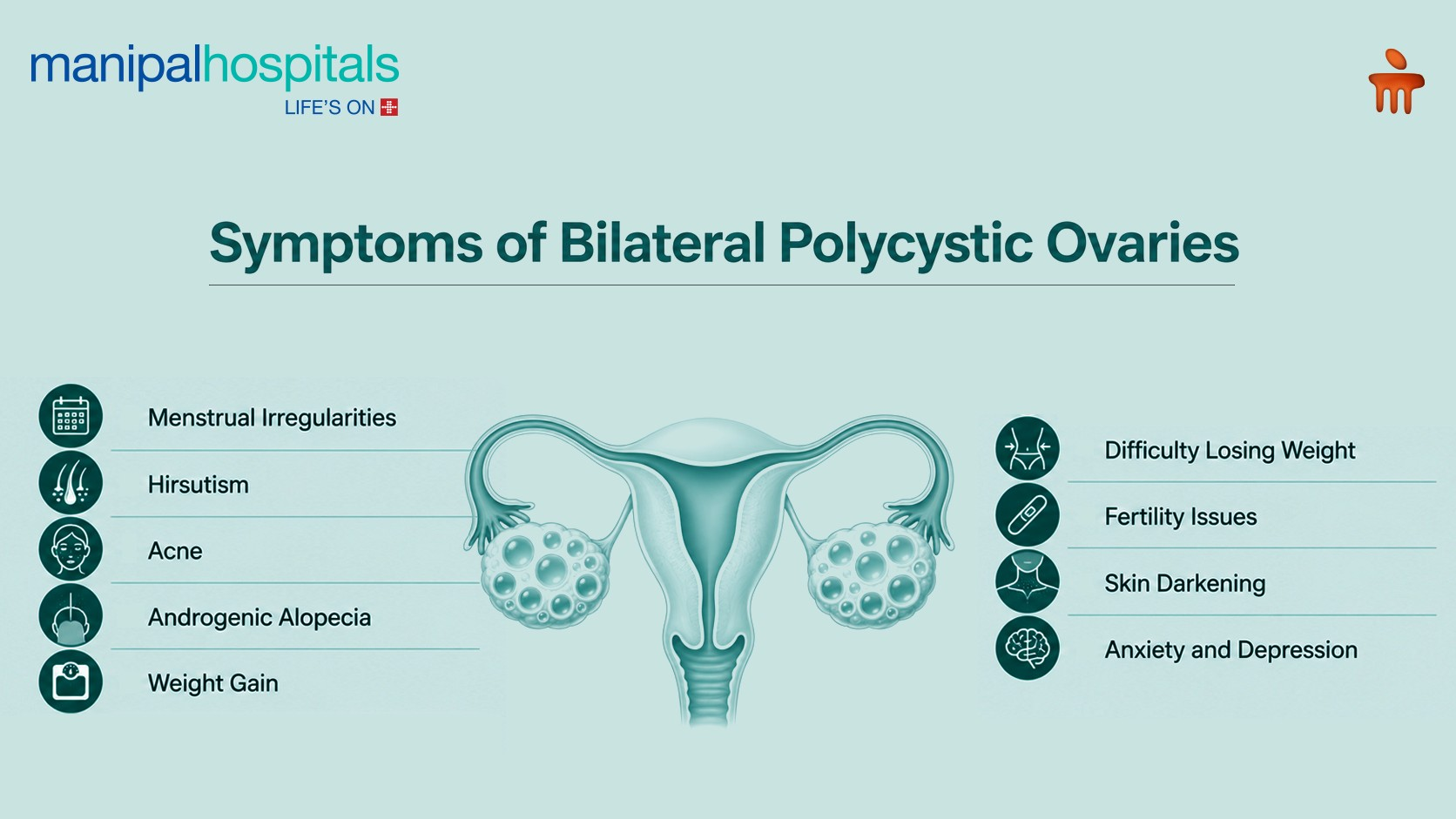
The symptoms of bilateral polycystic ovaries can vary widely among individuals, both in type and severity. They are primarily driven by hormonal imbalances and often become noticeable during adolescence or early adulthood. Common symptoms include:
-
Menstrual Irregularities: This is one of the most frequent symptoms. It can manifest as irregular periods, infrequent periods (oligomenorrhea), absent periods (amenorrhea), or heavy periods. These irregularities are due to the lack of regular ovulation.
Excess Androgen Symptoms:
-
Hirsutism: Excessive hair growth on the face, chest, back, or abdomen.
-
Acne: Severe acne, particularly on the face, chest, and upper back, is often resistant to conventional treatments.
-
Androgenic Alopecia: Male-pattern baldness or thinning hair on the scalp.
-
Weight Gain and Difficulty Losing Weight: Many women with bilateral polycystic ovaries struggle with weight management, especially around the abdominal area, largely due to insulin resistance.
-
Fertility Issues: Irregular or absent ovulation can make it challenging to conceive naturally. However, with appropriate interventions, many women with PMOS can achieve pregnancy.
-
Skin Darkening (Acanthosis Nigricans): Darkened, thickened skin patches, often in skin folds like the neck, groin, or underarms, also linked to insulin resistance.
-
Mood Swings, Anxiety, and Depression: The hormonal fluctuations can significantly affect mental well-being and cause sleep disturbances.
Bilateral Polycystic Ovaries Treatment Approaches
While there is no cure for bilateral polycystic ovaries or PMOS, the condition is can be effectively managed. Treatment for bilateral polycystic ovaries focuses on symptom relief, managing underlying hormonal imbalances, and reducing the risk of long-term complications. Many women achieve significant improvements, with a high success rate in managing symptoms and achieving reproduction.
Tailored Treatment Plans:
-
Lifestyle Modifications:
-
Dietary Changes: Follow a balanced diet, rich in whole foods, lean proteins, fibres, and healthy fats. Avoid intake of processed foods and refined carbohydrates to improve insulin sensitivity and aid weight management.
-
Regular Physical Activity: Engaging in regular exercise, such as 30 minutes of moderate-intensity activity most days of the week, can improve insulin sensitivity, aid weight loss, and boost mood.
-
Weight Management: Losing even a small amount of weight (5-10% of body weight) can dramatically improve symptoms like menstrual regularity, ovulation, and insulin resistance.
-
Medical Management: Depending on the primary concerns, your doctor may recommend specific medications. These are not a cure but help manage symptoms like irregular periods, hirsutism, acne, and fertility challenges. Your healthcare provider will discuss the most appropriate options for your individual needs.
-
Fertility Treatment: For women struggling to conceive due to ovulatory dysfunction, various fertility treatments are available. These interventions have a strong track record, with many couples achieving successful pregnancies.
-
Emotional and Psychological Support: Given the impact on quality of life, psychological support and counseling can be invaluable in coping with the emotional challenges associated with the condition.
Essential Strategies for Managing Bilateral Polycystic Ovaries
-
Prioritise Nutritional Choices: Focus on a balanced diet incorporating fibre-rich foods, lean proteins, and healthy fats. Avoiding processed foods and refined sugars can significantly support insulin regulation and overall health.
-
Embrace Regular Physical Activity: Integrate consistent exercise into your routine, aiming for at least 30 minutes of moderate-intensity activity most days of the week. This can improve insulin sensitivity, assist with weight management, and positively impact mood.
-
Consistent Health Monitoring: Regularly track your menstrual cycles and any bodily changes. Schedule routine check-ups with your healthcare provider for ongoing management and screening for related health conditions.
-
Proactive Symptom Management: Do not ignore emerging symptoms. Early diagnosis and intervention are fundamental for effective management. If you experience irregular periods or signs of excess androgens, seek prompt medical advice.
-
Seek Professional Guidance for Treatment: Always consult a doctor before commencing any new treatment or making significant changes to your existing regimen. Self-medication can be ineffective or harmful; personalised medical advice is crucial.
-
Cultivate Mental Well-being: Recognise the profound impact of stress and hormonal fluctuations on your mental health. Incorporate stress-reduction techniques like mindfulness, yoga, or meditation, and seek support for mental health if needed.
-
Build a Support System: Connecting with support groups, trusted friends, or family can provide emotional resilience and practical advice, helping to mitigate feelings of isolation.
Conclusion
Multiple little cysts in both ovaries creates bilateral polycystic ovaries. Hormonal imbalances that can result in ovulation dysfunction and other symptoms are the hallmarks of PMOS, which includes this illness. PMOS is not present in all women with polycystic ovaries, though. Other diagnostic requirements must also be fulfilled, so bilateral polycystic ovaries by themselves do not always signify PCOS.
At Manipal Hospital, Goa, our facilities our experts at the Department of Obstetrics and Gynaecology offer an integrated approach to help women manage their symptoms effectively, reducing long-term health risks and significantly improving their quality of life.
FAQ's
Not exactly. Bilateral polycystic ovaries refer to the physical appearance of the ovaries on an ultrasound. PMOS is a broader hormonal disorder diagnosed when you have at least two out of three criteria: irregular periods, high androgen levels, and polycystic ovaries.
Yes, irregular or absent ovulation, a common feature of PMOS associated with bilateral polycystic ovaries, can make it difficult to conceive. However, with appropriate medical management and fertility treatments, many women with this condition successfully achieve pregnancy.
Yes, if left unmanaged, the hormonal imbalances associated with bilateral polycystic ovaries (and PMOS) can increase the risk of developing type 2 diabetes, heart disease, high blood pressure, dyslipidemia, and endometrial cancer. Early diagnosis and consistent management are crucial for mitigating these risks.
Lifestyle modifications, including a balanced diet and regular exercise, are often the most effective first-line treatment. They can significantly improve insulin sensitivity, regulate menstrual cycles, help with weight management, and reduce the severity of many symptoms.
The underlying hormonal and metabolic changes associated with bilateral polycystic ovaries and PMOS are chronic. While symptoms can be effectively managed and may even go into remission with sustained lifestyle changes and treatment, the condition itself does not typically "go away."
Manipal Hospitals in Goa offers comprehensive and specialised care for women with bilateral polycystic ovaries and PMOS. Our team of experienced gynaecologists, endocrinologists, fertility specialists and nutrition experts provides personalised treatment plans to address your specific needs.
Share this article on: