8 Min Read
A cancer diagnosis can be a daunting experience, often leading to a whirlwind of emotions and questions about treatment options. Among the most pivotal and effective therapies available today is radiation therapy, a powerful tool in the fight against cancer. Our oncologists in Ghaziabad provide comprehensive, patient-centric care, utilising the latest advancements in radiation oncology to offer hope and healing. This guide aims to demystify what radiation therapy is, explain its process, and equip you with knowledge on managing its side effects, ensuring you feel supported every step of the way.
Radiation therapy, sometimes referred to as radiotherapy, is a highly effective cancer treatment that uses high doses of radiation to kill cancer cells and shrink tumours. It works by damaging the DNA of cancer cells, preventing them from growing and dividing. While it effectively targets diseased cells, healthy cells can also be affected, but they are generally more capable of repairing themselves. Over 50% of all cancer patients receive radiation treatment at some point during their journey, often leading to successful outcomes and improved quality of life. Modern techniques have significantly enhanced precision, helping to protect surrounding healthy tissue and minimise potential harm.
Synopsis
Understanding Radiation Therapy: How It Works
Radiation therapy for cancer can be delivered in various ways, either as a primary treatment, in combination with other therapies like chemotherapy or surgery, or as palliative care to relieve symptoms. The underlying principle remains the same: to deliver targeted radiation doses to cancer cells. Advances in technology have made radiation more precise than ever, allowing oncologists to tailor treatment plans unique to each patient’s specific needs and tumour characteristics.
A typical course of radiation therapy involves a detailed planning phase followed by daily treatment sessions over several weeks. During the planning stage, imaging tests like CT, MRI, and PET scans are used to precisely map the tumour's location and shape. This information is then used to create a personalised treatment plan that maximises the radiation dose to the cancer while sparing healthy tissue as much as possible. Precision targeting technologies have improved treatment accuracy by an impressive 25% in recent years, contributing to better patient outcomes.
Types of Radiation Therapy
Radiation treatment can be broadly categorised into external beam radiation therapy and internal radiation therapy (brachytherapy), each designed for specific types of cancer and patient situations.
-
External Beam Radiation Therapy (EBRT): This is the most common type of radiation therapy. A machine called a linear accelerator (LINAC) delivers radiation from outside the body to the tumour site. Modern EBRT techniques offer exceptional precision:
-
Intensity-Modulated Radiation Therapy (IMRT): This advanced technique uses computer-controlled linear accelerators to deliver precise radiation doses that conform to the shape of the tumour, even if it's irregularly shaped. This allows for higher doses to the tumour while reducing exposure to surrounding healthy tissues.
-
Image-Guided Radiation Therapy (IGRT): IGRT uses imaging tests (like X-rays or CT scans) taken just before or during each treatment session to ensure the tumour is in the exact position. This accounts for small movements of the tumour due to breathing or organ shifts, significantly improving accuracy.
-
Stereotactic Body Radiation Therapy (SBRT) / Stereotactic Radiosurgery (SRS): These techniques deliver very high doses of radiation in a few, highly precise sessions, often used for small tumours in difficult-to-reach areas. SRS is typically used for brain tumours, while SBRT is for tumours in the body. These methods boast a local control rate of over 90% for certain early-stage cancers.
-
Internal Radiation Therapy (Brachytherapy): In brachytherapy, a radioactive source is placed directly inside or very close to the tumour. This allows for a very high dose of radiation to be delivered to a small area over a short period, with minimal impact on distant healthy tissues. Brachytherapy is particularly effective for certain prostate, cervical, and breast cancers. Depending on the cancer, it can be temporary (high-dose rate) or permanent (low-dose rate).
The Radiation Therapy Process: What to Expect
Embarking on a course of radiation therapy involves several key stages, each designed to ensure the most effective and safest treatment possible. Understanding these steps can help ease anxiety and prepare you for what lies ahead.
Your journey will typically involve:
-
Consultation and Diagnosis: Initially, you will meet with a radiation oncologist who will review your medical history, diagnostic scans, and pathology reports. They will explain your cancer type, stage, and whether radiation therapy for cancer is the most suitable treatment option for you.
-
Simulation and Planning: This crucial step involves precise mapping of the tumour. You will undergo a "simulation" session, where imaging scans (CT, MRI, PET) are taken while you are positioned exactly as you will be during treatment. Custom immobilisation devices (like casts or moulds) may be created to help you stay still. Using these images, the medical physics team and radiation oncologist will create a personalised treatment plan, meticulously calculating the radiation dosage and angles to target the tumour accurately while protecting healthy tissues.
-
Treatment Sessions: Once the plan is finalised, you will begin daily treatment sessions, typically lasting 10-30 minutes. You will lie on a treatment couch, and the linear accelerator will deliver the radiation. The process is painless, similar to having an X-ray, though the machine can be noisy. The radiation therapists will monitor you from an adjacent room, ensuring your comfort and safety. Most courses involve daily treatments (Monday to Friday) for several weeks, though some may be shorter.
-
Follow-up: After completing your radiation treatment, you will have regular follow-up appointments with your oncologist to monitor your recovery, assess treatment effectiveness, and manage any long-term side effects.
Managing Radiation Side Effects
While radiation therapy is highly effective, it can cause side effects. These depend on the area being treated, the dose, and your overall health. The good news is that medical advancements and supportive care strategies have made managing radiation side effects more effective than ever. Modern radiation techniques have reduced severe side effects by up to 30%, improving patients' comfort during treatment.
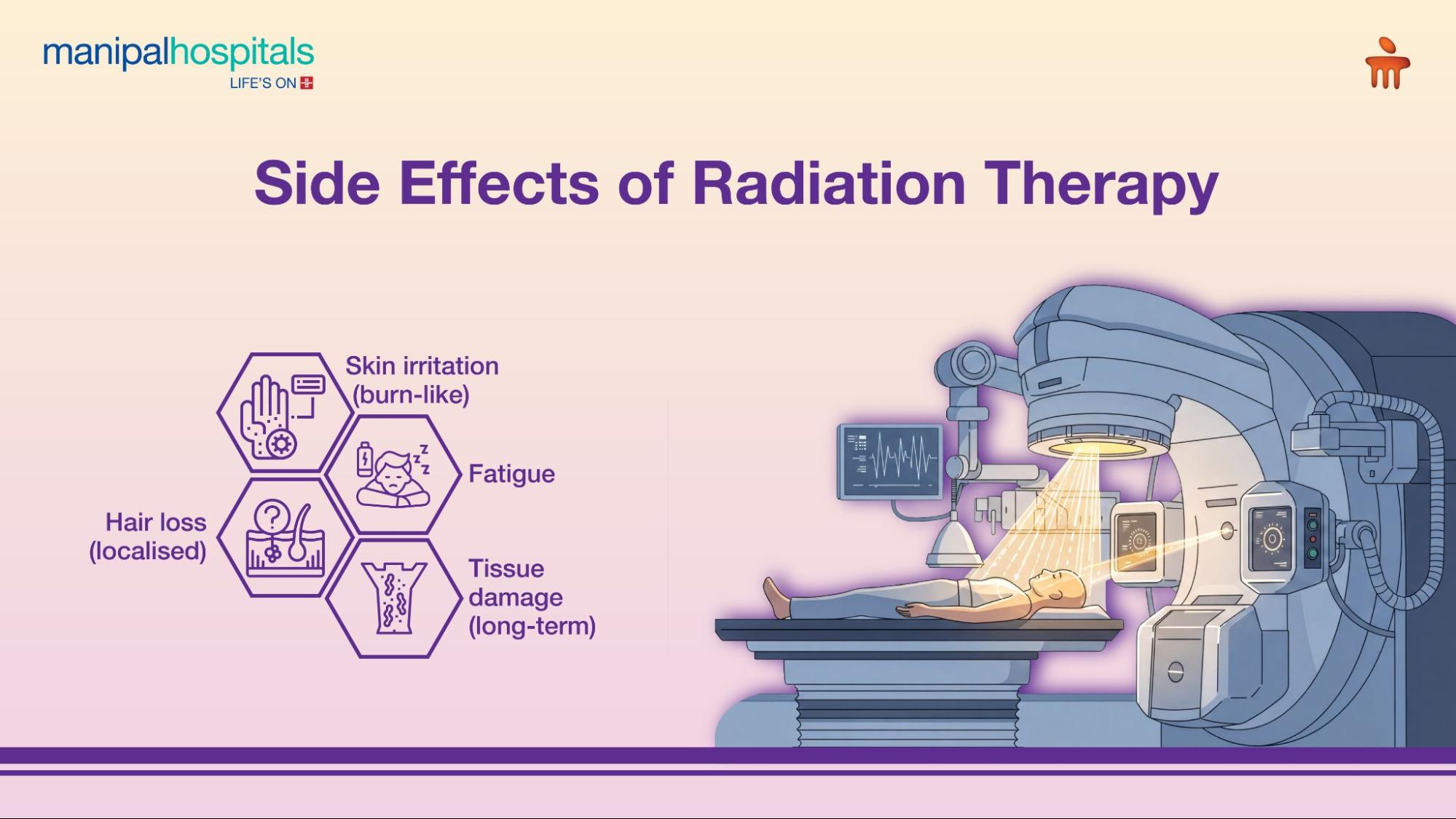
Common side effects often include:
-
Fatigue: This is one of the most common side effects, often described as a profound tiredness that isn't relieved by rest.
-
Skin Changes: In the treated area, the skin may become red, dry, itchy, or sensitive, similar to a sunburn. It can also blister or peel.
-
Hair Loss: Hair loss only occurs in the treated area. For example, radiation to the head may cause hair loss on the scalp, but not on other parts of the body.
Site-Specific Side Effects:
-
Head and Neck: Dry mouth, difficulty swallowing, sore throat, taste changes.
-
Chest: Shortness of breath, cough, difficulty swallowing, breast soreness.
-
Abdomen/Pelvis: Nausea, vomiting, diarrhoea, bladder irritation, bowel changes.
Most side effects are temporary and begin to improve a few weeks after treatment concludes. Our oncologist in Ghaziabad will provide guidance and support throughout your treatment to help manage these effects effectively.
Conclusion
Radiation therapy represents a cornerstone of modern cancer care, offering significant benefits in treating various cancers. At Manipal Hospitals, we are committed to providing advanced, compassionate care, ensuring each patient receives personalised treatment with the best possible outcomes. With our expert team and state-of-the-art technology, we empower patients in their fight against cancer.
FAQ's
No, the actual delivery of radiation is not painful. You won't see or feel the radiation during treatment. You might experience some discomfort from lying still on the treatment table for a few minutes.
The duration varies significantly depending on the type of cancer, its stage, and the specific radiation treatment plan. It can range from a single session to daily treatments over several weeks (e.g., 5-7 weeks).
For external beam radiation therapy, you are not radioactive and can safely be around others, including children and pregnant women. If you receive brachytherapy (internal radiation), temporary precautions may be advised while the radioactive source is in place, but you are not radioactive once it's removed.
Many patients continue with most of their daily activities, including work, during radiation therapy. However, you might experience fatigue, so it’s important to listen to your body and rest when needed.
A balanced, nutritious diet is crucial. Your doctor or a dietitian can provide specific dietary advice based on your treatment area and any side effects you might be experiencing, such as nausea or difficulty swallowing.
Share this article on: