7 Min Read
Chronic Kidney Disease (CKD) is a progressive condition affecting millions worldwide, often silently. Understanding its stages is not just about medical jargon; it's about empowering yourself with knowledge to take control of your health. At Manipal Hospitals, our dedicated nephrologists in Ghaziabad are committed to guiding you through every step of your kidney health journey. They emphasise that early detection and proactive management are key to maintaining quality of life. The expertise of our nephrologists in Ghaziabad ensures you receive personalised care tailored to your specific needs. Consulting with our experienced nephrologists in Ghaziabad can make a significant difference in slowing the progression of CKD. We pride ourselves on the compassionate approach taken by our nephrologists in Ghaziabad, who are always ready to answer your questions. For comprehensive kidney care, you can rely on our nephrologists in Ghaziabad.
Synopsis
Understanding Chronic Kidney Disease
Chronic Kidney Disease (CKD) refers to the gradual loss of kidney function over time. Your kidneys are vital organs responsible for filtering waste products and excess fluids from your blood, which are then excreted in your urine. They also play crucial roles in maintaining blood pressure, red blood cell production, and bone health. When your kidneys are damaged, waste products can build up in your body, leading to serious health problems.
Globally, CKD affects approximately 1 in 10 adults, with a significant number remaining undiagnosed. In India, the prevalence is estimated to be around 17%, indicating a widespread health challenge. Early detection dramatically improves patient outcomes, with studies showing that patients diagnosed in earlier stages (1-3) can often maintain stable kidney function for extended periods, avoiding or delaying the need for dialysis or transplant in up to 70% of cases through effective management.
The Five Stages of CKD: What They Mean for You
CKD is categorised into five stages based on your Glomerular Filtration Rate (GFR), a measure of how well your kidneys are filtering waste. A healthy GFR is typically 90 mL/min/1.73 m² or higher.
Stage 1: Kidney Damage with Normal GFR (GFR ≥ 90 mL/min)
-
What it means: At this stage, you have evidence of kidney damage (like protein in your urine or physical abnormalities), but your GFR is still in the normal range. Often, there are no noticeable chronic kidney disease symptoms.
-
Focus: Identifying and treating the underlying chronic kidney disease causes (e.g., diabetes, hypertension) to prevent further damage. Regular monitoring and lifestyle adjustments are key parts of chronic kidney disease treatment.
-
Outlook: With proper management, the progression to later stages can be significantly slowed or even halted for many patients, allowing for a near-normal life expectancy.
Stage 2: Kidney Damage with Mild Decrease in GFR (GFR 60-89 mL/min)
-
What it means: Your kidneys show mild damage and a slight reduction in function. Similar to Stage 1, you may not experience significant chronic kidney disease symptoms.
-
Focus: Continuing to manage the underlying chronic kidney disease causes. Your doctor will monitor your GFR and urine protein more closely. Lifestyle changes are even more critical here.
-
Outlook: Many individuals in Stage 2 can maintain this level of kidney function for years with diligent care. Early intervention at this stage can prevent progression to more severe stages in approximately 60% of cases.
Stage 3: Moderate Decrease in GFR (GFR 30-59 mL/min)
Stage 3 is often divided into two sub-stages:
- Stage 3a (GFR 45-59 mL/min):
-
What it means: Your kidney function is moderately decreased. You might start noticing some mild chronic kidney disease symptoms like fatigue, swelling, or changes in urination.
-
Focus: Intensified management of blood pressure, blood sugar, and diet. Your doctor will likely prescribe specific medications as part of your chronic kidney disease treatment plan to protect your kidneys.
-
- Stage 3b (GFR 30-44 mL/min):
- What it means: Your kidney function has further declined, and chronic kidney disease symptoms become more apparent. Anaemia and bone disease may start to develop.
-
Focus: Comprehensive management to prevent complications. This includes careful dietary restrictions and medication adjustments to manage symptoms and slow progression. Studies show that dedicated management in Stage 3 can reduce the risk of progressing to Stage 5 by up to 50%.
Stage 4: Severe Decrease in GFR (GFR 15-29 mL/min)
-
What it means: At this advanced stage, your kidneys are severely damaged and are struggling to remove waste. Chronic kidney disease symptoms are typically significant and include fatigue, swelling, nausea, poor appetite, and nerve problems.
-
Focus: Preparation for kidney failure treatment. Your medical team will discuss options like dialysis or a kidney transplant, which are crucial components of chronic kidney disease treatment at this point.
-
Outlook: While serious, effective management can significantly improve quality of life and prepare patients for necessary interventions.
Stage 5: Kidney Failure (GFR < 15 mL/min)
-
What it means: Your kidneys have largely failed or are very close to failing. This is also known as End-Stage Renal Disease (ESRD). At this stage, wastes accumulate to dangerous levels.
-
Focus: Immediate initiation of dialysis or kidney transplantation is essential for survival. These are the primary forms of chronic kidney disease treatment for ESRD.
-
Outlook: Modern dialysis techniques have significantly improved life expectancy for ESRD patients, with many living fulfilling lives for decades. Kidney transplantation offers the best long-term outcomes and quality of life.
Recognising Chronic Kidney Disease Symptoms
Many people with early CKD don't have chronic kidney disease symptoms. This is why it's often called a "silent killer." As the disease progresses, symptoms may include:
-
Fatigue and weakness
-
Swelling in your ankles, feet, or hands (oedema)
-
Nausea and loss of appetite
-
Changes in how often you urinate, especially at night
-
Muscle cramps and weakness
-
Dry, itchy skin
-
Difficulty concentrating
-
High blood pressure that's difficult to control
Causes of Chronic Kidney Disease
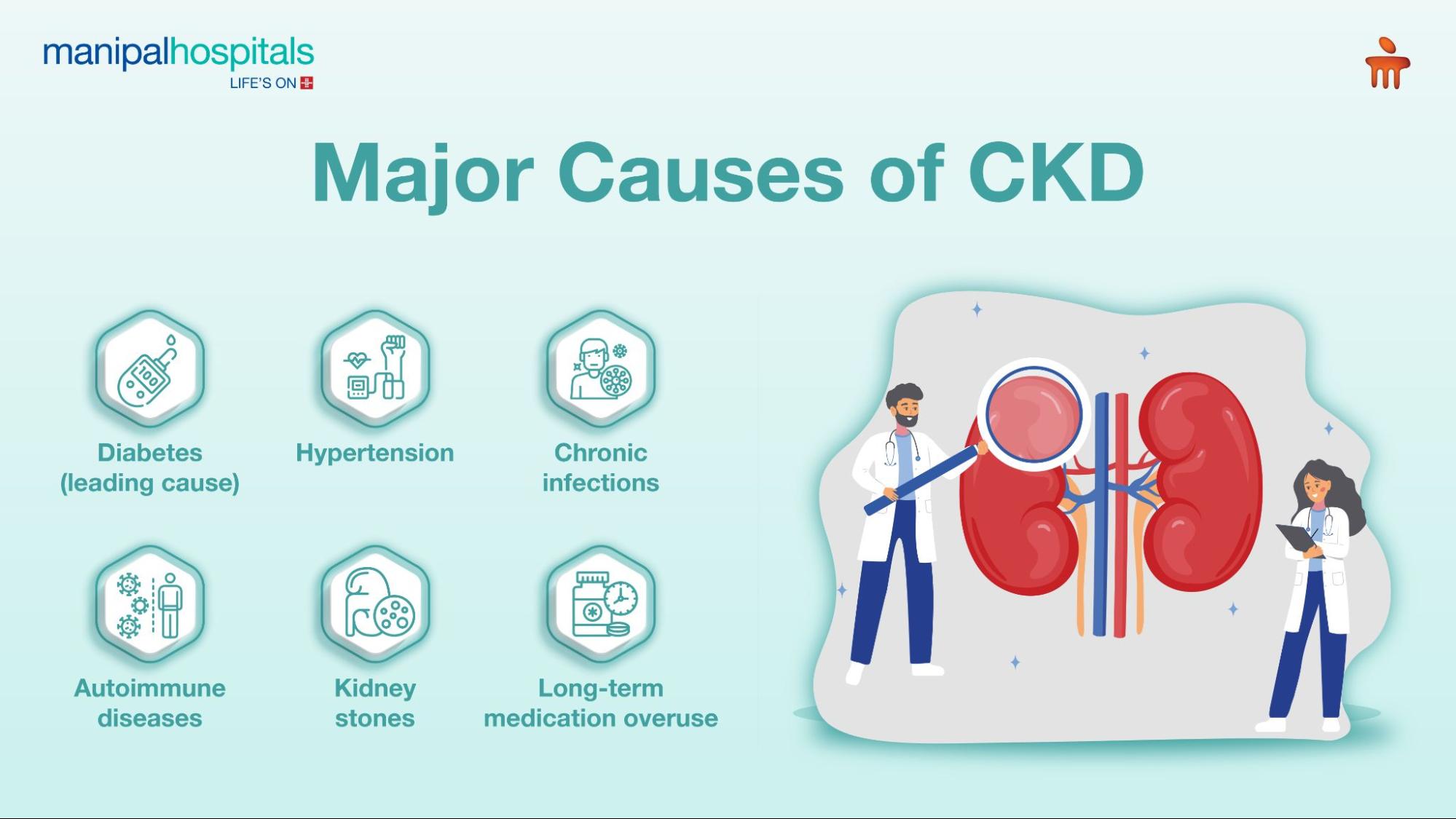
Understanding the primary chronic kidney disease causes is vital for prevention and management. The most common ones include:
-
Diabetes: Uncontrolled high blood sugar damages the filtering units of the kidneys. Diabetes is responsible for about 44% of new cases of kidney failure.
-
High Blood Pressure (Hypertension): Long-term uncontrolled high blood pressure can narrow and weaken the blood vessels in your kidneys, damaging them. It accounts for about 29% of new kidney failure cases.
-
Glomerulonephritis: A group of diseases that cause inflammation of the kidney's filtering units.
-
Polycystic Kidney Disease (PKD): An inherited disorder where cysts grow in the kidneys, eventually impairing their function.
-
Lupus and other autoimmune diseases: These conditions can attack various organs, including the kidneys.
-
Recurrent Kidney Infections: Frequent and severe kidney infections can lead to permanent damage.
-
Obstruction of the Urinary Tract: Conditions like kidney stones, an enlarged prostate, or certain cancers can block urine flow and damage the kidneys.
-
Certain Medications: Long-term use of some medications, like NSAIDs, can be harmful to the kidneys.
Effective Chronic Kidney Disease Treatment and Management
The goals of chronic kidney disease treatment are to slow the progression of the disease, manage symptoms, and prevent complications. Depending on the stage, treatment may involve:
-
Lifestyle Modifications:
-
A healthy, balanced diet is often low in sodium, potassium, and phosphorus.
-
Regular physical activity.
-
Maintaining a healthy weight.
-
Quitting smoking and limiting alcohol intake.
-
-
Medication:
-
Blood pressure medications (ACE inhibitors or ARBs) to protect kidney function.
-
Diuretics to reduce swelling.
-
Medications to manage anaemia, bone disease, and high cholesterol.
-
Blood sugar control medications for diabetic patients.
-
-
Dialysis: For Stage 5 CKD, dialysis takes over the function of failing kidneys to remove waste and excess fluid.
- Kidney Transplant: A surgical procedure to replace a failing kidney with a healthy donor kidney, offering the best quality of life for ESRD patients. Transplants have a high success rate, with over 90% of living donor kidneys still functioning after one year.
Conclusion
In conclusion, understanding the five stages of Chronic Kidney Disease (CKD) is essential for recognising how kidney health changes over time and why early intervention matters. Since CKD often develops silently, regular screening becomes especially important for individuals with diabetes, high blood pressure, obesity, or a family history of kidney disease. Identifying chronic kidney disease symptoms early and addressing the underlying chronic kidney disease causes can significantly slow disease progression and improve long-term outcomes. With timely chronic kidney disease treatment, lifestyle modifications, medication, and expert medical guidance, many patients can maintain a good quality of life and delay complications such as kidney failure. Our experienced nephrologists in Ghaziabad provide comprehensive, patient-centred kidney care tailored to every stage of CKD. From diagnosis and preventive strategies to advanced dialysis and transplant support, our team is committed to helping patients manage kidney disease effectively and lead healthier, more fulfilling lives.
FAQ's
The two most common causes are diabetes and high blood pressure, collectively accounting for the majority of CKD cases.
While existing kidney damage cannot typically be reversed, CKD can often be managed effectively to slow its progression and prevent further damage. Early stages (1-3) respond best to interventions.
GFR is estimated using a simple blood test that measures creatinine levels. This estimate, along with age, gender, and race, provides a reliable indicator of kidney function.
Managing blood pressure and blood sugar, following a kidney-friendly diet, exercising regularly, maintaining a healthy weight, and avoiding smoking are crucial.
You should see a nephrologist if you have risk factors for CKD (like diabetes or hypertension), persistent abnormal kidney function tests, or symptoms suggestive of kidney disease, especially if your GFR is below 60 mL/min.
Share this article on: