6 Min Read
A meniscus injury is one of the most common knee problems affecting athletes, fitness enthusiasts, and even older adults. While many people hope that a torn meniscus will simply heal with rest, the reality depends on the type, location, and severity of the injury. At our orthopaedics in Ghaziabad, we frequently evaluate patients who delay treatment because they assume the pain will resolve on its own.
If you have persistent knee pain, swelling, locking, or difficulty walking, understanding the science behind a meniscus injury can help you make informed decisions about your treatment and recovery.
Synopsis
- What Is a Meniscus Injury?
- Can a Torn Meniscus Heal Naturally?
- Factors That Determine Whether a Meniscus Injury Will Heal
- Symptoms That Suggest Your Meniscus Tear Needs Medical Attention
- Non-Surgical Meniscus Tear Treatment Options
- When Is Meniscus Tear Surgery Necessary?
- Meniscus Repair Surgery vs Meniscectomy
- Meniscus Tear Recovery Time: How Long Does Healing Take?
- How Is a Meniscus Injury Diagnosed?
- Can Delaying Treatment Make a Meniscus Tear Worse?
- Take the Next Step Towards Pain-Free Movement
What Is a Meniscus Injury?
The meniscus is a C-shaped piece of cartilage located between the thigh bone (femur) and shin bone (tibia). Each knee contains two menisci:
-
Medial meniscus (inner side)
-
Lateral meniscus (outer side)
A meniscus injury occurs when this cartilage tears due to sudden twisting movements, sports-related trauma, squatting, or age-related degeneration.
A knee meniscus tear can range from a small, stable tear to a large, complex injury that affects knee function and mobility.
Can a Torn Meniscus Heal Naturally?
The short answer is 'sometimes, but not always'.
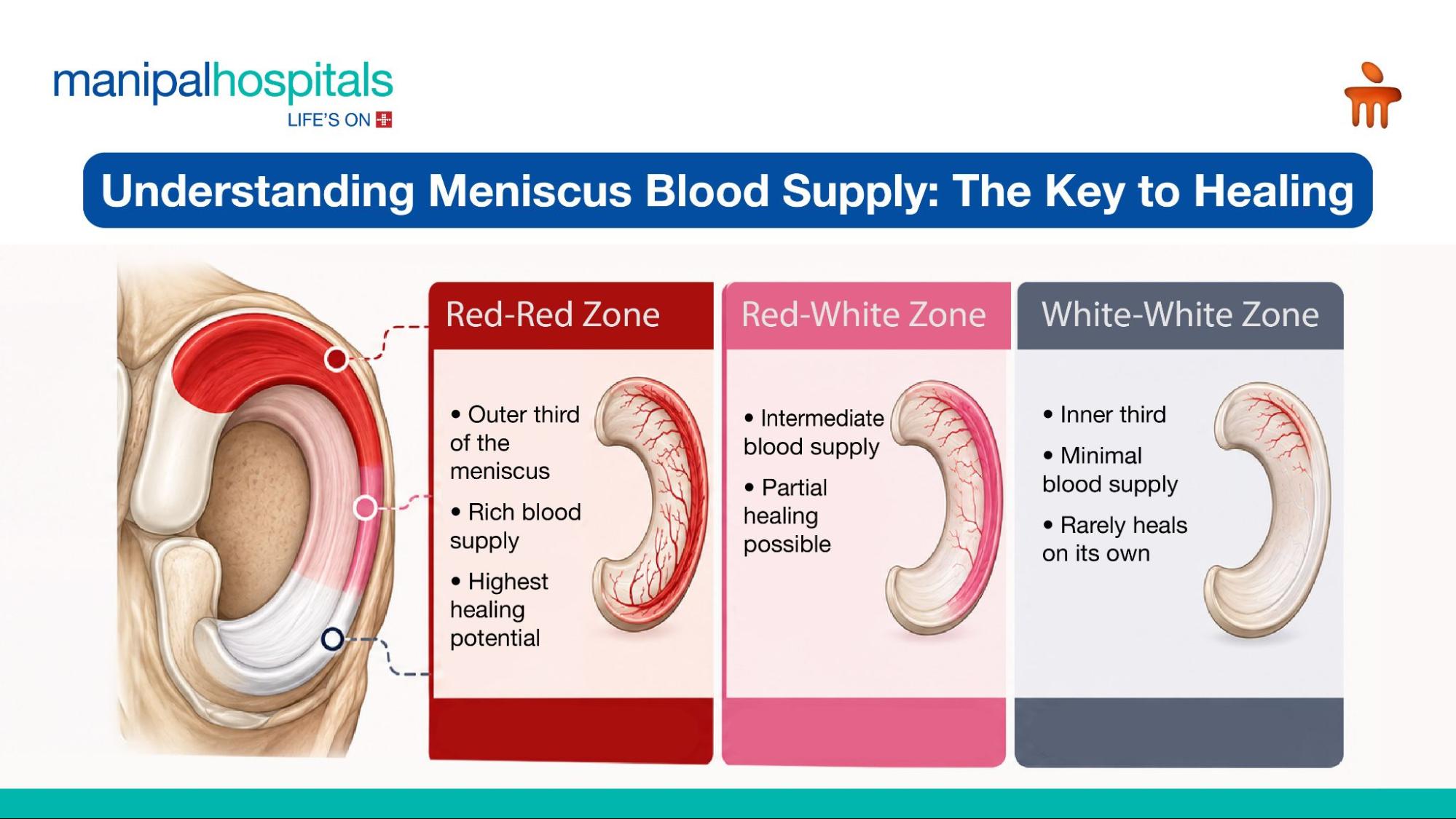
Whether a torn meniscus heals on its own largely depends on its blood supply.
The outer third of the meniscus, known as the "red zone", receives a good blood supply. Small tears in this area may heal naturally with rest, activity modification, physiotherapy, and appropriate meniscus tear treatment.
However, tears located in the inner two-thirds, known as the "white zone", have very limited blood supply. These injuries often struggle to heal without medical intervention and may require specialised treatment or meniscus repair surgery.
Factors That Determine Whether a Meniscus Injury Will Heal
Location of the Tear
The location is the most important factor influencing healing.
-
Outer-edge tears have better healing potential.
-
Inner-edge tears often do not heal independently.
-
Complex tears usually require specialist evaluation.
Type of Meniscus Tear
Different patterns of meniscus injury behave differently.
Common tear types include:
-
Longitudinal tears
-
Radial tears
-
Bucket-handle tears
-
Flap tears
-
Degenerative tears
-
Lateral meniscus tear
A lateral meniscus tear often occurs during sports involving rapid direction changes and may significantly affect knee stability.
Age of the Patient
Younger individuals generally have better tissue healing capabilities.
Older adults commonly experience degenerative meniscus injury where cartilage quality has already declined, reducing the likelihood of spontaneous healing.
Size of the Tear
Small tears may respond well to conservative management.
Large tears are more likely to cause persistent symptoms and may require meniscus tear surgery.
Symptoms That Suggest Your Meniscus Tear Needs Medical Attention
Seek evaluation if you experience:
-
Swelling lasting more than a few days
-
Clicking or popping sensations
-
Knee locking
-
Difficulty straightening the knee
-
Knee instability
-
Reduced range of motion
At our orthopaedics in Ghaziabad, these symptoms frequently indicate a significant meniscus injury that warrants imaging and specialist assessment.
Non-Surgical Meniscus Tear Treatment Options
Not every meniscus injury requires surgery.
Conservative meniscus tear treatment may include the following:
Rest and Activity Modification
Reducing activities that worsen symptoms allows inflammation to settle.
Ice Therapy
Ice helps reduce swelling and discomfort during the initial phase.
Physiotherapy
Structured rehabilitation can improve knee strength and stability.
Anti-Inflammatory Medication
Your doctor may recommend medication to control pain and swelling.
Meniscus Tear Exercises
Specific meniscus tear exercises play a crucial role in recovery.
Examples include:
-
Straight leg raises
-
Quadriceps strengthening
-
Hamstring stretches
-
Mini squats
-
Heel slides
-
Balance exercises
Appropriate meniscus tear exercises should always be performed under professional guidance to avoid worsening the injury.
When Is Meniscus Tear Surgery Necessary?
While many patients improve with conservative treatment, some cases require meniscus tear surgery.
Surgery may be recommended if:
-
Symptoms persist despite treatment
-
The knee locks repeatedly
-
The tear is large or unstable
-
Sports participation is affected
-
Daily activities become difficult
Our specialists at our orthopaedics in Ghaziabad carefully evaluate MRI findings, symptoms, and activity levels before recommending surgery.
Meniscus Repair Surgery vs Meniscectomy
Meniscus Repair Surgery
Meniscus repair surgery involves stitching the torn cartilage back together.
Advantages include:
-
Preserves natural knee function
-
Reduces future arthritis risk
-
Maintains shock absorption
Because the tissue must heal after repair, recovery may take longer.
Partial Meniscectomy
In some cases, damaged tissue is removed rather than repaired.
This procedure often allows faster recovery but may increase the long-term risk of knee degeneration.
Whenever possible, meniscus repair surgery is preferred because preserving the meniscus protects knee health.
Meniscus Tear Recovery Time: How Long Does Healing Take?
The meniscus tear recovery time depends on the severity of the injury and treatment approach.
Approximate timelines include the following:
Mild Meniscus Injury
4–8 weeks
Moderate Meniscus Injury
6–12 weeks
Meniscus Repair Surgery
3–6 months
Complex Meniscus Tear Surgery
Up to 6 months or longer
Understanding realistic meniscus tear recovery time expectations helps patients stay committed to rehabilitation and achieve better outcomes.
How Is a Meniscus Injury Diagnosed?
Diagnosis typically involves:
-
Medical history review
-
Physical examination
-
Knee stability tests
-
MRI scanning
Our experienced bone specialist in Ghaziabad can accurately determine the type and severity of the tear and recommend the most appropriate treatment strategy.
Can Delaying Treatment Make a Meniscus Tear Worse?
Yes.
An untreated meniscus injury can lead to:
-
Chronic pain
-
Progressive cartilage damage
-
Knee instability
-
Reduced mobility
-
Early osteoarthritis
Prompt assessment at our orthopaedics in Ghaziabad can help prevent long-term complications and improve recovery outcomes.
Take the Next Step Towards Pain-Free Movement
A torn meniscus may heal naturally in certain situations, but many cases require targeted treatment and rehabilitation. Early diagnosis is the key to preventing further knee damage and ensuring the best possible recovery.
If you are experiencing symptoms of a meniscus injury, consult the experts at our orthopaedics in Ghaziabad for a comprehensive evaluation and personalised treatment plan.
FAQ's
Yes, many people can walk with a torn meniscus, but continuing activity may worsen symptoms and delay recovery.
Early diagnosis, appropriate meniscus tear treatment, physiotherapy, and adherence to rehabilitation protocols provide the best chance of recovery.
Yes, properly prescribed meniscus tear exercises can strengthen the knee and support healing. However, they should be tailored to your injury.
Persistent pain, knee locking, instability, and large tears identified on MRI are common indications for meniscus tear surgery.
The average meniscus tear recovery time ranges from 4–12 weeks for non-surgical cases and 3–6 months following meniscus repair surgery.
Share this article on: