7 Min Read
Pancreatic cancer, often dubbed the 'silent killer', presents significant challenges due to its aggressive nature and late diagnosis. However, advancements in surgical techniques, particularly the Whipple procedure, offer a beacon of hope. At Manipal Hospitals, we are committed to pioneering innovative approaches, and our oncologists in Delhi are at the forefront of utilising cutting-edge technology like robotic surgery to enhance patient outcomes. The Robotic Whipple Procedure is revolutionising the treatment landscape for pancreatic cancer, promising greater precision, reduced recovery times, and improved safety for our patients.
Synopsis
- Understanding Pancreatic Cancer
- The Role of the Pancreas
- Recognizing the Symptoms
- The Whipple Procedure: A Lifesaving Intervention
- Whipple Procedure for Pancreatic Cancer: When is it Recommended?
- Robotic Whipple Surgery: Precision and Promise
- Advantages of Robotic Whipple Procedure
- Enhanced Safety and Efficacy
- Whipple Procedure Recovery Time: What to Expect
- Long-Term Recuperation and Support
- Pancreatic Cancer Surgery Survival Rate: A Glimmer of Hope
- Conclusion
Understanding Pancreatic Cancer
Pancreatic cancer originates in the tissues of the pancreas, a gland located behind the stomach. This vital organ plays a crucial role in digestion and blood sugar regulation. Unfortunately, symptoms often do not appear until the disease is advanced, making early detection difficult. It is estimated that global efforts are leading to earlier diagnoses in about 15-20% more cases over the last decade, significantly improving the chances for surgical intervention.
The Role of the Pancreas
The pancreas performs two main functions:
-
Exocrine function: Produces enzymes that help digest fats, carbohydrates, and proteins.
-
Endocrine function: Produces hormones, like insulin and glucagon, which regulate blood sugar levels.
Most pancreatic cancers begin in the exocrine cells that line the ducts carrying digestive enzymes.
Recognizing the Symptoms
While often subtle in early stages, common symptoms of pancreatic cancer can include:
-
Jaundice (yellowing of skin or eyes)
-
Abdominal or back pain
-
Unexplained weight loss
-
Loss of appetite
-
Dark urine and pale stools
-
Newly diagnosed diabetes or worsening existing diabetes
-
Fatigue and weakness
Recognising these signs and seeking timely medical evaluation is paramount for improved prognosis.
The Whipple Procedure: A Lifesaving Intervention
The Whipple procedure, formally known as pancreaticoduodenectomy, is one of the most complex and extensive abdominal surgeries. Despite its complexity, it remains the gold standard treatment for resectable pancreatic head cancer and certain other periampullary tumours.
What is the Whipple Procedure?
The Whipple procedure involves the removal of the head of the pancreas, the gallbladder, part of the small intestine (duodenum), a portion of the bile duct, and sometimes a part of the stomach. The remaining organs are then reconnected to allow normal digestion. This intricate surgery requires exceptional surgical skill and precision.
Whipple Procedure for Pancreatic Cancer: When is it Recommended?
The Whipple procedure for pancreatic cancer is primarily recommended when the tumour is located in the head of the pancreas and has not spread to distant sites or invaded major blood vessels. It offers the best chance for long-term survival for eligible patients. Studies show that patients undergoing a successful Whipple procedure have a significantly better prognosis, with 5-year survival rates increasing by up to 25% compared to those without surgical resection.
Robotic Whipple Surgery: Precision and Promise
Traditional open Whipple procedures involve a large incision. However, the advent of minimally invasive techniques, particularly Robotic Whipple Surgery, has transformed the landscape, offering significant advantages for patients.
The Robotic Whipple Procedure utilises a sophisticated robotic system controlled by the surgeon. Small incisions are made, through which robotic instruments and a high-definition 3D camera are inserted. The robotic arms offer an enhanced range of motion and tremor filtration, allowing for unparalleled precision and dexterity.
Advantages of Robotic Whipple Procedure
The benefits of opting for a Robotic Whipple Procedure are substantial:
-
Enhanced Precision: The robot's articulated instruments and magnified 3D vision allow surgeons to operate with microscopic accuracy, distinguishing delicate structures with greater ease.
-
Minimally Invasive: Smaller incisions lead to less trauma to surrounding tissues.
-
Reduced Blood Loss: The precise dissection and cautery capabilities often result in significantly less intraoperative bleeding.
-
Decreased Pain: Patients typically experience less post-operative pain compared to open surgery.
-
Shorter Hospital Stay: Many patients find that their Whipple procedure recovery time is reduced, often by 20-30%, allowing for a quicker return home.
-
Faster Recovery: A shorter hospital stay often correlates with an accelerated overall recovery and return to daily activities.
-
Lower Risk of Complications: Studies have indicated a potential reduction in certain post-operative complications, such as wound infections.
Manipal Hospitals is proud to offer this advanced technology, further enhancing the care provided by our dedicated team, including our expert oncologists in Delhi.
Enhanced Safety and Efficacy
The enhanced visualisation and control offered by robotic systems translate into improved safety and efficacy for such a complex operation. The ability to perform delicate dissections and precise anastomoses (reconnections) can reduce the risk of leaks and other post-surgical complications. This is particularly important for a procedure like the Whipple, where the chances of complications can be higher than in other routine surgeries.
Whipple Procedure Recovery Time: What to Expect
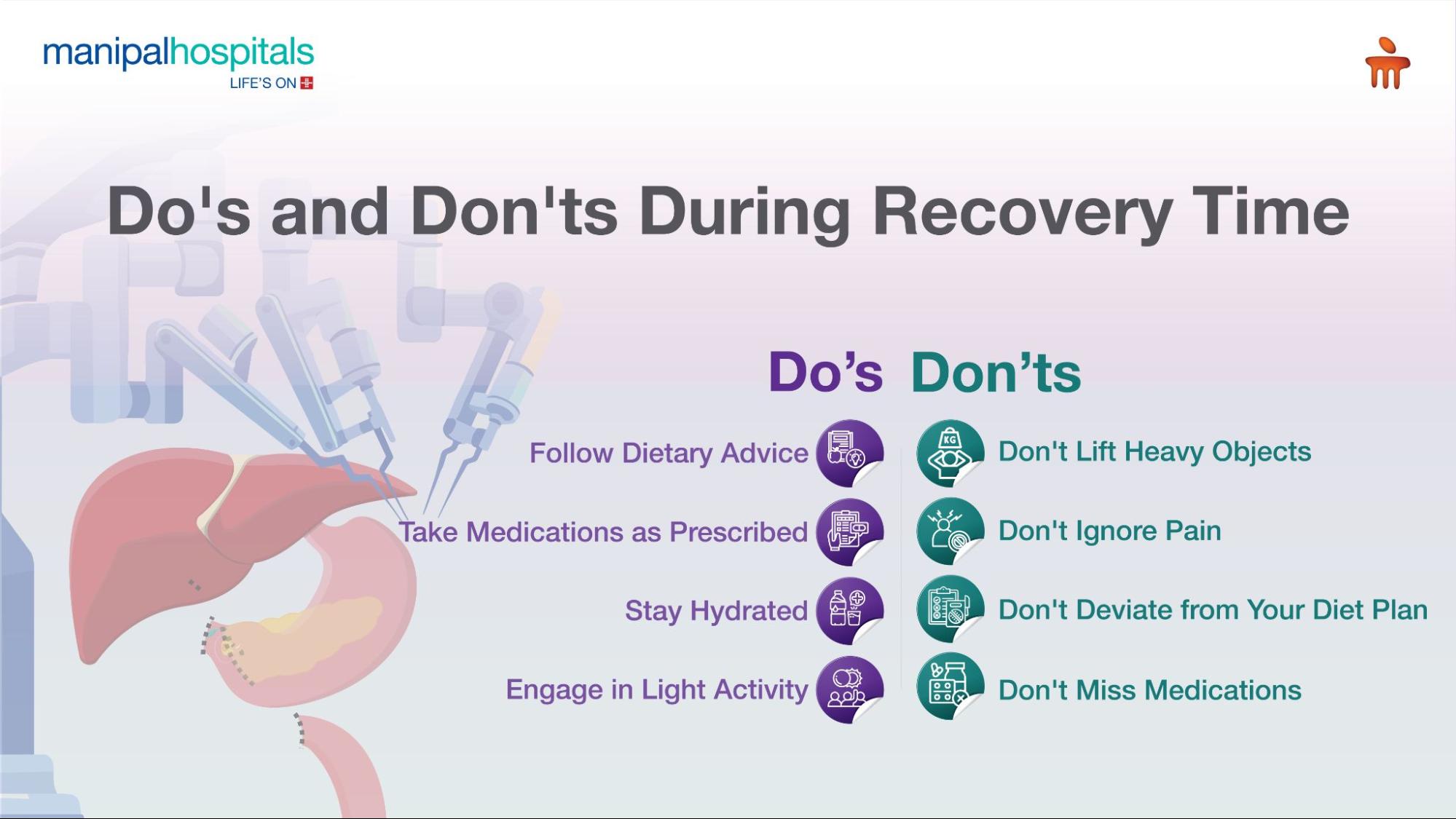
While Robotic Whipple Surgery generally leads to a faster recovery, it is still a major operation that requires a dedicated recuperation period. Understanding the Whipple procedure recovery time is crucial for patients and their families.
Hospital Stay and Initial Recovery
Typically, patients can expect to stay in the hospital for about 7 to 10 days following a Robotic Whipple Procedure, which is often 3-5 days shorter than traditional open surgery. During this time, medical staff will monitor for complications, manage pain, and assist with early mobilisation. By the time of discharge, approximately 85% of patients can tolerate a soft diet and manage their pain with oral medication.
Long-Term Recuperation and Support
Once discharged, the full Whipple procedure recovery time at home can range from 4 to 8 weeks. During this period, patients should expect:
-
Gradual increase in activity levels.
-
Adherence to dietary modifications often involves smaller, more frequent meals.
-
Potential need for pancreatic enzyme supplements to aid digestion.
-
Regular follow-up appointments with their medical team, including nutritionists and oncologists, to monitor recovery and manage any long-term effects.
-
Emotional support, such as coping with a major surgery and cancer diagnosis, can be challenging. Manipal Hospitals provides comprehensive support services to help patients navigate this journey.
Pancreatic Cancer Surgery Survival Rate: A Glimmer of Hope
Historically, the pancreatic cancer surgery survival rate has been a significant concern. However, with advances in surgical techniques, particularly Robotic Whipple Surgery, and comprehensive perioperative care, outcomes are steadily improving. In high-volume centres like Manipal Hospitals, the 5-year pancreatic cancer surgery survival rate for patients who undergo a successful Whipple procedure can be as high as 25-30% for early-stage disease, a remarkable improvement from earlier decades. Furthermore, the short-term survival (30- and 90-day mortality) rates have dramatically reduced to less than 2-3% in expert hands.
Key factors influencing survival rates include:
-
Stage of cancer at diagnosis.
-
Completeness of tumour removal (R0 resection).
-
Overall health of the patient.
-
Adherence to post-operative treatments like chemotherapy.
-
The experience of the surgical team and hospital.
Conclusion
If you are experiencing any symptoms or have been diagnosed with pancreatic cancer, it's crucial to seek timely medical advice. Book an appointment with our expert gastroenterologists and oncologists at Manipal Hospitals today to explore advanced treatment options like the Robotic Whipple Procedure.
FAQ's
Yes, the Whipple procedure is considered one of the most complex abdominal surgeries, requiring the removal of multiple organs and extensive reconstruction. However, with modern surgical techniques like robotic surgery, safety and recovery have significantly improved.
A Robotic Whipple Surgery typically takes between 6 and 10 hours, depending on the complexity of the case and individual patient anatomy. The precision involved necessitates meticulous attention to detail.
As with any major surgery, risks include bleeding, infection, and blood clots. Specific to the Whipple, there's a risk of pancreatic leak (where digestive fluids leak from the reconnected pancreas), delayed gastric emptying, and digestive issues. Robotic surgery aims to minimise some of these risks.
No, the Whipple procedure is only suitable for patients whose pancreatic cancer is confined to the head of the pancreas and has not spread or invaded major blood vessels. A thorough evaluation by a multidisciplinary team is essential to determine eligibility.
Adhering to your surgeon's post-operative instructions, including dietary guidelines, medication schedule, and gradual increase in activity, is crucial. Good nutrition, adequate rest, and avoiding heavy lifting are key components to a smoother recovery.
Share this article on: