8 Min Read
Obesity has emerged as one of the most significant public health challenges worldwide, driving an urgent need for effective, durable, and safe treatment strategies. As medical science evolves, robotic bariatric surgery has become a defining innovation in modern weight loss care. By combining advanced technology with surgical expertise, our bariatric surgeons in Delhi-NCR are increasingly adopting robotic platforms to deliver superior precision, enhanced safety, and improved metabolic outcomes. These advances are shaping current obesity surgery trends and redefining the future of minimally invasive bariatrics.
Synopsis
- Understanding the Shift Toward Robotic Weight Loss Procedures
- Why Robotic Bariatric Surgery Is Gaining Clinical Preference
- Robotic Bariatric Surgery and Metabolic Outcomes
- Robotic Staplers: Precision That You Can See
- Expanded Role in Complex and Revisional Bariatric Surgery
- Safety Trends and Postoperative Recovery
- Technological Innovations Shaping the Future
- Expertise Matters: Choosing the Right Surgical Team
- Long-Term Outcomes and Quality of Life
- Conclusion: Redefining Obesity Treatment Through Robotics
Understanding the Shift Toward Robotic Weight Loss Procedures
The demand for safer and more refined techniques has led to the rapid adoption of robotic bariatric surgery.
Unlike conventional laparoscopy, robotic systems provide surgeons with:
-
Enhanced dexterity
-
Tremor filtration
-
High-definition 3D visualisation
This evolution supports the broader movement toward minimally invasive bariatrics, where surgical trauma is minimised while clinical outcomes are optimised.
As part of emerging obesity surgery trends, robotic techniques are increasingly used for sleeve gastrectomy, Roux-en-Y gastric bypass, and complex revisional procedures.
These trends reflect a growing emphasis on accuracy, consistency, and patient-specific surgical planning.
Why Robotic Bariatric Surgery Is Gaining Clinical Preference
One of the most significant advantages of robotic bariatric surgery is its ability to improve surgical precision.
-
The robotic arms allow fine, controlled movements within confined anatomical spaces, reducing the risk of tissue trauma.
-
This is particularly valuable in patients with high body mass index (BMI), previous abdominal surgeries, or complex anatomy.
-
From a clinical standpoint, minimally invasive bariatrics performed robotically are associated with reduced blood loss, lower postoperative pain, and shorter hospital stays.
These benefits are increasingly highlighted in global obesity surgery trends, positioning robotics as a preferred approach in advanced bariatric centres.
Robotic Bariatric Surgery and Metabolic Outcomes
Beyond weight loss, robotic bariatric surgery plays a critical role in improving obesity-related metabolic disorders.
Procedures performed with robotic assistance have demonstrated significant improvement in:
-
Type 2 diabetes
-
Hypertension
-
Dyslipidaemia
-
Obstructive sleep apnoea
Precision in anastomosis and gastric pouch creation contributes to consistent metabolic outcomes, reinforcing the role of robotics in modern minimally invasive bariatrics.
As obesity surgery trends increasingly focus on metabolic health rather than weight reduction alone, robotic platforms support this shift by enabling reproducible, high-quality surgical results.
Robotic Staplers: Precision That You Can See
One of the most visually striking advancements in robotic bariatric surgery is the use of robotic staplers.
These intelligent devices allow surgeons to control stapling with:
-
Enhanced accuracy
-
Optimal tissue compression
-
Real-time feedback
Robotic staplers contribute significantly to leak prevention, staple-line integrity, and haemostasis.
Within minimally invasive bariatrics, robotic staplers have become symbols of precision engineering.
Their growing adoption reflects broader obesity surgery trends that prioritise safety, standardisation, and surgical consistency across procedures.
Expanded Role in Complex and Revisional Bariatric Surgery
Revisional bariatric surgery remains one of the most technically demanding areas in obesity treatment. Robotic bariatric surgery offers a distinct advantage in these cases due to superior articulation and visual clarity. Adhesiolysis, suturing, and reconstruction can be performed with greater confidence, reducing complication rates.
As obesity surgery trends evolve, robotics is increasingly utilised for failed primary procedures, weight regain, and complication management. This further cements robotic systems as essential tools in advanced minimally invasive bariatrics.
Safety Trends and Postoperative Recovery
Safety remains a cornerstone of robotic bariatric surgery.
Enhanced visualisation and controlled instrument movement reduce intraoperative risks.
Postoperatively, patients undergoing minimally invasive bariatrics via robotic platforms often experience faster mobilisation, lower infection rates, and quicker return to daily activities.
These benefits reflect broader obesity surgery trends that emphasise patient comfort, early recovery, and reduced healthcare burden without compromising clinical outcomes.
Technological Innovations Shaping the Future
The future of robotic bariatric surgery lies in continuous innovation. Integration of artificial intelligence, data-driven surgical planning, and improved ergonomic design is expected to further enhance outcomes. As minimally invasive bariatrics continue to advance, robotics will play a central role in personalising obesity treatment.
Emerging obesity surgery trends also point toward hybrid approaches that combine robotic precision with endoscopic techniques, expanding treatment options for patients across the obesity spectrum.
Expertise Matters: Choosing the Right Surgical Team
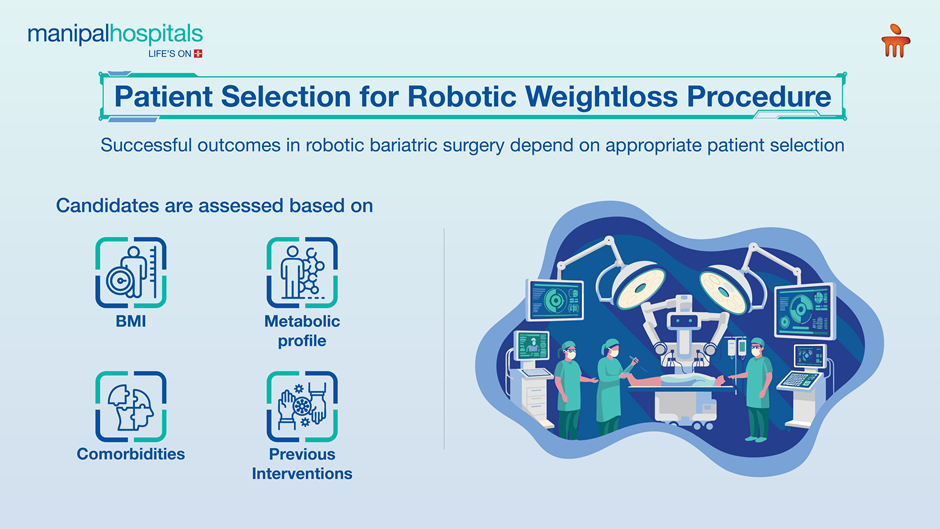
While technology is crucial, outcomes in robotic bariatric surgery are ultimately driven by surgical expertise. Experienced teams understand the nuances of robotic platforms, patient selection, and long-term metabolic management. This is where centres offering advanced minimally invasive bariatrics truly differentiate themselves.
At a Leading Bariatric Surgery Hospital in Delhi-Ncr, Our Expert Surgeons Combine Advanced Robotic Technology and Multidisciplinary Care for Safe, Effective Weight-Loss Outcomes. Their experience reflects current obesity surgery trends while maintaining a strong focus on patient safety and long-term success.
Long-Term Outcomes and Quality of Life
Sustained weight loss and metabolic improvement are the ultimate goals of robotic bariatric surgery. Studies increasingly show durable outcomes when surgery is combined with structured follow-up and lifestyle modification. Patients benefit not only from weight reduction but also from improved mobility, mental well-being, and overall quality of life.
These outcomes reinforce why minimally invasive bariatrics are central to modern obesity surgery trends, offering solutions that extend well beyond the operating room.
Conclusion: Redefining Obesity Treatment Through Robotics
The rise of robotic bariatric surgery represents a significant leap forward in obesity care. By advancing precision, enhancing safety, and improving metabolic outcomes, robotic platforms are reshaping the landscape of minimally invasive bariatrics. As obesity surgery trends continue to evolve, robotics stands at the forefront of innovation, offering patients effective, reliable, and future-ready solutions.
With experienced teams like our bariatric surgeons in Delhi-NCR adopting these advancements responsibly, robotic weight loss procedures are set to redefine standards of care in obesity and metabolic surgery.
FAQ's
Robotic bariatric surgery uses advanced robotic systems that provide surgeons with enhanced dexterity, tremor filtration, and high-definition 3D visualisation. Unlike conventional laparoscopy, this technology allows greater precision, especially in complex anatomy, improving safety and consistency in minimally invasive bariatrics.
Robotic platforms enable controlled, precise movements within confined spaces, reducing tissue trauma and surgical complications. This makes robotic bariatric surgery particularly beneficial for patients with high BMI, scar tissue, or complex revisional requirements.
Robotic bariatric surgery supports accurate pouch creation and anastomosis, which leads to consistent metabolic improvements. Patients often experience significant improvement or resolution of type 2 diabetes, hypertension, dyslipidaemia, and obstructive sleep apnoea.
Robotic staplers offer optimal tissue compression, real-time feedback, and precise stapling control. These features enhance staple-line integrity, reduce leak risks, and improve haemostasis, reinforcing safety standards in minimally invasive bariatrics.
Ideal candidates are assessed through a multidisciplinary approach considering BMI, metabolic conditions, previous surgeries, and overall health. Robotic bariatric surgery is especially suited for patients requiring complex primary or revisional procedures under comprehensive obesity management programmes.
Share this article on: