6 Min Read
Understanding Pacemakers and ICDs: Lifelines for Your Heart
Our hearts beat rhythmically, a complex ballet of electrical impulses that keeps us alive. But sometimes, this intricate system can falter, leading to irregular heartbeats or arrhythmias. This is where modern medical marvels like pacemakers and implantable cardioverter-defibrillators (ICDs) step in, offering a second chance at a healthy, active life. These small, sophisticated devices play a pivotal role in managing various heart rhythm disorders, ensuring your heart maintains its crucial beat.
At Manipal Hospitals, our commitment is to provide cutting-edge cardiac care, and understanding these devices is key to empowering our patients. Millions worldwide have benefited from this technology, with studies consistently showing a remarkable 95% success rate for device implantations, leading to significant improvements in patient well-being.
Synopsis
Who Needs a Pacemaker?
A pacemaker is a small device placed under the skin near the collarbone, connected to the heart by tiny wires. Its primary function is to regulate a slow or irregular heart rate (bradycardia) by sending electrical pulses to prompt the heart to beat at a normal pace.
Conditions Requiring Pacemakers
-
Bradycardia: A heart rate that is too slow, often less than 60 beats per minute, which can cause symptoms like dizziness, fatigue, and fainting.
-
Heart Block: A condition where the electrical signals that control the heartbeat are partially or completely blocked, preventing the heart's chambers from communicating effectively.
-
Sick Sinus Syndrome: A malfunction of the heart's natural pacemaker (the sinus node), leading to irregular heart rhythms, which can be too fast, too slow, or alternate between the two.
-
Post-Heart Attack Complications: Sometimes, damage from a heart attack can impair the heart's electrical system.
Patients experiencing persistent symptoms such as severe fatigue, shortness of breath, lightheadedness, or fainting spells should consult a cardiologist. Timely diagnosis and intervention with a pacemaker can dramatically improve quality of life, allowing individuals to resume their daily activities without constant worry about their heart rate. In fact, over 70% of patients report a significant improvement in their energy levels and reduction in symptoms post-implantation.
Who Needs an ICD?
An Implantable Cardioverter-Defibrillator (ICD) is similar in size and placement to a pacemaker, but its function is more complex. While it can also act as a pacemaker, its main role is to detect and correct dangerously fast heart rhythms (tachycardia) that can lead to sudden cardiac arrest. The `ICD device heart` is designed to deliver an electrical shock (defibrillation) to restore a normal heart rhythm when necessary.
Conditions Requiring ICDs
-
Ventricular Tachycardia (VT) and Ventricular Fibrillation (VF): These are life-threatening arrhythmias where the lower chambers of the heart beat too rapidly or quiver ineffectively, preventing proper blood circulation.
-
Survivors of Sudden Cardiac Arrest: For individuals who have survived a sudden cardiac arrest, an ICD is crucial for preventing future episodes.
-
High Risk of Sudden Cardiac Arrest: Patients with severe heart failure, certain genetic heart conditions, or previous heart attacks that have left significant scarring are often candidates for an ICD.
The decision to implant an `ICD device heart` is a critical one, often made for patients at high risk of sudden cardiac death. These devices have been shown to reduce the risk of mortality by up to 50% in carefully selected patient populations, providing peace of mind and protection against life-threatening events.
The Pacemaker & ICD Implantation Procedure
The 'pacemaker surgery' or ICD implantation is a routine procedure performed by our highly skilled cardiac electrophysiologists. At Manipal Hospitals, patient safety and comfort are our top priorities throughout the process.
Pre-Procedure Evaluation
Before the 'pacemaker surgery', you will undergo a thorough evaluation, including electrocardiograms (ECGs), echocardiograms, and potentially an electrophysiology study to precisely map your heart's electrical activity. This helps our team determine the best type of device and optimal placement. Our cardiologists in Delhi-NCR ensure every detail is meticulously planned.
The Implantation Procedure
The procedure is typically performed under local anaesthesia with sedation, meaning you will be awake but relaxed. A small incision is made near the collarbone, and the leads (thin insulated wires) are guided through a vein into the heart. The tips of these leads are then attached to the heart muscle. Once the leads are in place, they are connected to the device, which is then inserted into a small pocket created under the skin. The incision is then closed. The entire `pacemaker surgery` usually takes about 1-2 hours.
Immediate Post-Procedure Recovery
After the 'pacemaker surgery', you will be monitored closely for a few hours or overnight. Most patients can return home within 24-48 hours. You might experience some soreness or bruising at the incision site, which is normal and can be managed with pain medication. Before discharge, the device will be thoroughly checked to ensure it's functioning correctly.
Regarding 'pacemaker surgery cost', it can vary depending on the type of device, hospital stay, and individual patient needs. At Manipal Hospitals, we believe in transparent pricing and will provide a detailed cost estimate during your consultation, ensuring you have all the necessary information.
Life After Implantation
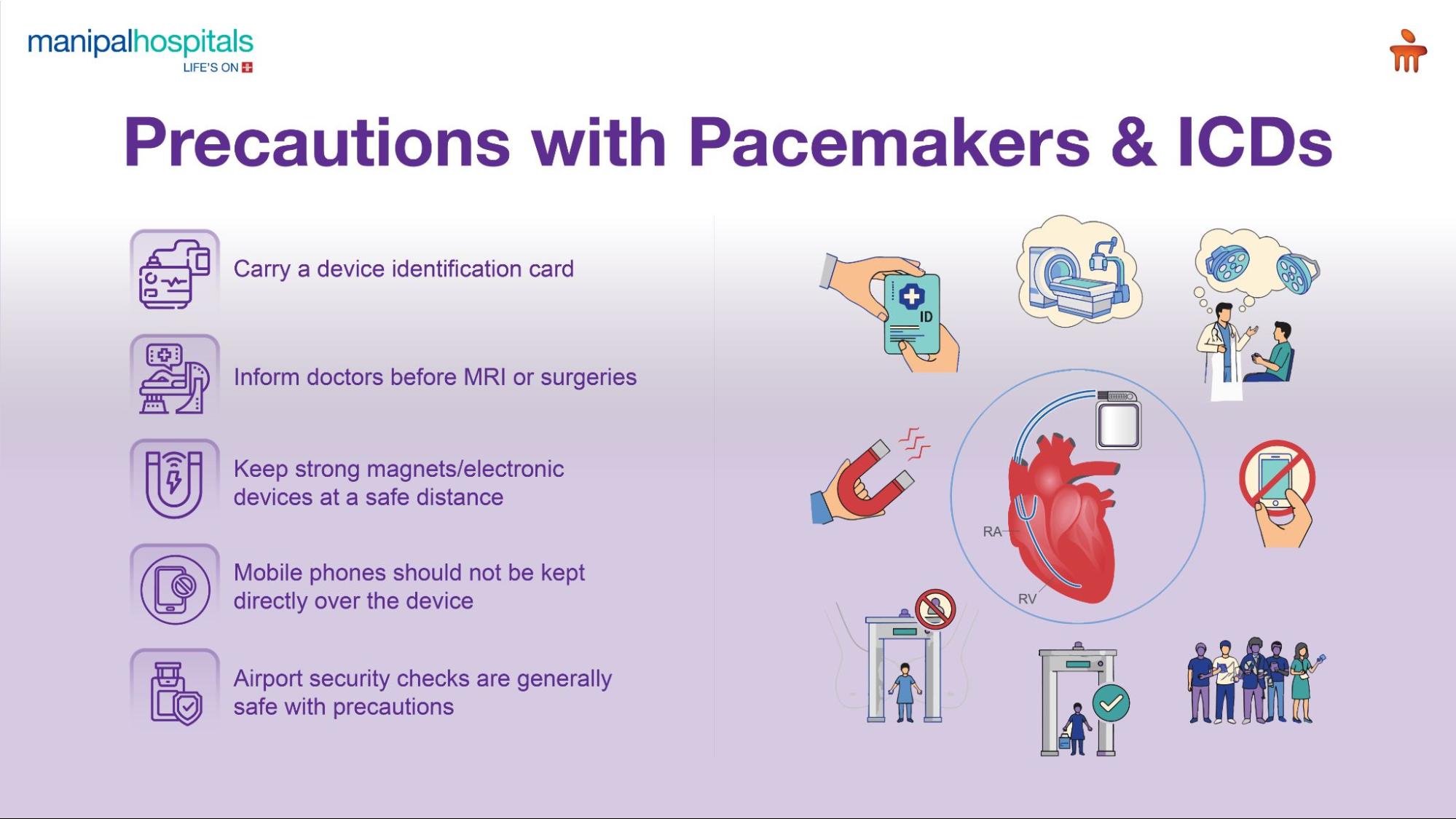
Living with a pacemaker or ICD generally allows for a return to a full and active lifestyle, albeit with a few precautions. The `pacemaker benefits` extend beyond just regulating heart rhythm; they significantly enhance quality of life.
Adapting to Life with Your Device
Most people can resume their normal activities, including work, hobbies, and exercise, within a few weeks. The devices are designed to be durable and blend seamlessly into your daily life. It's crucial to be aware of strong electromagnetic fields, which can sometimes interfere with the device. Your doctor will provide specific guidance on this. Many patients report feeling more energetic and secure, knowing their heart is constantly monitored.
Follow-up Care and Monitoring
Regular follow-up appointments are essential to ensure your device is functioning optimally and to make any necessary programming adjustments. These checks can often be done remotely, with data transmitted from your device to our clinic. Our cardiologists in Delhi-NCR utilise advanced remote monitoring systems to keep a close watch on your heart health, ensuring proactive care.
Why Choose Manipal Hospitals for Cardiac Care?
At Manipal Hospitals, we are dedicated to providing comprehensive and compassionate cardiac care. Our team of experienced cardiologists, cardiac electrophysiologists, and support staff are equipped with state-of-the-art technology and a patient-centric approach.
When it comes to complex procedures like pacemaker and ICD implantation, expertise matters. Our cardiologists in Delhi-NCR are renowned for their precision and successful outcomes, treating thousands of patients annually. We focus not just on the procedure, but on your overall well-being and long-term heart health. Our commitment to excellence means we continually strive for the best `pacemaker benefits` for every individual.
Conclusion
With a legacy of trust and innovation, Manipal Hospitals ensures that you receive world-class treatment right here. Our cardiologists in Delhi-NCR are leaders in the field, ensuring you have access to the latest advancements in cardiac rhythm management. Trust our cardiologists in Delhi-NCR to provide the highest standard of care.
If you are experiencing symptoms related to heart rhythm disorders or have been recommended for a pacemaker or ICD, it's crucial to seek timely medical advice. Book an appointment with our expert cardiologists at Manipal Hospitals today.
FAQ's
The battery life typically ranges from 7 to 10 years for pacemakers and 5 to 7 years for ICDs, depending on how often the device needs to deliver therapy. Regular follow-up checks monitor battery status, and a replacement procedure (which is less invasive than the initial implantation) is scheduled when needed.
Yes, most patients can travel normally. It's advisable to carry your device identification card, especially when going through airport security. Inform security personnel about your device, and they may use a hand-held wand (which should not be held directly over the device for prolonged periods) or conduct a manual pat-down.
No, you typically will not feel the pacemaker working once it's implanted. Its electrical pulses are very subtle. For ICDs, you might feel a brief, mild sensation if it delivers a pacing pulse for a fast heart rate, and a definite jolt if it delivers a defibrillation shock, which is a life-saving event.
The `pacemaker surgery cost` can vary significantly based on factors like the type of device, hospital charges, pre-operative tests, and post-operative care. Manipal Hospitals provides detailed cost estimates during your consultation and offers various payment options and insurance assistance. We strive to make advanced cardiac care accessible.
Yes, you can use cell phones and microwave ovens. For cell phones, it's recommended to hold the phone to the ear opposite the device and avoid carrying it in a shirt pocket directly over the device. Microwave ovens pose no risk to pacemakers or ICDs.
Share this article on:


--What-This-ECG-Finding-Means-for-Your-Heart-Health.webp "left bundle branch block")