




 6 Min Read
--What-This-ECG-Finding-Means-for-Your-Heart-Health.webp "left bundle branch block")
A finding on an electrocardiogram (ECG) can sometimes raise questions and concerns, even if you feel perfectly healthy. One such finding is a Left Bundle Branch Block (LBBB). At Manipal Hospitals, we believe in empowering our patients with clear, accurate information about their heart health. This detailed guide, prepared by our cardiologists in Delhi-NCR, aims to demystify LBBB, explaining what it is and what steps you can take.
Synopsis
Understanding Your Heart's Electrical System
Your heart beats thanks to a sophisticated electrical system. This system generates tiny electrical impulses that travel through specialised pathways, telling your heart muscles when to contract. These impulses start in the right atrium, pass through the AV node, and then travel down the "His bundle," which splits into two main branches: the right bundle branch and the left bundle branch. These branches carry the electrical signal to the right and left ventricles, respectively, ensuring a coordinated and efficient pump.
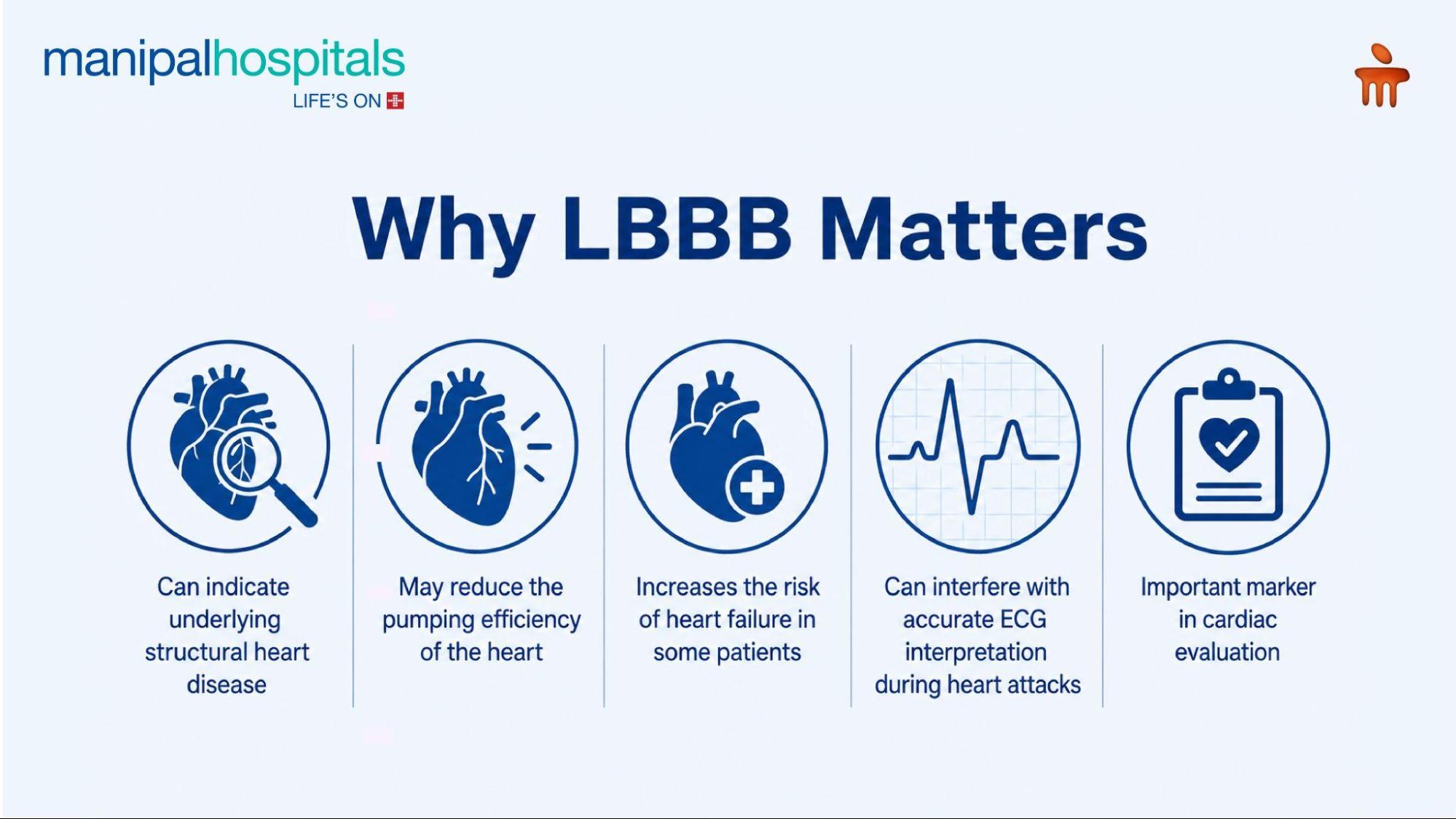
What Exactly is Left Bundle Branch Block (LBBB)?
A Left Bundle Branch Block (LBBB) occurs when there's a delay or complete interruption in the electrical impulse's journey through the left bundle branch. Instead of flowing directly, the signal has to take a detour, often activating the right ventricle first, then spreading to the left ventricle. This delay changes the pattern of electrical activity on an ECG, giving it a distinctive appearance. While it sounds alarming, an isolated Left Bundle Branch Block ECG finding doesn't always signify an immediate crisis, but it warrants thorough evaluation.
Uncovering the Causes of LBBB
The presence of Left Bundle Branch Block often points to an underlying heart condition, though it can sometimes occur in individuals with no apparent heart disease, particularly in older adults. Understanding the Left Bundle Branch Block causes is crucial for proper management. Common causes include:
-
Coronary Artery Disease (CAD): Blockages in the heart's arteries can damage the left bundle branch.
-
High Blood Pressure (Hypertension): Long-standing uncontrolled high blood pressure can strain and thicken the heart muscle, affecting electrical pathways.
-
Heart Valve Disease: Conditions affecting the aortic or mitral valves can lead to heart muscle changes.
-
Heart Attack (Myocardial Infarction): Damage to heart tissue from a heart attack can interrupt electrical signals.
-
Heart Failure: A weakened heart muscle can struggle with electrical conduction.
-
Cardiomyopathy: Diseases of the heart muscle itself can impair its electrical system.
-
Inflammation of the Heart Muscle (Myocarditis): Infection or inflammation can temporarily or permanently damage the conduction system.
Remarkably, managing underlying conditions like hypertension can reduce the risk of further cardiovascular events by 20-30%, highlighting the importance of early diagnosis and intervention.
Recognising the Symptoms of LBBB
Many individuals with Left Bundle Branch Block experience no symptoms at all, especially if the block is new or if there's no significant underlying heart disease. The LBBB is often discovered incidentally during a routine ECG. However, if symptoms do occur, they are typically related to the underlying heart condition rather than the LBBB itself. Potential Left Bundle Branch Block symptoms can include:
-
Dizziness or lightheadedness
-
Fainting (syncope)
-
Shortness of breath, especially with exertion
-
Chest pain or discomfort
If you experience any of these symptoms, it's essential to consult a healthcare professional. Our cardiologists in Delhi-NCR are equipped with state-of-the-art diagnostic tools to accurately assess your condition.
Diagnosing LBBB: The ECG's Crucial Role
The primary diagnostic tool for LBBB is an electrocardiogram (ECG). A standard 12-lead ECG provides a snapshot of your heart's electrical activity. On a Left Bundle Branch Block ECG, specific patterns, such as a widened QRS complex and altered T waves, indicate the presence of the block. Once LBBB is identified, further investigations are usually conducted to determine the underlying cause and assess the overall health of your heart.
These additional tests may include:
-
Echocardiogram: An ultrasound of the heart to evaluate its structure, function, and pumping ability.
-
Stress Test: To assess how your heart performs under physical stress.
-
Cardiac MRI: Provides detailed images of the heart muscle.
-
Blood Tests: To check for markers of heart damage or other conditions.
Early and accurate diagnosis allows for timely management, which is vital for maintaining optimal heart health.
Navigating Treatment Options for LBBB
There is no specific "cure" for the Left Bundle Branch Block itself. Instead, Left Bundle Branch Block treatment focuses primarily on managing the underlying heart conditions that cause it. For instance:
-
Medications: To control blood pressure, manage cholesterol, treat heart failure, or address other cardiac issues.
-
Lifestyle Modifications: Adopting a heart-healthy diet, regular exercise, maintaining a healthy weight, quitting smoking, and managing stress are crucial for all heart conditions.
-
Cardiac Resynchronisation Therapy (CRT): In patients with LBBB and moderate to severe heart failure, CRT involves implanting a special pacemaker to resynchronize the ventricles, improving the heart's pumping efficiency. Studies show that CRT can significantly improve symptoms and quality of life in up to 70% of carefully selected patients.
-
Coronary Revascularisation: If CAD is the cause, procedures like angioplasty and stenting or bypass surgery may be necessary.
Consulting with expert cardiac specialists is paramount to determine the most effective treatment plan tailored to your specific situation. Our cardiologists in Delhi-NCR are leaders in advanced cardiac care.
Living with LBBB: Outlook and Life Expectancy
The prognosis and Left Bundle Branch Block life expectancy depend largely on the presence and severity of any underlying heart disease. If LBBB is found in an otherwise healthy individual with no other cardiac issues, it may not significantly impact their life expectancy. However, if LBBB is associated with conditions like severe heart failure, advanced coronary artery disease, or significant structural heart disease, the prognosis is linked to the management of these conditions.
Regular follow-ups with your cardiologist are essential to monitor your heart health and adjust treatment as needed. Proactive management of risk factors and underlying conditions can help prevent progression and improve your long-term outlook. With advancements in cardiac care, many individuals with LBBB lead full and active lives. At Manipal Hospitals, we are committed to providing comprehensive care and support to help you achieve the best possible quality of life.
If you are experiencing symptoms or have been diagnosed with LBBB, it's crucial to seek timely medical advice. Book an appointment with our expert cardiologists at Manipal Hospitals today. Our team, including our cardiologists in Delhi-NCR, is dedicated to providing personalised and advanced cardiac care.
FAQ's
LBBB itself is often a sign of an underlying heart condition. Its seriousness depends on what's causing it. If found in an otherwise healthy individual, it may not be serious, but it always warrants further investigation.
In most cases, LBBB is a permanent finding. However, in rare instances, such as after an acute inflammation or injury, it can resolve if the underlying cause is transient.
LBBB itself does not typically require immediate treatment. The focus is on diagnosing and treating any underlying heart condition that may be causing the LBBB.
In many cases, yes. However, your doctor will advise you on appropriate exercise levels based on your overall heart health and any underlying conditions. Always follow your cardiologist's recommendations.
LBBB itself is not typically hereditary. However, some underlying heart conditions that cause LBBB (like certain types of cardiomyopathy) can have a genetic component.
Share this article on:





