10 Min Read
_of_the_Hip-_Why_Bone_Dies_What_Can_Save_It.webp "avascular necrosis symptoms")
Hip pain that refuses to go away is never something to ignore. While arthritis is often blamed, another serious condition may quietly damage the joint long before symptoms become unbearable — avascular necrosis (AVN) of the hip. Also known as osteonecrosis, AVN occurs when the blood supply to the bone is disrupted, causing bone tissue to die gradually. Without timely treatment, the hip joint can collapse, severely affecting mobility and quality of life.
Recognising avascular necrosis symptoms early can make a significant difference in preserving the natural joint and avoiding extensive surgery. In this detailed guide, we explain avascular necrosis causes, early warning signs, treatment options, recovery timelines, and the latest advances that can save the hip before permanent damage occurs.
Synopsis
- What Is Avascular Necrosis of the Hip?
- Avascular Necrosis Symptoms: Early Signs You Should Never Ignore
- What Causes Avascular Necrosis of the Hip?
- How Fast Does Avascular Necrosis Progress?
- Stages of Hip Avascular Necrosis
- How Is Avascular Necrosis Diagnosed?
- Can Avascular Necrosis Be Treated Without Surgery?
- Hip Core Decompression Surgery: Can It Save the Joint?
- Does Hip Replacement Cure Avascular Necrosis?
- How Long Can You Live With Avascular Necrosis?
- Recovery After AVN Treatment
- When Should You See a Specialist?
- Final Thoughts
What Is Avascular Necrosis of the Hip?
Avascular necrosis of the hip is a condition where reduced blood flow damages the femoral head — the ball-shaped upper part of the thigh bone that fits into the hip socket. Since bone cells depend on continuous blood circulation for survival, an interrupted blood supply leads to bone death, weakening the structure over time.
As the condition progresses, the smooth surface of the hip joint begins to collapse, resulting in severe pain, stiffness, limping, and loss of movement. Many patients initially mistake avascular necrosis symptoms for muscle strain or routine joint pain, delaying diagnosis until the disease becomes advanced.
Avascular Necrosis Symptoms: Early Signs You Should Never Ignore
One of the biggest challenges with AVN is that symptoms may remain mild in the early stages. However, as bone damage increases, the discomfort becomes more noticeable.
Common avascular necrosis symptoms include:
-
Persistent groin pain or deep hip pain
-
Pain while walking, climbing stairs, or standing
-
Reduced hip mobility and stiffness
-
Limping during movement
-
Pain radiating to the thigh, buttock, or knee
-
Difficulty sitting cross-legged
-
Worsening pain during weight-bearing activities
Patients with avascular necrosis hip symptoms often describe a dull ache that gradually intensifies over months. In advanced stages, even resting may become painful.
Specialists at our orthopaedics in Delhi-NCR frequently diagnose AVN in individuals who initially assumed their pain was due to ageing or overexertion.
What Causes Avascular Necrosis of the Hip?
Understanding what causes avascular necrosis of the hip is essential because the disease is often linked to underlying medical conditions or lifestyle factors.
Major avascular necrosis causes include:
1. Long-Term Steroid Use
Excessive corticosteroid use is among the leading AVN hip causes. Steroids can increase fat deposits in blood vessels, reducing blood supply to the bone.
2. Excessive Alcohol Consumption
Heavy alcohol intake damages blood circulation and weakens bone health over time.
3. Trauma or Hip Injury
Fractures or hip dislocations may injure blood vessels supplying the femoral head.
4. Blood Disorders
Conditions such as sickle cell disease can block blood flow to bones.
5. Autoimmune Disorders
Diseases like lupus increase the risk of impaired circulation.
6. Radiation or Chemotherapy
Cancer treatments may weaken bone tissue and affect vascular supply.
7. Idiopathic AVN
In some patients, no clear cause is identified despite extensive evaluation.
Understanding avascular necrosis causes allows doctors to customise treatment while also preventing further progression.
How Fast Does Avascular Necrosis Progress?
One of the most common concerns patients ask is: " How fast does avascular necrosis progress?
The progression rate varies significantly depending on:
-
Stage of diagnosis
-
Underlying cause
-
Patient age
-
Bone involvement extent
-
Lifestyle factors
In some individuals, AVN may worsen gradually over several years. In others, rapid joint collapse can occur within months. Once the femoral head begins collapsing, irreversible arthritis develops quickly.
This is why early detection of avascular necrosis symptoms is critical. MRI scans can identify AVN before X-rays show visible damage.
At our orthopaedics in Delhi-NCR, early-stage AVN is increasingly being detected during routine investigations for unexplained hip pain, allowing more joint-preserving treatment options.
Stages of Hip Avascular Necrosis
Stage 1: Silent Damage
-
Blood supply decreases
-
MRI detects early bone injury
-
X-rays appear normal
-
Mild or no symptoms
Stage 2: Bone Weakening
-
Structural bone changes begin
-
Pain increases during activity
-
Walking discomfort develops
Stage 3: Femoral Head Collapse
-
The bone surface starts flattening
-
Severe avascular necrosis hip symptoms occur
-
Limping and restricted movement worsen
Stage 4: Advanced Arthritis
-
Joint destruction develops
-
Constant pain
-
Major mobility limitations
-
Hip replacement is often required
How Is Avascular Necrosis Diagnosed?
Diagnosis typically involves:
Clinical Evaluation
An orthopaedic specialist assesses:
-
Pain pattern
-
Movement restriction
-
Walking ability
-
Medical history
Imaging Tests
X-Ray
Useful in moderate to advanced stages.
MRI Scan
The gold standard for early AVN detection.
CT Scan
Helps evaluate bone collapse severity.
Bone Scan
Sometimes used to assess blood supply changes.
Consulting our bone specialist in Delhi-NCR early can significantly improve treatment outcomes before permanent joint damage occurs.
Can Avascular Necrosis Be Treated Without Surgery?
Yes — but mainly in early stages.
Non-Surgical Treatments Include:
-
Activity modification
-
Weight-bearing restrictions
-
Physiotherapy
-
Pain management medications
-
Bone-strengthening medicines
-
Lifestyle modification
-
Alcohol and steroid reduction
However, conservative treatment mainly slows progression rather than reversing existing bone death.
Hip Core Decompression Surgery: Can It Save the Joint?
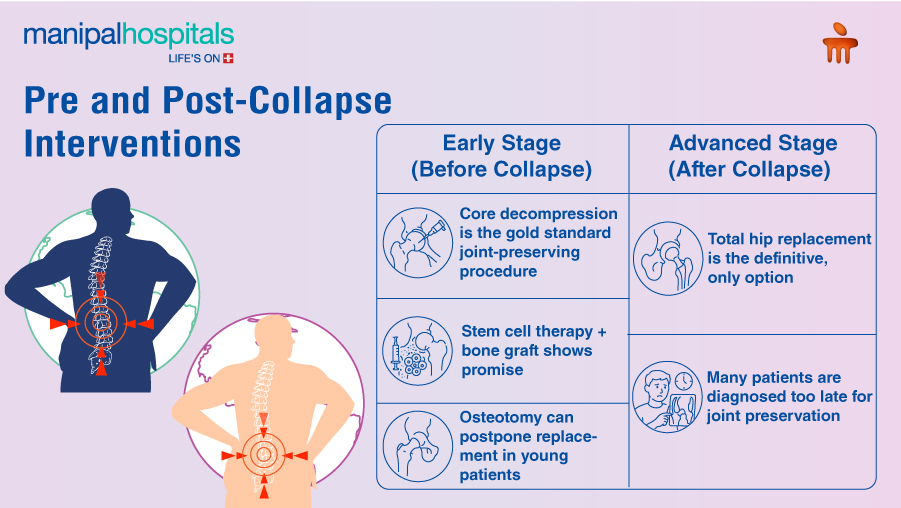
For early-stage AVN, hip core decompression surgery is one of the most effective joint-preserving procedures.
What Is Hip Core Decompression Surgery?
The procedure involves drilling small channels into the affected bone to:
-
Reduce internal bone pressure
-
Improve blood circulation
-
Stimulate healing
-
Delay joint collapse
In some cases, stem cell therapy or bone grafting may also be added.
Benefits of Hip Core Decompression Surgery
-
Preserves the natural hip joint
-
Reduces pain
-
Improves blood supply
-
Delays or avoids hip replacement
-
Faster recovery in selected patients
Patients diagnosed early often achieve significantly better outcomes after hip core decompression surgery.
At our orthopaedics in Delhi-NCR, minimally invasive techniques are increasingly helping younger patients retain hip function for longer durations.
Does Hip Replacement Cure Avascular Necrosis?
Another common question is: Does hip replacement cure avascular necrosis?
In advanced AVN, where the femoral head has collapsed, total hip replacement becomes the most reliable treatment.
-
Hip Replacement Benefits
-
Removes damaged joint surfaces
-
Eliminates severe pain
-
Restores mobility
-
Improves quality of life
-
Allows return to daily activities
Modern hip replacement implants are highly durable and provide excellent long-term outcomes.
However, while hip replacement effectively treats advanced joint damage, preserving the natural joint through early diagnosis remains the ideal goal whenever possible.
How Long Can You Live With Avascular Necrosis?
Patients frequently wonder: how long can you live with avascular necrosis?
AVN itself is not usually life-threatening. However, untreated disease can severely affect:
-
Mobility
-
Independence
-
Mental well-being
-
Daily functioning
Many people live long lives with AVN, especially when diagnosed early and managed appropriately. The real concern is progressive disability and chronic pain if treatment is delayed.
Timely management of our orthopaedics in Delhi-NCR can help patients maintain mobility and avoid severe joint destruction.
Recovery After AVN Treatment
Recovery depends on the treatment type.
After Core Decompression
-
Partial weight-bearing for several weeks
-
Physiotherapy rehabilitation
-
Gradual return to activity
-
Recovery may take 3–6 months
After Hip Replacement
-
Walking often resumes within days
-
Significant pain relief occurs quickly
-
Most patients regain normal mobility within weeks
Long-term outcomes improve substantially with:
-
Weight management
-
Smoking cessation
-
Controlled steroid use
-
Regular physiotherapy
When Should You See a Specialist?
Seek medical attention immediately if you experience:
-
Persistent hip or groin pain
-
Limping
-
Restricted hip movement
-
Pain worsening with walking
-
Difficulty bearing weight
Ignoring avascular necrosis symptoms may allow irreversible joint collapse to develop silently.
Final Thoughts
Avascular necrosis of the hip is a serious but treatable condition when detected early. Understanding avascular necrosis causes, identifying avascular necrosis symptoms promptly, and seeking timely orthopaedic care can help preserve the joint and maintain long-term mobility.
Whether through lifestyle modification, hip core decompression surgery, or advanced hip replacement techniques, modern treatment options continue to improve outcomes for AVN patients. Early diagnosis remains the key to saving the hip before irreversible damage occurs.
FAQ's
Early avascular necrosis symptoms usually include mild groin pain, hip stiffness, and discomfort during walking or weight-bearing activities.
Common causes include steroid use, alcohol consumption, trauma, blood disorders, autoimmune diseases, and impaired blood supply to the femoral head.
The progression rate varies widely. Some patients deteriorate over the years, while others experience rapid joint collapse within months.
Hip replacement effectively treats advanced AVN by replacing the damaged joint, relieving pain, and restoring mobility.
Yes, when performed in early stages, hip core decompression surgery can delay or sometimes avoid the need for total hip replacement.
Share this article on: