7 Min Read
Memory loss can be a worrying experience. While occasional forgetfulness is a normal part of aging, persistent and progressive changes could possibly be dementia symptoms. This blog aims to empower the readers to recognise early dementia symptoms and understand underlying causes, ensuring timely intervention.
Synopsis
What is dementia and how does it differ from Alzheimer's?
Dementia is an umbrella term for a decline in cognitive functions like memory, thinking, and reasoning, severe enough to interfere with daily life. It is not a specific disease but a syndrome. Crucially, ‘Alzheimer's vs Dementia’ is a common point of confusion. While Dementia is the general term, Alzheimer's disease is the most common specific cause, accounting for 60-80% of cases. It is vital to note that dementia is not a normal part of aging, and this underscores the significance of understanding dementia vs normal aging changes.
Dementia Vs normal aging
While memory loss in old age is common, severe or progressive decline is not. Forgetting a name occasionally is normal, but signs of dementia involve more persistent and debilitating cognitive decline. Recognizing these early dementia symptoms is key for timely diagnosis and management.
Causes of memory loss: Beyond dementia
Memory loss is not always dementia. While neurodegenerative diseases like Alzheimer's are primary causes, sudden memory loss causes can include reversible conditions such as:
-
Medication side effects
-
Nutritional deficiencies (like B12)
-
Thyroid problems
-
Infections (UTIs)
-
Head injuries
-
Emotional disorders like depression.
Even memory loss in young adults calls for a comprehensive evaluation to determine the cause. They can occur due to:
-
Stress
-
Sleep deprivation
-
More serious, though rare, conditions
Key dementia symptoms to watch for
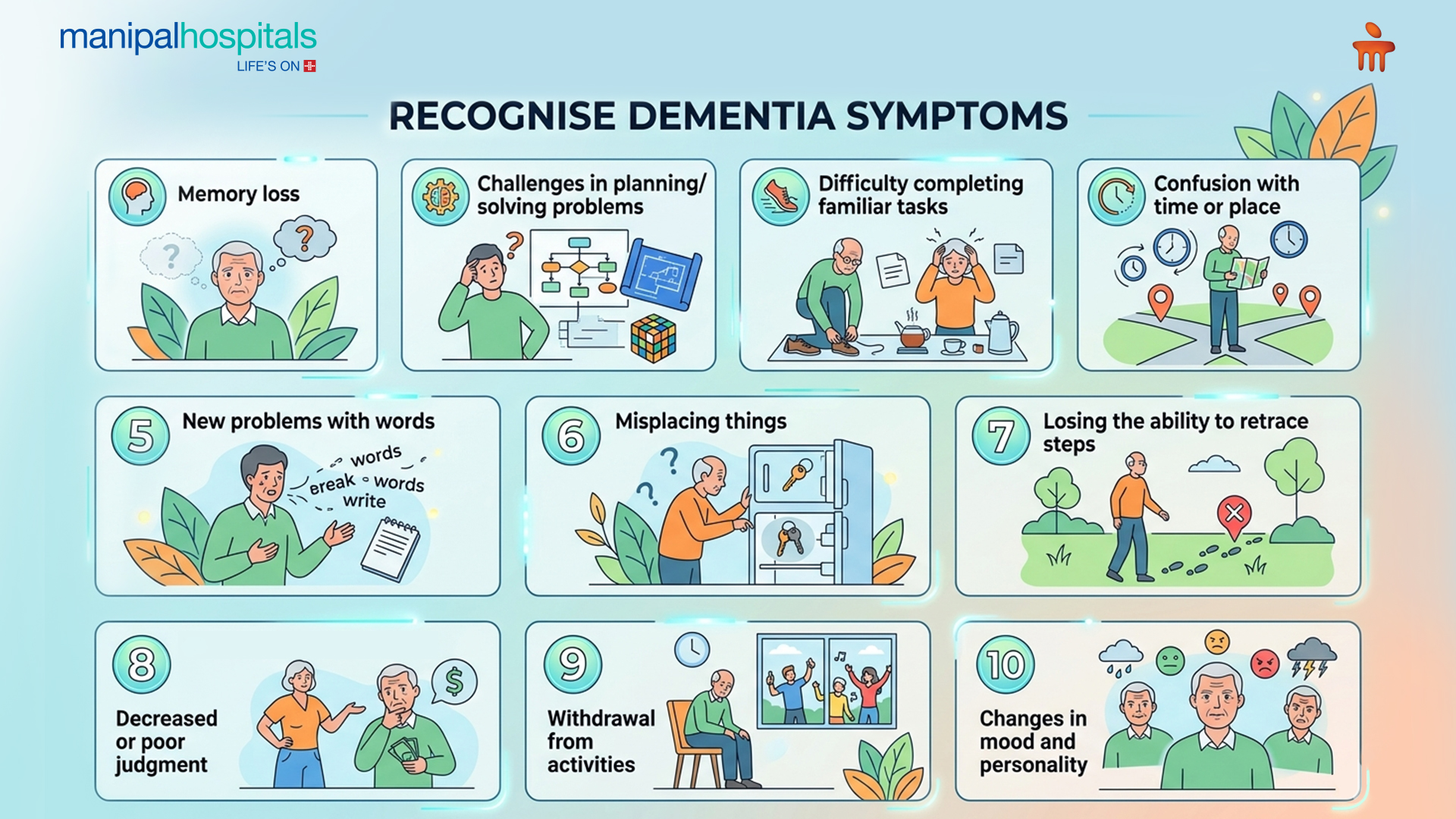
Recognising the signs of dementia is the first step towards seeking help. These dementia symptoms often develop gradually:
-
Memory loss that disrupts daily life- Forgetting recently learned information, important dates, or asking the same questions repeatedly.
-
Challenges in planning or solving problems- Difficulty managing finances or following instructions.
-
Difficulty completing familiar tasks- Trouble driving a familiar route or remembering game rules.
-
Confusion with time or place- Losing track of dates, seasons, or where they are.
-
New problems with words- Trouble following conversations or calling things by the wrong name.
-
Misplacing things and losing the ability to retrace steps- Putting items in unusual places.
-
Decreased or poor judgment- Making poor decisions.
-
Withdrawal from activities- Losing interest in hobbies or social engagements.
-
Changes in mood and personality- Becoming confused, suspicious, or anxious.
Managing memory changes
Managing memory changes involves adopting simple daily strategies, maintaining a healthy lifestyle, and seeking medical guidance when needed to support cognitive well-being:
-
Seek professional medical evaluation early (can improve management by up to 30%)
-
Maintain a healthy lifestyle
-
Engage in mentally stimulating activities
-
Create structured routines
-
Do not ignore persistent dementia symptoms
-
Engage in social interaction
Conclusion
Understanding and addressing dementia symptoms requires compassion and expert guidance. While there is no cure for many progressive forms, early diagnosis allows for medical management, potentially slowing progression and helping families plan for the future. Studies show early intervention can extend independence by 1.5 years.
If you or a loved one are experiencing persistent memory loss in old age or concerning cognitive changes at any age, seek timely medical advice from experts at Manipal Hospitals. Book an appointment with our expert neurologists at Manipal Hospitals Broadway for a comprehensive evaluation and personalised care plan.
FAQ's
No, memory loss is not always a sign of dementia. Stress, poor sleep, medications, vitamin deficiencies, and treatable conditions like thyroid disorders can cause temporary memory issues. A medical evaluation helps identify the underlying cause.
Dementia symptoms caused by reversible factors like vitamin deficiencies, thyroid issues, medications, or infections may improve with proper treatment. However, progressive dementias like Alzheimer’s cannot currently be reversed but can be managed with treatment.
While dementia cannot always be prevented, a healthy lifestyle may reduce risk. Regular exercise, a balanced diet, mental and social activity, managing health conditions, adequate sleep, and avoiding smoking or excessive alcohol can support brain health.
Dementia diagnosis involves medical history, physical and neurological examinations, cognitive tests, blood tests, and brain imaging to identify causes and changes. Manipal Hospitals provides advanced diagnostic support for accurate and timely assessment.
Caregivers play a vital role but may face emotional and physical challenges. Support through education, counselling, respite care, and support groups can help. Manipal Hospitals offers guidance and connects caregivers with resources to support their journey.
Share this article on:


--Symptoms,-Stroke-Risk-and-Modern-Treatment-Options.webp "Atrial Fibrillation (AFib): Symptoms, Stroke Risk and Modern Treatment Options")