7 Min Read
Dealing with complex medical conditions like blood cancer can feel challenging and confusing. This guide demystifies blood cancers by focusing on the three primary types of blood cancer- Leukaemia, Lymphoma, and Myeloma. It provides clarity and insights into these conditions, their symptoms, diagnosis, and treatment approaches to help patients and their families understand the disease better and make informed decisions about care and management.
Synopsis
How many types of blood cancer are there?
Blood cancers originate in bone marrow or the lymphatic system when abnormal blood cells grow uncontrollably, disrupting normal cell function. Unlike solid tumours, they circulate throughout the body. Understanding them is crucial for effective blood cancer treatment. When discussing blood cancer, the three main categories are referenced.
What are the 3 types of blood cancer?
Leukaemia
Leukaemia is a cancer of blood-forming tissues, characterised by abnormal white blood cell production. These cells disrupt infection fighting and normal blood cell production. Common types of Leukaemia include the Acute (Acute Lymphoblastic Leukemia or ALL and Acute Myeloid Leukemia or AML) and Chronic (Chronic Lymphocytic Leukemia or CLL, Chronic Myeloid Leukemia or CML) types. Early diagnosis and modern blood cancer treatment have improved outcomes.
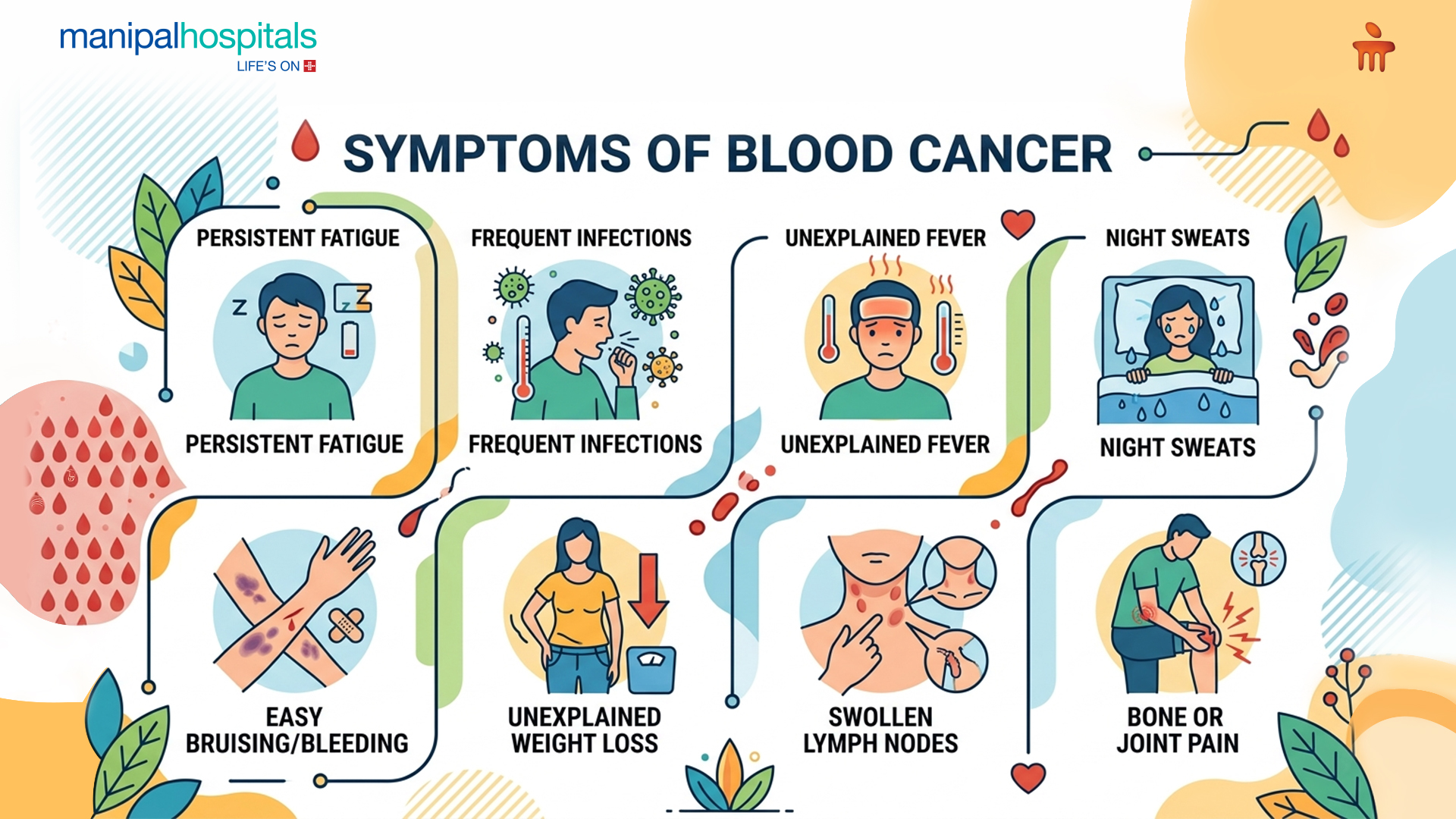
Symptoms of Leukaemia are-
-
Persistent fatigue
-
Frequent infections
-
Easy bruising or bleeding
-
Unexplained weight loss
-
Swollen lymph nodes
Lymphoma
Lymphoma begins in infection-fighting lymphocytes within lymph nodes and other immune tissues. The two main types of Lymphoma are Hodgkin Lymphoma (HL) and Non-Hodgkin Lymphoma (NHL). HL often has high early-stage survival, while NHL encompasses many subtypes with varying prognosis.
Symptoms of Lymphoma can be-
-
Swollen lymph nodes
-
Fever
-
Night sweats
-
Unexplained weight loss
Myeloma
Myeloma, specifically Multiple Myeloma, is a cancer of plasma cells in the bone marrow. Myeloma cells accumulate, crowding healthy blood cells and producing dysfunctional antibodies. This leads to complications like bone pain, fractures, fatigue, and kidney problems. Advancements in Myeloma blood cancer treatment have improved survival, offering greater hope.
The typical symptoms include-
-
Persistent bone pain
-
Ongoing fatigue (from anemia)
-
Frequent infections
-
Signs of high blood calcium (like- nausea, loss of appetite, constipation, extreme thirst, frequent urination, and mental confusion)
Causes and risk factors
Exact causes of blood cancer are often unknown. Though a risk factor doesn't guarantee cancer, they are believed to enhance the chances of developing the disease. These risk factors include:
-
Chemical/radiation exposure- Exposure to certain chemicals, such as benzene, or high levels of radiation may increase the risk of changes in blood cells that can lead to blood cancer
-
Certain viral infections- Some viral infections may affect the immune system or alter blood cell function, increasing the risk of certain types of blood cancers.
-
Genetic predispositions- Inherited genetic changes or a family history of blood-related disorders may make some individuals more susceptible to developing blood cancer.
-
Weakened immune system- A compromised immune system due to certain medical conditions or treatments may reduce the body’s ability to control abnormal cell growth.
Diagnosis and early detection
Early and accurate diagnosis is essential for identifying the type and stage of blood cancer and developing an effective treatment plan. A combination of tests and evaluations are used to detect abnormal blood cells, confirm the diagnosis, and understand how the disease is affecting the body. It involves:
-
Blood tests- Blood tests, such as a complete blood count (CBC), help detect abnormal levels of blood cells and identify changes that may suggest the presence of blood cancer.
-
Bone marrow/lymph node biopsies- Examining samples of bone marrow or lymph node tissue under a microscope to identify cancerous cells and determine the specific type of blood cancer.
-
Imaging- Tests such as CT scans, PET scans, or MRI may be used to check whether cancer has spread to other parts of the body and to assess the extent of the disease.
Blood cancer treatment
Advanced treatment approaches combine the expertise of oncologists and haematologists with the latest medical advancements. Common treatment options include:
-
Chemotherapy- Powerful medicines that destroy cancer cells or slow their growth. This is often used as a primary treatment for many blood cancers.
-
Radiation therapy- High-energy radiation targets and destroys cancer cells, particularly in specific areas affected by the disease.
-
Targeted therapy- Focuses on specific genetic or molecular changes in cancer cells and blocks their growth while reducing damage to healthy cells.
-
Immunotherapy- Helps strengthen the body’s immune system to recognise and attack cancer cells more effectively.
-
Stem cell transplantation- Damaged or diseased bone marrow is replaced with healthy stem cells to restore normal blood cell production and support recovery.
Care essentials
Living with blood cancer involves informed decisions, following medical advice, and prioritising physical and emotional well-being to support better care and management.
-
Seek timely medical attention; communicate with your team.
-
Adhere to treatment plans; prioritize healthy living.
-
Seek emotional support.
-
Avoid self-diagnosis or delaying professional advice.
-
Don't ignore new symptoms; ask questions; prioritize mental well-being.
Conclusion
Understanding the different types of blood cancer is the first step towards timely diagnosis and effective management. With advanced diagnostic tools and personalised treatment approaches, Manipal Hospitals Broadway provides comprehensive care by a multidisciplinary team guided by experienced oncologists. If you notice any symptoms or have concerns about blood cancer, seek expert medical advice without delay at Manipal Hospitals.
FAQ's
The ‘most dangerous’ type depends on many factors, including the specific subtype, stage at diagnosis, patient's age, and overall health. Acute Leukaemia, if not treated promptly, can be rapidly fatal.
In many cases, especially with early diagnosis, remission is achievable, and some can be cured. Advancements in treatment, including targeted therapies and stem cell transplants, continue to improve success rates.
Leukaemia primarily affects the blood and bone marrow, leading to an overproduction of abnormal white blood cells. Lymphoma, on the other hand, starts in the lymphatic system (lymph nodes, spleen, etc.) and involves abnormal lymphocytes.
Since the exact causes of many blood cancers are unknown, complete prevention may not always be possible. However, maintaining a healthy lifestyle, avoiding known risk factors, and seeking timely medical care can help support overall health.
You should seek medical advice if you experience persistent or unexplained symptoms such as unusual fatigue, repeated infections, unexplained bleeding, prolonged fever, or swollen lymph nodes.
Share this article on:


--Symptoms,-Stroke-Risk-and-Modern-Treatment-Options.webp "Atrial Fibrillation (AFib): Symptoms, Stroke Risk and Modern Treatment Options")