7 Min Read
Our hearts are extraordinary organs that beat tirelessly to sustain life. However, sometimes their natural rhythm can falter, leading to conditions that can significantly impact the quality of life and even pose serious risks. This is where a pacemaker becomes a lifesaving device. Despite scientific and technical advancements with leadless pacemakers, the profound positive impact of traditional pacemaker implantation has been consistent. This procedure has stood the test of time, with a remarkable success rate of over 95% in restoring healthy heart rhythms and improving patient outcomes. This blog highlights the salient features of this procedure.
Synopsis
What is a Pacemaker?
A pacemaker is a small, battery-powered device designed to regulate your heartbeat. It is implanted under the skin, usually near the collarbone, and connected to your heart by thin wires called ‘leads’. When your heart beats too slowly (bradycardia) or irregularly (arrhythmia), the pacemaker sends gentle electrical pulses that prompt it to beat at a normal rate. This ensures sufficient oxygenated blood, alleviating symptoms like dizziness, fainting, fatigue, and shortness of breath.
Traditional pacemaker implantation
The traditional pacemaker implant procedure involves surgical placement of the device and its leads. This can be done in two different approaches- temporary pacemaker implantation and permanent pacemaker implantation. While temporary pacemaker implantation might be used in emergencies or short-term situations, traditional methods focus on permanent pacemaker implantation, offering a long-term solution for chronic heart rhythm disorders. It's generally minimally invasive, taking 1-2 hours.
-
Preparation- Patients receive local anaesthesia and often mild sedation for comfort.
-
Incision- A small incision is made, usually below the collarbone.
-
Lead placement- Leads are passed through a vein and guided to heart chambers using X-ray imaging.
-
Generator connection- Leads are connected to the pacemaker generator, then tucked into a small pocket under the skin.
-
Testing and closure- The device is tested for proper functioning, and the incision is carefully closed.
Recovery after pacemaker implantation
Recovery from pacemaker implant procedure is generally smooth, with most patients returning home within 1-2 days. Specific instructions on wound care and activity restrictions apply for a few weeks. Regular follow-ups help to monitor device function and ensure optimal heart rhythm management. Many patients report renewed energy, leading to a much-improved and active life.
Advantages of traditional pacemaker implantation
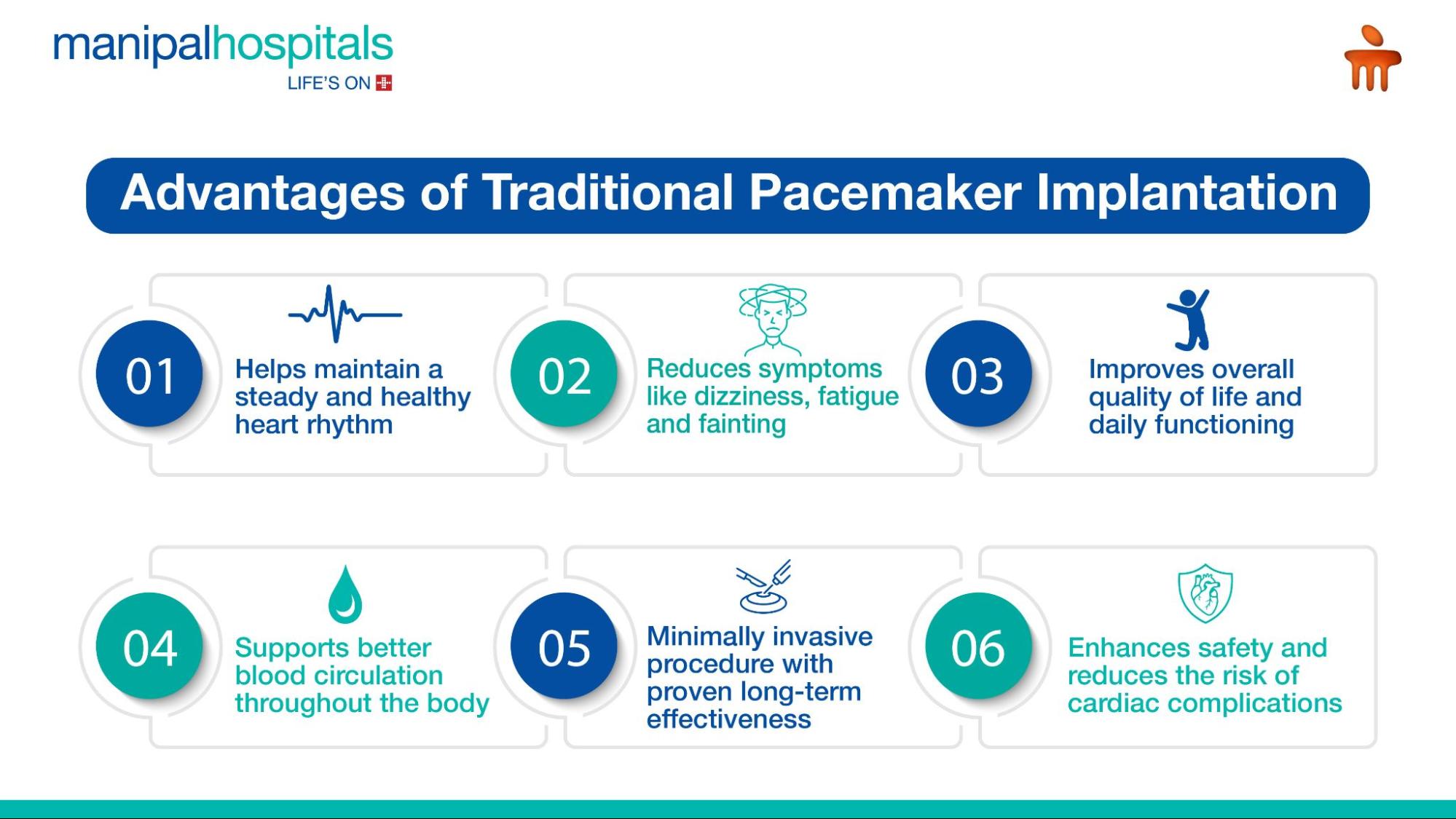
Traditional pacemaker implantation remains prominent due to its significant benefits:
-
Proven reliability and longevity- With decades of refinement, traditional pacemakers are incredibly reliable. Modern devices have battery lives extending up to 10-15 years, minimising frequent replacements.
-
Exceptional success rates- As mentioned, traditional pacemaker implantation with success rates exceeding 95%, can effectively manage bradycardia and heart blockage as well as reduce associated symptoms significantly.
-
Significant improvement in quality of life- Patients report dramatic improvement in daily lives with a significant reduction in symptoms like fatigue and dizziness, allowing resumption of active lifestyles.
-
Safety profile- While all medical procedures carry some risk, complication rates for traditional pacemaker implantation are remarkably low (often less than 1-2%) due to advanced surgical techniques and meticulous patient care.
-
Versatility- Traditional pacemakers can be programmed to address a wide range of heart rhythm issues, offering tailored therapy for individual patient needs.
-
Established expertise- Medical professionals worldwide have extensive experience with this procedure, ensuring expert care and optimal outcomes.
Care essentials
For optimal healing and device function after pacemaker implantation, the following guidelines remain imperative :
|
DO'S |
DON’TS |
|
Follow your doctor's instructions regarding activity levels and arm movements. |
Lift heavy objects or engage in strenuous activities with the arm on the side of the implant for the first 4-6 weeks. |
|
Attend all scheduled follow-up appointments for device checks. |
Wear tight clothing or jewellery that could irritate the incision site. |
|
Carry your pacemaker identification card at all times. |
Directly place mobile phones over the pacemaker site; use the opposite ear. |
|
Inform airport security personnel about your pacemaker. |
Undergo MRI scans unless your pacemaker is specifically MRI-compatible, and your doctor approves. |
|
Report any symptoms like dizziness, fainting, or prolonged redness at the incision site to your doctor immediately. |
Ignore any unusual symptoms or feelings. |
Addressing potential risks and complications
While traditional pacemaker implantation is extremely safe, like any medical procedure, it carries minimal risks such as infection, bleeding, collapsed lung (pneumothorax), or lead displacement. The incidence of these complications is very low (often less than 1%), and an experienced team of experts along with advanced techniques and meticulous care can minimise these issues, ensuring your safety and well-being.
Conclusion
A traditional pacemaker implant plays a vital role in regulating irregular or slow heart rhythms, ensuring the heart beats steadily and efficiently. It helps improve quality of life by reducing symptoms while supporting overall heart health. At Manipal Hospitals, our expert cardiac team utilises state-of-the-art technology and stringent safety protocols, ensuring the best outcomes for your pacemaker implant procedure. We offer a patient-centric approach, guiding you from diagnosis to post-procedure care.
If you or a loved one experiences irregular heartbeat symptoms, book an appointment with our expert cardiologists at Manipal Hospitals Broadway today to take the first step towards a healthier future.
FAQ's
Most modern pacemaker batteries typically last between 7 and 15 years, depending on the patient’s heart condition, device settings, and overall usage patterns. Regular follow-up check-ups and device monitoring are essential to track battery performance.
Generally, yes. It's recommended to keep mobile phones at least six inches away from your pacemaker and use the ear opposite the implant site. Avoid placing the phone in a shirt pocket directly over the device.
Initial restrictions involve avoiding heavy lifting or strenuous arm movements for a few weeks to allow proper healing. Most patients can resume normal activities, including light exercise, after their doctor gives clearance.
Typically, follow-up appointments for an individual with a permanent pacemaker are scheduled a few weeks after implantation, then usually every 6-12 months. These check-ups monitor device function, battery life, and your heart rhythm.
A temporary pacemaker is implanted for short-term heart rhythm management, often in emergencies or during recovery from certain heart conditions, with wires placed externally. A permanent pacemaker implantation is a long-term solution for chronic heart rhythm disorders, with the device fully implanted under the skin.
Share this article on:


--Symptoms,-Stroke-Risk-and-Modern-Treatment-Options.webp "Atrial Fibrillation (AFib): Symptoms, Stroke Risk and Modern Treatment Options")