5 Min Read
Epilepsy is a chronic neurological disorder which happens due to abnormal electrical activity in the brain. Epilepsy symptoms may vary between individuals, with seizures being the most common. Causes of seizures may also vary between adults and children for a number of reasons. This blog upholds a comparative study of how epilepsy differs between children and adults, and why early diagnosis plays a pivotal role.
Synopsis
- Understanding Epilepsy
- Recognising Epilepsy in Adults
- Common Causes of Epilepsy in Adults
- Epilepsy Symptoms in Adults
- Epilepsy in Children
- Causes of Epilepsy in Children
- Epilepsy Symptoms in Children
- Why Early Diagnosis is Important
- Treatment and Management Strategies
- Care Essentials: Do's and Don'ts during a Seizure
- Conclusion
Understanding Epilepsy
Epilepsy is a chronic neurological condition that happens as a result of abnormal electrical activity in the brain. In India, about 5 to 6 per 1000 people are epileptic. While underlying brain activity is similar between children and adults, causes, types, and visible epilepsy symptoms may differ between age groups, posing unique diagnostic challenges.
Recognising Epilepsy in Adults
Recognising epilepsy symptoms in adults is often quite complex, as the symptoms are often mistaken for other conditions attributed to stress or ageing.
Types of Epilepsy in Adults
Epilepsy types in adults are categorised into:
-
Generalised Epilepsy: Seizures occur from both sides of the brain at the same time.
-
Focal Epilepsy: Seizures start from one side of the brain and may either stay on that side or spread to other parts of the brain.
-
Unknown: Where the source of seizures is not known, requiring more in-depth care.
Understanding epilepsy types in adults is key for tailored treatment.
Common Causes of Epilepsy in Adults
Possible causes of epilepsy in adults include:
-
Stroke
-
Traumatic Brain Injury (TBI)
-
Brain Tumours
-
Infections (meningitis, encephalitis)
-
Neurodegenerative Diseases
-
Genetic Factor
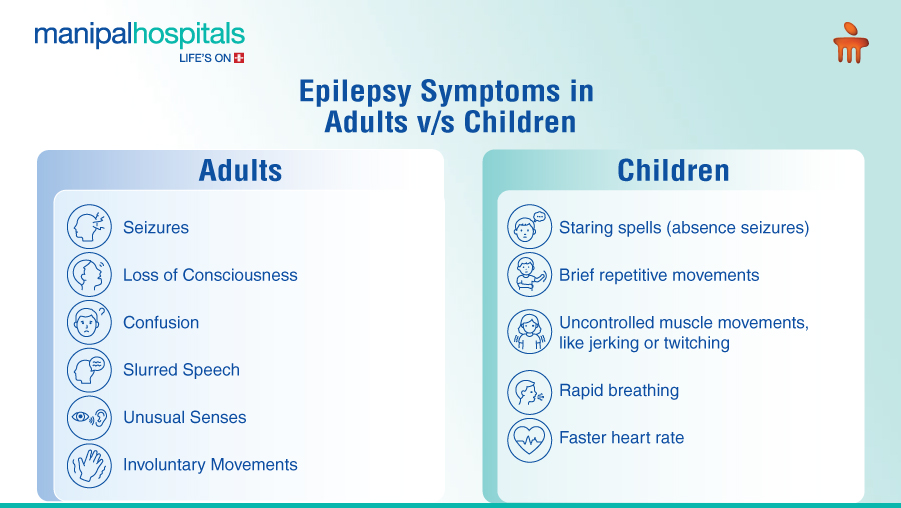
Epilepsy Symptoms in Adults
Common epilepsy symptoms in adults include:
-
Seizures: Most common symptom, characterised by jerky movements or shaking.
-
Loss of Consciousness: Brief loss of consciousness or awareness due to seizures.
-
Confusion: Trouble thinking or understanding others.
-
Slurred Speech: Trouble speaking or forming words properly.
-
Unusual Senses: Tingling sensation or numbness and changes in vision, hearing, taste and smell.
-
Involuntary Movements: Twitching, jerking and loss of muscle control.
Epilepsy in Children
Epilepsy is a common neurological condition in childhood. Diagnosis of epilepsy in children may be challenging as their symptoms differ, and they may struggle to articulate experiences.
Causes of Epilepsy in Children
In children, epileptic seizures may occur because of any of these following conditions:
-
Birth trauma
-
Developmental brain abnormalities
-
Genetic syndromes (Dravet, Lennox-Gastaut)
-
Infections (Meningitis)
-
Metabolic Disorders
-
Severe Febrile Seizures.
Understanding these seizure causes in children is critical for lessening their impact and frequency.
Epilepsy Symptoms in Children
Epilepsy symptoms in children can be subtle. Watch out for recurrent, unusual behaviours, such as:
-
Staring spells (absence seizures)
-
Brief repetitive movements
-
Uncontrolled muscle movements, like jerking or twitching
-
Rapid breathing
Why Early Diagnosis is Important
Early diagnosis of epilepsy plays a vital role in dramatically altering outcomes for both adults and children. Benefits of early diagnosis include preventing complications, optimising treatment, and improving quality of life, while also reducing morbidity or mortality (SUDEP). It also helps in adopting essential management strategies for minimising the impact of a seizure.
Treatment and Management Strategies
Treatment for epilepsy symptoms aims for seizure control with minimal side effects. Strategies include:
-
Anti-Seizure Medications (ASMs): The most common treatment; medications are decided as per the patient’s age, type of seizures and overall health condition.
-
Dietary Therapies: A high-fat, low-carb diet (keto diet) has been shown to minimise seizure frequency, especially in children.
-
Surgical Options: This is mainly used for focal point seizures that cannot be controlled by medication.
-
Vagus Nerve Stimulation: The procedure of placing an implant in the brain that sends electrical signals via the vagus nerve.
-
Lifestyle Modifications: Avoid triggers, manage stress, and have a proper regular schedule.
Consistency in following epilepsy treatment protocols and seizure management strategies can help minimise their frequency.
Care Essentials: Do's and Don'ts during a Seizure
Do's:
-
Stay calm.
-
Ease towards the floor.
-
Calculate the duration of the seizure.
-
Clear area of hard objects.
-
Cushion head with a pillow.
-
Turn on one side.
-
Stay with them.
-
Call medical help: If seizure lasts above 5 minutes, repeated, injured, or if it is the first seizure.
Don'ts:
-
Don't restrain.
-
Don't put anything in their mouth.
-
Don't give any food or drink.
-
Don't panic.
-
Don't leave them alone.
Conclusion
Epilepsy can be a challenging condition, but timely diagnosis of epilepsy symptoms in adults and seizure causes in children can significantly improve treatment outcomes. At Manipal Hospitals Broadway, Kolkata, our Neurology experts use the latest technology for accurate diagnosis and personalised treatment and management plans. If you or your loved ones are struggling with epilepsy symptoms, book an appointment at Manipal Hospitals Broadway today!
FAQ's
Epilepsy is a chronic neurological condition characterized by recurrent, unprovoked seizures due to abnormal electrical activity in the brain.
In adults, symptoms can be mistaken for other conditions and include focal seizures (sensory changes, jerking) or generalised seizures (tonic-clonic, or absence). Children's symptoms can be more subtle, such as staring spells, brief repetitive movements, or behavioural changes, making diagnosis challenging
For children, include birth trauma, developmental brain abnormalities, genetic syndromes, infections, and severe febrile seizures are some common causes. In adults, causes often include stroke, traumatic brain injury, brain tumours, infections, and neurodegenerative diseases. Epilepsy in adults can be focal or generalized, requiring tailored treatment.
Early diagnosis is crucial because it significantly improves treatment outcomes; It helps prevent complications, optimises treatment, enhances quality of life, and reduces mortality risks, while also providing essential support.
You can consult expert neurologists at Manipal Hospitals Broadway, Kolkata, who are dedicated to providing compassionate and comprehensive care for epilepsy and other neurological conditions.
Share this article on:


--Symptoms,-Stroke-Risk-and-Modern-Treatment-Options.webp "Atrial Fibrillation (AFib): Symptoms, Stroke Risk and Modern Treatment Options")