7 Min Read
The time after childbirth is often expected to be full of happiness, but for many women, it can feel overwhelming instead. Along with physical recovery, there are emotional ups and downs that aren’t always easy to understand. You might find yourself feeling low, anxious, or simply not like yourself and then wonder if this is normal. Many women go through this phase quietly, sometimes even feeling guilty for not being as happy as they expected to be.
In some cases, more intense changes in mood or behaviour may need immediate attention. That’s why it helps to understand what’s happening and when to seek support. This blog answers what postpartum depression is, its signs, causes, and the treatment options available so you can recognise it early and feel more prepared to deal with it.
Synopsis
- What is Postpartum Depression?
- What Causes Postpartum Depression?
- Signs and Symptoms of Postpartum Depression
- Baby Blues Vs Postpartum Depression
- Postpartum Depression Treatment: What Are Your Options
- Simple Ways to Cope Day-to-Day
- Why Support Is Important?
- Recovery Timeline: What to Expect
- When Should You Seek Help
- Conclusion
What is Postpartum Depression?
Postpartum depression is something some women go through after having a baby, where feelings of sadness, anxiety, or emotional exhaustion continue longer than expected. It’s different from the usual “baby blues” because it lasts longer and can start affecting how you feel day to day.
Postpartum depression in women is tied to everything that changes after childbirth. Your body is still recovering, sleep becomes irregular, and adjusting to caring for a newborn can feel overwhelming. All of this together can make emotions harder to handle than usual.
It’s also more common than many people realise, with studies suggesting that around 1 in 7 women may experience it after childbirth. Knowing this can help you understand that it’s not just a phase or something to feel guilty about.
What Causes Postpartum Depression?
There isn't a single cause. However, postpartum depression in women may be due to multiple factors:
-
Rapid hormonal changes during postpartum
-
Lack of sleep and fatigue
-
Emotional adjustment after having a baby
-
Absence of family or partner support
-
History of depression or anxiety disorders
-
Difficult pregnancy or childbirth experiences
Understanding the meaning helps explain why it’s not a personal weakness but a medical condition.
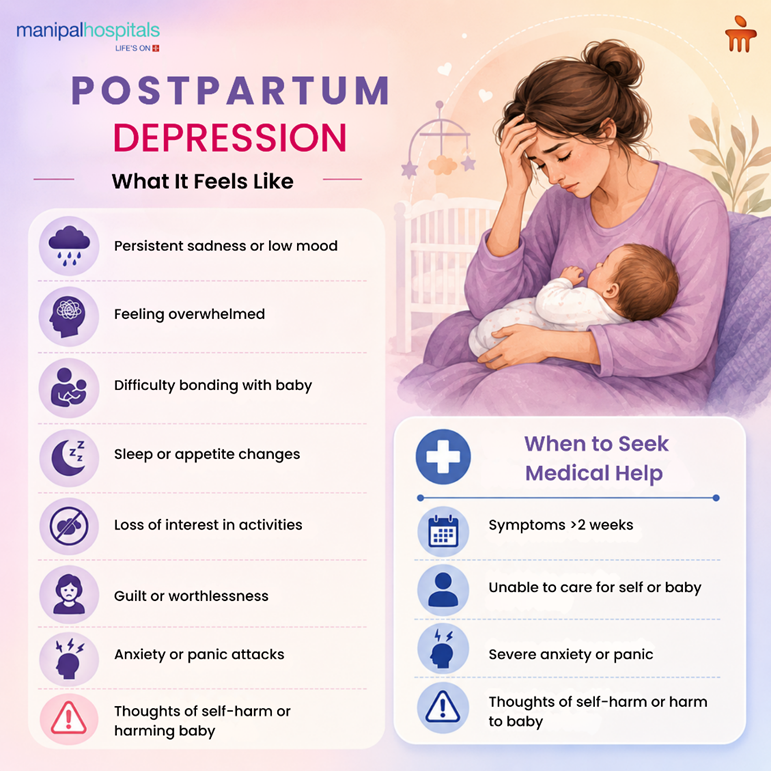
Signs and Symptoms of Postpartum Depression
Early identification is key to seeking prompt treatment. Some common symptoms of postpartum depression include:
-
Continued sadness or low spirits
-
Feeling overwhelmed or unable to cope
-
Difficulty connecting with the baby
-
Disturbing thoughts involving self-harm or harm to the baby
-
Changes in sleep or appetite
-
Loss of interest in activities
-
Feelings of worthlessness or guilt
-
Anxiety attacks or panic attacks
-
Severe withdrawal
Many women assume these feelings are simply part of adjusting to motherhood. But when they don’t ease or keep coming back, it’s better not to ignore them, as they can begin to affect how you feel over time.
Baby Blues Vs Postpartum Depression
Many new mothers feel emotional, overwhelmed, or unusually tearful after childbirth, which can make it difficult to tell what is considered normal and what may need medical attention. Knowing the difference can help mothers and families recognise when extra support or treatment may be needed:
|
Feature |
Baby Blues |
Postpartum Depression |
|
Duration |
A few days to 2 weeks |
Weeks to months |
|
Severity |
Mild mood swings |
Persistent sadness |
|
Daily functioning |
Mostly unaffected |
Can be impaired |
|
Treatment needed |
Usually not |
Often required |
Postpartum Depression Treatment: What Are Your Options
The good news is that this treatment is highly successful. Some effective treatment options for postpartum depression are as follows:
-
Counselling (therapy): Assists in processing emotions
-
Medications: Balances brain chemicals
-
Support groups: Provide emotional connection
-
Lifestyle changes: Improves overall well-being
-
Family support: Reduces stress
Simple Ways to Cope Day-to-Day
In addition to medical treatment, women can take a lot of small steps to help with postpartum depression:
-
Take short naps: Even a 20-minute nap when your baby sleeps can make a difference
-
Speak frankly: Share your feelings with those you trust
-
Accept assistance: Let others help with everyday chores
-
Keep moving: Gentle movement is good for the mood
-
Eat balanced meals: Maintain energy levels
-
Take breaks: Take short breaks whenever possible, even if it’s only a few quiet minutes for yourself.
These measures are an adjunct to professional treatment for postpartum depression.
Why Support Is Important?
Support is one of the most important aspects of recovery. The stigma around it makes many women reluctant to talk about how they feel.
Understanding postpartum depression normalises conversations on mental health and encourages seeking help. Family members are also important in recognising the signs and symptoms of postpartum depression and supporting recovery.
Recovery Timeline: What to Expect
Each woman’s experience with postpartum depression recovery is different. However, when appropriate treatment and support are provided, the woman will begin to notice an improvement after some time, even if the progress is somewhat slow initially.
-
Early stage: Physical symptoms and emotional stress start to lessen once treatment begins.
-
Middle stage: Mood becomes more stable, energy comes back, and daily routines start to feel easier.
-
Later stage: Confidence increases, relationships improve, and emotional balance returns.
When Should You Seek Help
You should seek medical advice from the renowned gynaecologist in Bhubaneswar if:
-
Symptoms last over two weeks
-
You are unable to take care of yourself or your baby
-
You have severe anxiety or panic attacks
-
You have thoughts of harming yourself or your baby
Some women may have a higher risk of developing postpartum depression, including:
-
First-time mothers
-
Lack of social support
-
Preterm delivery or NICU baby
Early intervention leads to a significant improvement in outcomes for the treatment of postpartum depression.
Conclusion
Postpartum depression is a real and treatable condition – many new mothers experience it, but it does not define you. You don’t have to go through this alone. With the right support, most mothers gradually feel better and regain confidence in their new role.
If you’re looking for expert care, postpartum depression treatment in Bhubaneswar is at Obstetrics & Gynaecology Care in Manipal Hospitals Bhubaneswar. At Manipal Hospital Bhubaneswar, women can consult experienced obstetrics and gynaecology specialists near Bhubaneswar for confidential support, expert counselling and therapy, safe and effective medication plans, and holistic care tailored to new mothers.
FAQ's
No, baby blues are mild and short-lived; postpartum depression is more intense and longer-lasting and often requires medical treatment and a structured recovery plan.
Yes, it can make bonding difficult, but with the right support and treatment, most mothers eventually develop strong emotional bonds with their babies.
Yes, symptoms can appear weeks or even months after delivery, which is why it is important to be emotionally aware and supported during the postpartum period.
Most of the medications used to treat postpartum depression are safe for breastfeeding women, but they should always be used under medical supervision and guidance.
While lifestyle changes can help, moderate to severe cases often require therapy or medication as part of a comprehensive treatment plan to achieve effective recovery.
Share this article on:


.webp "ଅଙ୍ଗ ଦାନର ଗୁରୁତ୍ୱ: ମୃତ୍ୟୁ ପରେ କେଉଁ ଅଙ୍ଗ ଦାନ କରାଯାଇପାରିବ?")