8 Min Read
Experiencing a seizure can be frightening and deeply unsettling not only for the individual but also for family members and caregivers who witness it. At Manipal Hospital Pune, we understand how overwhelming seizures can feel and how important timely, accurate care is. With expert neurologists, advanced diagnostics, and personalised treatment plans, we aim to help patients regain confidence, control, and quality of life.
This guide explains what seizures are, what causes seizures, the different types of seizures, common seizure symptoms, and the most effective seizure treatment options available today. With the right medical approach, seizure control and, in many cases, seizure freedom are very much achievable.
Synopsis
Understanding Seizures
A seizure is a sudden burst of abnormal electrical activity in the brain. This disruption can temporarily affect movement, awareness, behaviour, sensations, or emotions. While anyone can experience a seizure under certain conditions, recurrent unprovoked seizures are known as epilepsy.
Globally, over 50 million people live with epilepsy, making it one of the most common neurological conditions. Understanding seizures and their causes is the first and most important step towards effective management.
What Causes Seizures?
The brain’s electrical system is highly sensitive, and several factors can interfere with its normal function. Identifying what causes seizures helps neurologist at Manipal Hospital Baner design targeted treatment plans.
Common seizure causes include:
-
Genetic factors: A family history of epilepsy can increase susceptibility
-
Head injury or trauma: Past accidents may trigger seizures months or years later
-
Stroke: One of the leading seizure causes in older adults
-
Brain infections: Meningitis, encephalitis, or severe infections
-
Brain tumours: Both benign and cancerous growths
-
Developmental disorders, Such as autism or neurocutaneous syndromes
-
Medication or substance withdrawal: Especially alcohol or certain drugs
-
Metabolic imbalances: Low blood sugar, sodium, or calcium levels
In many cases, no clear cause is identified; this is known as idiopathic epilepsy. Even then, seizures can often be effectively controlled with the right treatment.
Classification: Types of Seizures Explained
Seizures are classified based on where they begin in the brain. Recognising the types of seizures is crucial for accurate diagnosis and appropriate care.
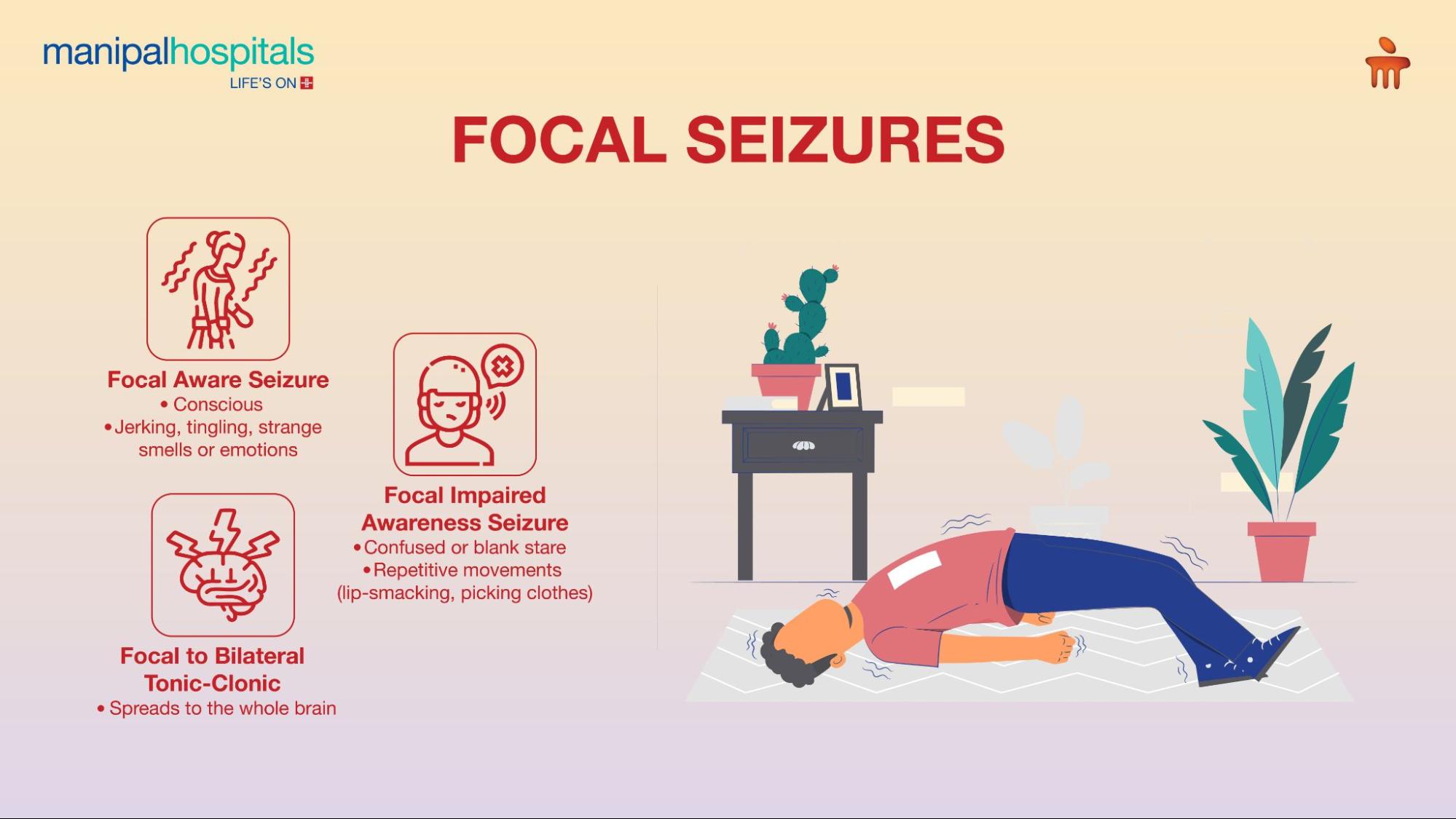
Focal Seizures (Partial Seizures)
These begin in one specific area of the brain.
Focal Aware Seizures
The person remains conscious. Symptoms may include:
-
Jerking of a limb
-
Tingling or numbness
-
Sudden emotions or unusual smells/tastes
Focal Impaired Awareness Seizures
Consciousness is altered. The person may:
-
Stare blankly
-
Perform repetitive actions like lip-smacking
-
Feel confused afterwards
Focal to Bilateral Tonic-Clonic Seizures
These start in one area and spread to both sides of the brain.
Generalised Seizures
These affect both sides of the brain from the start.
-
Tonic-clonic seizures: Muscle stiffening followed by jerking movements
-
Absence seizures: Brief staring spells, common in children
-
Atonic seizures: Sudden loss of muscle tone causing falls
-
Myoclonic seizures: Short, shock-like muscle jerks
-
Tonic seizures: Sudden muscle stiffness
-
Clonic seizures: Rhythmic jerking movement
Understanding seizure type helps specialists at Manipal Hospital Pune determine the most effective seizure treatment approach.
Common Seizure Symptoms
Seizure symptoms vary widely depending on the brain area involved. Common signs include:
-
Sudden confusion
-
Staring spells
-
Loss of consciousness
-
Uncontrolled jerking of arms or legs
-
Fear, anxiety, or déjà vu sensations
-
Tingling, numbness, or visual disturbances
-
Difficulty speaking
-
Changes in breathing or heart rate
Keeping a record of symptoms can significantly help in diagnosis and treatment planning.
Effective Seizure Treatment Options at Manipal Hospital Baner
With medical advancements, up to 70% of patients achieve good seizure control. At Manipal Hospital Baner, Pune, seizure care is personalised and evidence-based.
Medical Treatment
Anti-seizure medications are the first line of treatment. These medicines stabilise abnormal electrical activity in the brain. With careful dose adjustments and regular follow-ups, many patients live seizure-free lives.
Advanced Seizure Therapies
For drug-resistant seizures, advanced options include:
-
Ketogenic diet: Especially effective in some childhood epilepsies
-
Vagus Nerve Stimulation (VNS): Electrical stimulation via a small implanted device
-
Responsive Neurostimulation (RNS): Detects and stops seizures before they start
-
Deep Brain Stimulation (DBS): Used in select, difficult-to-treat cases
-
Epilepsy surgery: Highly effective for focal seizures with a clear brain origin
Our neurologists and neurosurgeons conduct detailed evaluations to identify the best treatment path for each patient.
Do’s and Don’ts During a Seizure
Do:
-
Stay calm and stay with the person
-
Time the seizure
-
Clear nearby objects
-
Cushion the head
-
Turn them onto their side
Don’t:
-
Don’t restrain them
-
Don’t put anything in their mouth
-
Don’t give food or water immediately
-
Don’t leave them alone
Conclusion
Call emergency services (108) if the seizure lasts over 5 minutes, repeats, or causes injury.
A seizure diagnosis does not define a person’s future. With proper seizure treatment, lifestyle adjustments, and medical support, most individuals lead full, productive lives. At Manipal Hospital Baner, our focus goes beyond treatment; we support long-term wellbeing, education, and confidence.
Book Expert Seizure Care Today
If you or a loved one experiences seizure symptoms, early evaluation is crucial. Book an appointment with the neurology specialists at Manipal Hospital Baner and take the first step towards safer, seizure-free living.
Disclaimer: This article is for informational purposes only and does not replace professional medical advice.
FAQ's
Many people achieve complete seizure control. Some causes can be permanently resolved with surgery or treatment.
No. A seizure is an event; epilepsy is a condition involving repeated seizures.
Yes. Stress, sleep deprivation, alcohol, and illness are common triggers.
EEG, MRI, CT scans, blood tests, and clinical evaluation.
Some childhood epilepsies resolve with age, but medical follow-up is essential.
Share this article on:


.webp "Stroke types, causes, and symptoms")