8 Min Read
For most people, when they hear the term “lymphoma cancer", confusion, fear, and uncertainty will set in right away. Questions will start to pop up in their heads, such as, What is lymphoma?' How serious is it? Which warning signs should never be ignored? Most importantly, what does recovery look like after diagnosis?
Even though "lymphoma cancer" is considered a complicated medical term, breaking it down into simple components will help reduce the fear associated with it. Most patients who have some information regarding their problem tend to be more open to communication with healthcare professionals and to taking part in the diagnostic process and further treatment decisions.
Through this blog, an experienced cancer care expert in Yeshwanthpur, Bangalore, explains the basics of lymphoma, including its meaning, symptoms, and treatment methods.
Synopsis
What Is Lymphoma?
To understand the meaning of lymphoma, it helps to know about the lymphatic system. This system is part of the body’s immune defence and includes the lymph nodes, spleen, bone marrow, and lymph vessels.
Lymphoma cancer develops when lymphocytes, a type of white blood cell, begin growing abnormally and continue multiplying instead of dying naturally. Over time, these abnormal cells can affect the normal functioning of the immune system.
Doctors mainly divide lymphoma into two types:
-
Hodgkin Lymphoma: Identified by Reed-Sternberg cells. It often spreads in an organised pattern and may respond well to early treatment.
-
Non-Hodgkin Lymphoma: Includes different subtypes. Some grow slowly, while others progress quickly and may require urgent lymphoma treatment.
Treatment and recovery in lymphoma cancer can vary from person to person, depending on the type of lymphoma and how far the disease has spread.
Common Lymphoma Symptoms
A problem with lymphoma cancer is that the initial symptoms can be subtle or even mistaken for common infections. It can take patients months to seek medical assistance due to these mild symptoms.
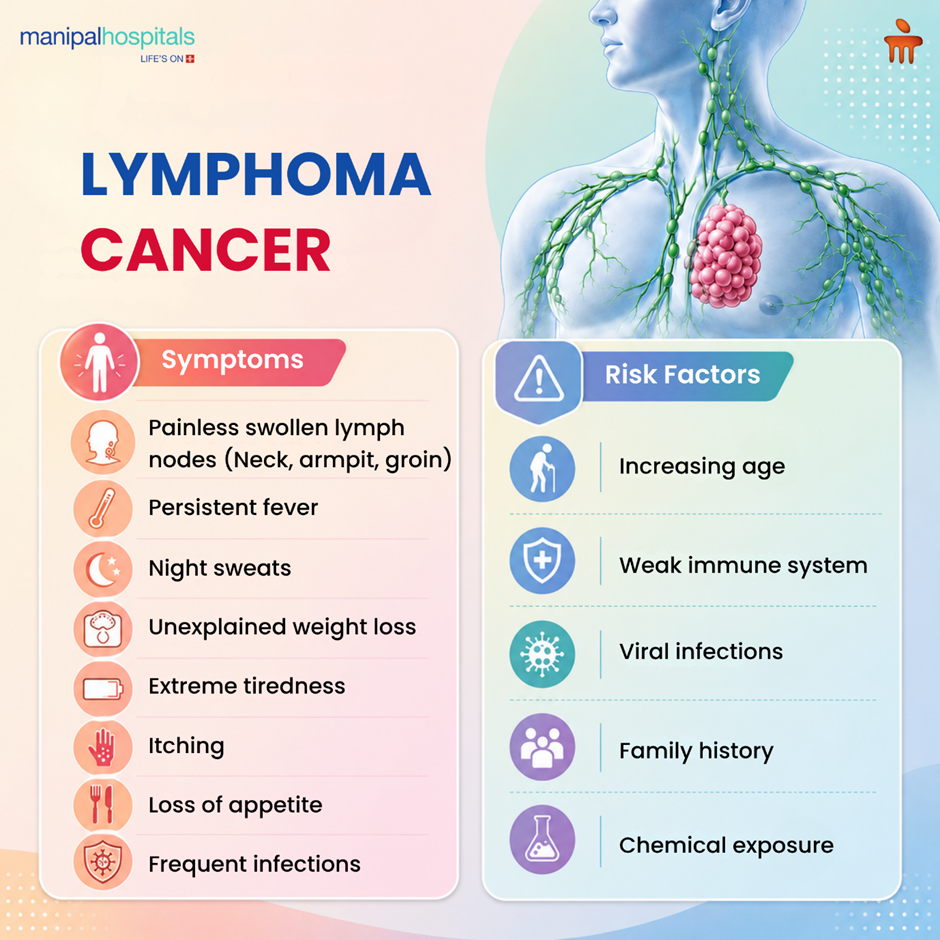
Symptoms of lymphoma include:
-
Swellings in the neck, armpit, or groin areas
-
Fever without any sign of infection
-
Malaise
-
Night sweats
-
Itching
-
Reduced appetite
-
Increased susceptibility to infections
First, many patients notice enlarged lymph nodes while bathing or dressing. These swollen nodes are often painless, which can delay attention.
What Causes Lymphoma?
Often, the exact reason for lymphoma, a cancer, is not known. Researchers believe several factors may increase the risk of developing the disease.
|
Risk Factor |
How It May Contribute |
|
Increasing age |
Some lymphoma types occur more frequently in older adults |
|
Reduced immunity |
Weak immune systems may increase vulnerability |
|
Viral infections |
Certain viruses have been linked to lymphoma development |
|
Family history |
A close relative with lymphoma may slightly increase the risk |
|
Chemical exposure |
Long-term exposure to industrial chemicals may contribute |
Even when these risk factors are present, many people never develop lymphoma cancer. Likewise, some patients diagnosed with lymphoma have no identifiable risk factors at all.
How Doctors Diagnose Lymphoma
Diagnosing lymphoma cancer involves several steps. Doctors first evaluate symptoms and then perform tests to confirm the disease type and extent.
-
Physical Examination: The doctor checks for enlarged lymph nodes, swelling of the spleen, or other abnormal findings linked to lymphoma symptoms.
-
Blood Investigations: Blood tests help assess immune function, infection markers, liver function, and overall health before lymphoma treatment begins.
-
Imaging Tests: CT scans, PET scans, and MRI scans allow specialists to identify areas affected by lymphoma cancer. Imaging also helps determine disease stage.
-
Biopsy: A biopsy remains the most important investigation for confirming lymphoma's meaning. In this process, a sample of a lymph node or tissue is removed and examined under a microscope.
-
Bone Marrow Testing: Some patients require bone marrow examination to determine whether lymphoma cancer has spread into the marrow.
Accurate diagnosis helps specialists choose the safest and most effective lymphoma treatment strategy.
Understanding Lymphoma Staging
After diagnosis, doctors determine how far the disease has spread. This process is called staging.
-
Stage I: Lymphoma affects one lymph node region or a single organ.
-
Stage II: The disease affects two or more areas of lymph nodes on the same side of the diaphragm.
-
Stage III: Lymphoma spreads to lymph node groups above and below the diaphragm.
-
Stage IV: Lymphoma cancer spreads to organs such as the liver, lungs, or bone marrow.
Staging is important in determining the intensity and duration of therapy for lymphoma.
Modern Lymphoma Treatment Options
Treatment for lymphoma cancer has improved significantly over the past decade. Many patients now achieve long-term remission or complete recovery through advanced therapies and supportive care.
The right lymphoma treatment depends on:
-
Lymphoma subtype
-
Disease stage
-
Patient age
-
Overall health
-
Rate of disease progression
Chemotherapy
-
Chemotherapy is one of the most widely used forms of lymphoma treatment. Anti-cancer medicines destroy rapidly growing lymphoma cells and help reduce tumour size.
-
Treatment is usually given in cycles over several months. Some patients experience temporary side effects such as nausea, tiredness, hair loss, or low immunity.
Radiation Therapy
-
Radiation therapy uses focused high-energy rays to destroy cancer cells in specific body areas. It may be used alone or combined with chemotherapy.
Immunotherapy
-
Immunotherapy helps the immune system in your body find and fight lymphoma cancer cells better. These therapies are increasingly used in specialised cancer care.
Targeted Therapy
-
Targeted drugs work differently from standard chemotherapy. They target specific molecules that promote cancer growth and may reduce damage to healthy tissue.
Stem Cell Transplant
-
Patients with aggressive or relapsed lymphoma cancer may require stem cell transplantation. Healthy stem cells help rebuild bone marrow after intensive treatment.
Patients exploring lymphoma treatment in Yeshwanthpur should discuss available options carefully with oncology specialists to understand expected benefits and possible risks.
Side Effects During Treatment
Many patients worry about the physical effects of lymphoma treatment. Side effects vary, depending on the medicines taken and the general health of the patient.
Possible side effects include:
-
Fatigue
-
Nausea
-
Mouth ulcers
-
Hair loss
-
Reduced immunity
-
Appetite changes
-
Sleep disturbance
Modern cancer care focuses strongly on supportive treatment. Doctors may prescribe medications to control nausea, reduce infections, and improve comfort throughout lymphoma treatment.
Patients receiving lymphoma treatment in Yeshwanthpur often receive dietary guidance and counselling support alongside medical therapy.
Living with Lymphoma Cancer
You may find that the physical and emotional demands of life while undergoing treatment for lymphoma can be considerable. Many patients report stress about work, finances, family responsibilities or uncertainty about recovery. Simple lifestyle habits can help improve overall well-being during treatment.
-
Consume Healthy Foods: Good nutrition helps you stay strong and helps with healing while you are being treated for lymphoma.
-
Stay Physically Active: For a little boost of energy and to relieve stress, try walking or stretching.
-
Follow-up appointments: Your doctor will monitor your recovery from the disease and help detect any relapses.
-
Get Emotional Support: Attending a counsellor or attending support groups may help to reduce some of the emotional stress that goes along with lymphoma cancer.
-
Prevent infection: If you are having chemotherapy, make sure you have good hygiene and avoid infections.
When Should You Consult a Specialist?
Individuals tend to put off seeking medical help since many symptoms of lymphoma are similar to other diseases. But it is always best not to ignore any symptom.
These include:
-
Enlarged lymph glands for weeks
-
Ongoing tiredness
-
Recurrent fever
-
Dramatic weight loss
-
Profuse night sweating
-
Often getting sick
A medical assessment will make the treatment of lymphoma more effective.
Conclusion
Knowing about the lymphoma definition will help you approach the disease with more clarity and assurance. Lymphoma cancer is a disease that will be experienced differently in each patient diagnosed with the disease, but with the progress of medicine, the survival rates for many patients have been significantly improved. However, recognising symptoms of lymphoma at the right time and going through proper lymphoma treatment remain critical.
For those who are looking for reliable lymphoma treatment in Yeshwanthpur, it is recommended to consult the experienced cancer care experts at Manipal Hospital Yeshwanthpur, Bangalore.
FAQ's
The major symptoms of lymphoma are swelling of lymph glands, fatigue, fever, sweating at night, unexplained weight loss, and skin itching.
Yes, most types of lymphoma cancer can be cured using chemotherapy, immunotherapy, radiotherapy, and other treatment options.
Cancer of lymphoma can be diagnosed by physicians through physical examination, imaging studies, blood testing, and biopsy. The biopsy test confirms the diagnosis and specifies the subtype of disease.
Not every lymphoma treatment causes hair loss. Side effects depend on the medicines used, treatment duration, and individual patient response during cancer care.
Lymphoma patients requiring treatment in Yeshwanthpur must visit qualified oncologists who offer individualised treatments and modern cancer care facilities.
Share this article on:


.webp "Neurological disorders symptoms and treatment")