7 Min Read
Receiving a cancer diagnosis can bring a wave of overwhelming questions and an immediate desire to find the most effective medical options available. For decades, the standard path forward usually focused on finding ways to physically destroy tumour cells from the outside using tools like surgery, chemotherapy, or radiation. However, a major breakthrough in modern oncology has introduced an entirely different, highly precise biological strategy.
For patients exploring innovative therapies such as immunotherapy, consulting specialists at the best hospital for cancer treatment in Yeshwanthpur, Bengaluru, can provide access to advanced treatment options, multidisciplinary expertise, and personalised cancer care.
This blog explains exactly what immunotherapy is, how it utilises your body's natural defence systems to combat illness, and who is an ideal candidate for this care.
Synopsis
What Is Immunotherapy and How Does It Work?
Your white blood cells act as internal security guards, constantly patrolling your tissues to find, isolate, and clear out abnormal cells, bacteria, or viruses. However, cancer cells are uniquely deceptive; they possess a distinct ability to hide by developing molecular shields or sending out chemical signals that trick your immune system into thinking they are completely normal, healthy tissues.
This is exactly where immunotherapy cancer treatment steps in. Instead of introducing heavy chemical substances to directly attack the tumour, this biological therapy trains, unmasks, or boosts your own immune cells so they can recognise the hidden cancer cells and clear them out naturally.
Oncologists deploy this treatment using several distinct mechanisms:
-
Immune Checkpoint Inhibitors: These therapies physically turn off the "brakes" on your immune system. By blocking specific masking proteins on cancer cells, they allow your white blood cells to see the hidden tumour and attack it directly.
-
Monoclonal Antibodies: These are custom, laboratory-created immune system proteins designed to stick to specific markers on target cells, acting like a highly visible clinical flag that tells your body exactly where to look.
-
Cancer Vaccines: Unlike traditional preventive vaccines, these are therapeutic tools designed to kickstart an active immune response against a specific, already present tumour profile.
-
Adoptive T-Cell Therapy: A specialised process where a patient’s own immune cells are collected, grown, or re-engineered in a laboratory to increase their fighting capability and then carefully delivered back into the bloodstream.
Types of Immunotherapy for Cancer
There are several main types of immunotherapy for cancer, each working differently:
-
Monoclonal Antibody Therapy: Monoclonal antibody therapy involves the use of antibodies produced in a laboratory to target specific proteins on the surface of cancer cells. These antibodies are designed in labs to bind to cancer-specific targets.
-
Immune Checkpoint Inhibitors: These drugs block the "stop signals" (checkpoint proteins) that cancer cells use to prevent immune cells from attacking. By blocking these proteins, checkpoint inhibitors release the brakes on the immune system.
-
T-Cell Transfer Therapy (CAR T-Cell Therapy): T-cells are collected from your blood and genetically modified in a lab to better fight your cancer. The modified cells are grown in large numbers and returned to your body through IV infusion.
-
Cancer Vaccines: Vaccines that treat cancer (not just prevent it) work by exposing the immune system to cancer antigens, helping it recognise and attack cancer cells.
-
Immune System Modulators: These treatments boost the overall immune system response rather than targeting cancer specifically. They include cytokines (proteins that help immune cells communicate) and other immune-enhancing substances.
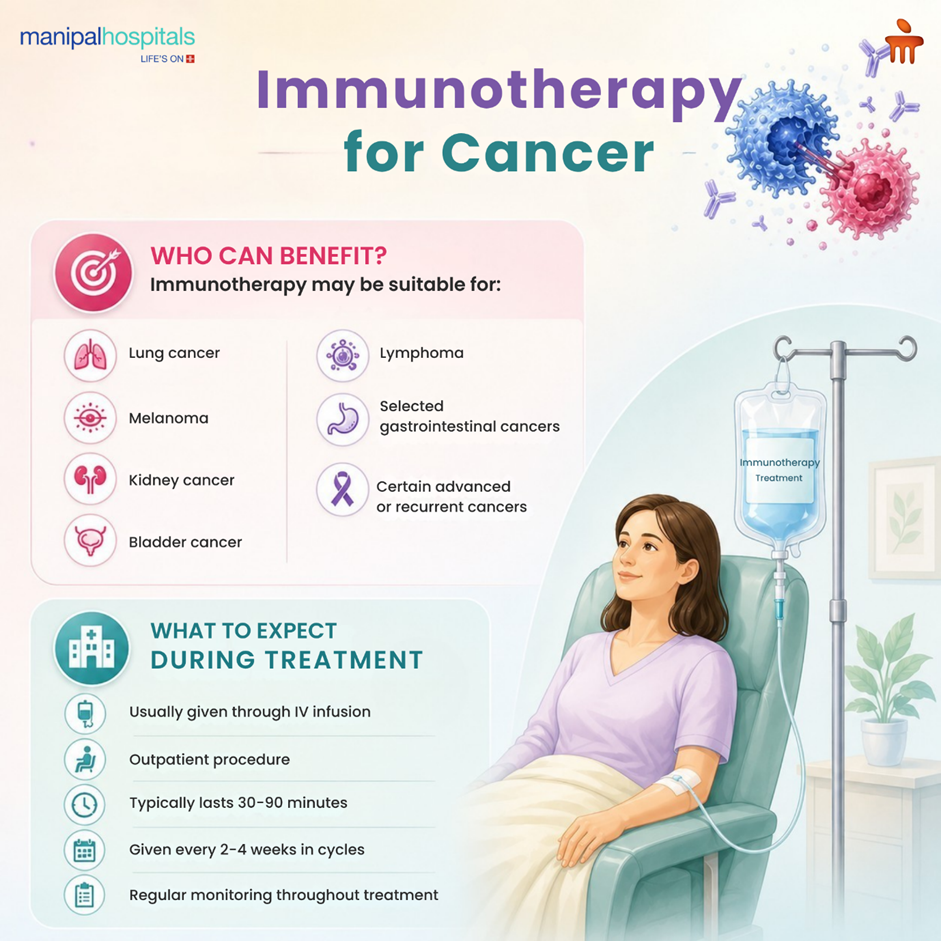
Determining Candidate Eligibility: Who Can Benefit?
Discovering whether this biological path is appropriate requires a detailed, patient-specific mapping process. Immunotherapy is not a universal solution for every diagnosis; eligibility depends heavily on the unique biological properties of the tumour rather than the stage of the illness alone. Specialists evaluate several core pillars to check your compatibility:
-
Tumour Biomarker Testing: Lab technicians perform detailed testing on a tissue sample to check for specific chemical pathways, such as high PD-L1 expression, or genetic flags like Microsatellite Instability-High (MSI-H). Pockets of tumours carrying these flags are significantly more visible to an enhanced immune system.
-
The Specific Cancer Type: While clinical indications expand regularly, this therapy has become a primary, highly successful cornerstone for specific conditions, including advanced lung cancer, melanoma, kidney cancer, bladder cancer, and certain lymphomas.
-
Overall Systemic Health: Because this approach coaxes your immune system into an active, high-energy state, your body must possess adequate organ reserves. Patients dealing with severe, active autoimmune diseases often require careful matching, as boosting the immune system could accidentally flare up their underlying condition.
Understanding the Treatment Process and Management
This therapy follows a distinct clinical progression compared to traditional interventions because it takes time for the immune system to build an active, sustained response.
What to Expect During Administration
The treatment is highly streamlined and typically administered as an outpatient procedure in a dedicated day-care oncology unit. The medicine is delivered directly into a vein via an intravenous (IV) infusion, with sessions usually lasting anywhere from 30 to 90 minutes. These sessions are arranged in structured cycles, often once every two, three, or four weeks, giving your body a dedicated window to rest and respond between clinic appointments.
Managing Potential Side Effects
Because this therapy amplifies your internal defences, immunotherapy side effects are entirely different from the hair loss, severe nausea, and deep tissue depletion commonly linked to traditional chemotherapy. Instead, side effects occur when an over-activated immune system accidentally causes mild, temporary inflammation in healthy tissues. The table below outlines common structural patterns, potential side effects, and how medical teams monitor your safety at each stage:
|
System Involved |
Potential Side Effect Signs |
Why It Happens |
Typical Clinical Game Plan |
|
Skin Layer |
Mild skin rash, localised itching, or patches of dry skin. |
Increased immune activity in the dermal layers. |
Soothing topical creams, mild antihistamines, and routine tracking. |
|
Digestive Tract |
Watery diarrhoea or mild abdominal cramping. |
Temporary inflammation inside the intestinal lining (colitis). |
Immediate hydration, dietary adjustments, or mild anti-inflammatory drugs. |
|
Hormonal System |
Unexpected fatigue, sudden weight shifts, or feeling uncomfortably cold. |
Altered signalling in the thyroid or pituitary glands may occur. |
Routine hormone tracking via blood tests and simple hormone replacements. |
|
Respiratory System |
A dry, persistent cough or shortness of breath. |
Mild, localised inflammation within the lung tissue (pneumonitis). |
Temporary rest from infusion cycles or short courses of corticosteroids. |
Prevention & Long‑Term Health Tips During Rehabilitation
Active participation in your daily wellness plays a major role in keeping your immune system stable and resilient throughout your infusion cycles:
-
Keep a transparent daily symptom log: Jot down any sudden shifts in your baseline comfort, such as new skin changes or changes in your stool frequency. Catching minor inflammation early allows your oncology team to adjust your care gently before it interrupts your timeline.
-
Prioritise consistent hydration: Drink plenty of clean water and clear fluids daily. This supports your kidney function, helps your body process metabolic waste efficiently, and minimises general fatigue between cycles.
-
Shield your skin from harsh elements: An active immune system can make your skin layers more sensitive. Use mild, fragrance-free moisturisers and apply a broad-spectrum sunscreen before stepping outdoors.
-
Practice reliable infection protection: While this treatment doesn't wipe out your white blood cells like chemotherapy, practising smart safety, like washing your hands regularly and avoiding crowded spaces during flu season, safeguards your healing reserves.
Conclusion
Embracing modern immunotherapy for cancer represents a profound shift toward working with your body’s natural intelligence to reclaim your health. From early biomarker mapping to long-term side effect monitoring, this specialised therapy offers a highly precise, evidence-backed pathway toward recovery.
If you are exploring advanced therapeutic options or seeking immunotherapy cancer treatment in Yeshwanthpur, consulting the medical oncology experts at Manipal Hospital Yeshwanthpur, regarded among the best hospitals for cancer treatment in Yeshwanthpur, Bangalore, can provide access to advanced molecular diagnostics, personalised care plans, and comprehensive support to help you move forward with confidence and peace of mind.
FAQ's
No. Chemotherapy uses strong medications to directly target and physically destroy rapidly dividing cells throughout the body. Immunotherapy works differently; it acts as a biological trainer that unmasks and strengthens your immune cells so they can find and clear out the cancer naturally.
Because your immune system must slowly build an active response, visible changes on follow-up scans usually take anywhere from 2 to 4 months to appear. In some cases, tumours may temporarily look slightly larger on an early scan due to healthy immune cells rushing into the tissue, a harmless phenomenon specialists call "pseudoprogression."
Yes, absolutely. Oncology teams frequently combine different modalities into a comprehensive treatment program. Using surgery or radiation to debulk a primary tumour can often make it significantly easier for an enhanced immune system to manage and clear any remaining microscopic cells.
The vast majority of immune-related side effects are temporary and can be easily managed. If a specific organ like the thyroid or colon becomes inflamed, temporary lifestyle measures or anti-inflammatory medications resolve it smoothly, and permanent issues are quite rare when tracked early.
Missing a cycle by a week or two to let a minor cold or temporary inflammation settle down is an incredibly standard, safe practice. Your immune cells maintain their training across blocks, and your care team will simply recalibrate your calendar to ensure optimal safety.
Share this article on:


.webp "Neurological disorders symptoms and treatment")