8 Min Read
When doctors suspect a kidney problem that blood tests or scans cannot fully explain, they may recommend a kidney biopsy. For many patients, hearing the word “biopsy” immediately creates anxiety. People often worry about pain, complications, or whether the test has already found something serious.
In reality, a kidney biopsy is a common procedure that helps doctors understand how well the kidneys are functioning and identify the type of disease affecting them. The test can provide information that routine tests may not always detect.
Knowledge about kidney biopsy meaning may make it easier for patients to have confidence before undergoing the test. Through this blog, a leading nephrologist and kidney transplant specialist in Yeashwanthpur, Bangalore, explains all you need to know about kidney biopsy, including kidney biopsy indications, post-kidney biopsy care, and what will be revealed by the kidney biopsy about the patient’s kidney. Patients looking for a kidney biopsy in Yeshwanthpur may find this article informative too.
Synopsis
- What Is a Kidney Biopsy?
- Why Do Doctors Recommend a Kidney Biopsy?
- What Will a Kidney Biopsy Reveal?
- How to Prepare for a Kidney Biopsy
- What Happens During the Procedure?
- Recovery After a Kidney Biopsy
- Risks Associated With Kidney Biopsy
- Conditions Commonly Diagnosed Through Kidney Biopsy
- Emotional Concerns Before the Procedure
- When Should You Consult a Nephrologist?
- Conclusion
What Is a Kidney Biopsy?
A kidney biopsy is a process to remove a tiny piece of kidney tissue to examine under a microscope. The tissue is examined under a microscope by a pathologist. The main reason for the test is to check for inflammation, infection, scarring, immunological issues, and any structural abnormalities of the kidney.
In order to better comprehend the meaning of a kidney biopsy, it is necessary to consider it as an examination method that enables direct examination of kidney tissue rather than depending on blood and urine results.
In most cases, the procedure is performed using a thin needle inserted through the skin with imaging guidance to locate the correct area.
A kidney biopsy may be:
-
Native kidney biopsy – performed on a patient’s own kidneys
-
Transplant kidney biopsy – performed after kidney transplantation
The results help nephrologists decide the most appropriate treatment plan.
Why Do Doctors Recommend a Kidney Biopsy?
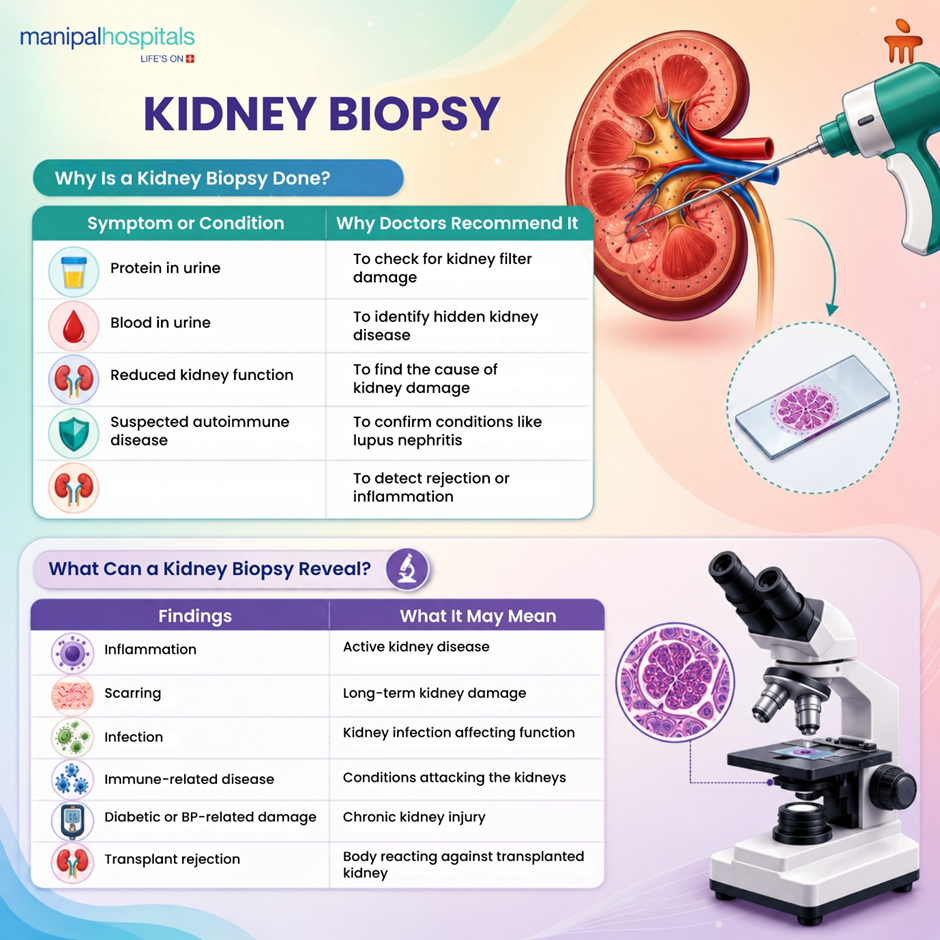
Doctors usually advise a kidney biopsy when other investigations cannot clearly explain kidney dysfunction. Several kidney biopsy indications may lead to the procedure being recommended.
-
Unexplained Protein in Urine: Protein leakage in the urine may indicate damage to the filtering units of the kidneys. A biopsy can help identify the underlying cause.
-
Blood in Urine: Persistent blood in urine without infection or stones sometimes requires tissue evaluation.
-
Reduced Kidney Function: A sudden or unexplained decline in kidney function is among the common kidney biopsy indications.
-
Suspected Autoimmune Disease: Conditions such as lupus nephritis may require biopsy confirmation before treatment begins.
-
Monitoring Transplanted Kidneys: Doctors may advise a kidney biopsy after transplantation if rejection or inflammation is suspected.
Understanding kidney biopsy meaning also involves recognising that the procedure helps guide treatment decisions rather than simply confirming disease.
What Will a Kidney Biopsy Reveal?
One of the most common patient concerns is what a kidney biopsy will reveal and whether the results will change treatment.
A kidney biopsy can identify:
-
Kidney inflammation
-
Immune-related disease
-
Scarring
-
Infection
-
Damage caused by diabetes or hypertension
-
Rejection after transplantation
-
Rare kidney disorders
The biopsy also helps doctors assess disease severity. In some situations, the amount of scarring visible under the microscope helps determine whether kidney damage may improve with treatment.
When patients ask what a kidney biopsy will reveal, nephrologists usually explain that the test helps answer both diagnostic and treatment-related questions.
How to Prepare for a Kidney Biopsy
Preparation plays an important role in reducing risks and ensuring accurate results.
Before the procedure, doctors may advise:
-
Blood tests
-
Urine tests
-
Blood pressure evaluation
-
Medication review
Patients are often asked to stop blood-thinning medicines temporarily because these medicines increase bleeding risk during a kidney biopsy.
It is also important to inform the nephrology team about:
-
Existing allergies
-
Pregnancy
-
Previous bleeding problems
-
Current medications
Patients undergoing a kidney biopsy in Yeshwanthpur are generally given detailed preparation instructions beforehand to help ensure the procedure proceeds safely.
What Happens During the Procedure?
Many people imagine surgery when they hear the word "biopsy," but most kidney biopsy procedures are minimally invasive.
-
Positioning: Patients usually lie on their stomachs during the test. If the biopsy involves a transplanted kidney, lying on the back may be required.
-
Local Anaesthesia: Doctors numb the skin using local anesthesia before inserting the biopsy needle. Patients may feel pressure, but sharp pain is usually minimal.
-
Imaging Guidance: Ultrasound or CT imaging helps guide needle placement accurately.
-
Tissue Collection: The doctor removes a small portion of tissue from the kidney using a thin needle. Sometimes, you may need more than one sample.
-
Observation: After the procedure, patients remain under observation for several hours while medical staff monitor blood pressure and urine output.
Understanding the meaning of a kidney biopsy often reduces fear because patients realise the procedure is brief and carefully monitored.
Recovery After a Kidney Biopsy
Recovery after a kidney biopsy is usually straightforward, although temporary soreness near the biopsy site may occur.
Doctors commonly recommend the following:
-
Bed rest for several hours
-
Avoiding heavy lifting for a few days
-
Drinking adequate fluids
-
Monitoring urine colour
Mild discomfort generally improves within a short time.
Patients should see a doctor if they notice:
-
Persistent bleeding in the urine
-
Fever
-
Severe pain
-
Dizziness
-
Difficulty passing urine
Patients undergoing a kidney biopsy in Yeshwanthpur are often given written discharge instructions to support safe recovery at home.
Risks Associated With Kidney Biopsy
Although generally safe, a kidney biopsy can have some complications. Some of the most common potential complications associated with a kidney biopsy include the following:
-
Bleeding
-
Bruising
-
Pain at the biopsy site
-
Infection
-
Blood in the urine (temporary)
Serious complications are uncommon because imaging guidance and careful monitoring improve safety considerably.
Doctors evaluate kidney biopsy indications carefully before recommending the procedure to ensure benefits outweigh potential risks.
Conditions Commonly Diagnosed Through Kidney Biopsy
Various forms of kidney diseases can be detected by using tissue tests.
-
Glomerulonephritis: It is characterised by the inflammation of the kidneys’ filters, necessitating a biopsy test.
-
Lupus Nephritis: Individuals with lupus disease can have their kidneys affected, calling for a biopsy test.
-
Nephrotic Syndrome: Heavy protein loss in urine sometimes results from diseases identified only through microscopic examination.
-
Diabetic Kidney Disease: A biopsy may help distinguish diabetic damage from other kidney conditions.
-
Transplant Rejection: In transplant patients, biopsy helps identify immune-related rejection early.
These examples explain why kidney biopsy indications vary depending on symptoms and changes in kidney function.
Emotional Concerns Before the Procedure
It is common for patients to feel anxious before the procedure. Some patients have fears about pain, whereas others fear the diagnosis that may result from the procedure. It is important to speak with the nephrologists, who usually help reduce patient fears. Once patients understand what exactly happens during a kidney biopsy, they get better prepared for the procedure. It might also help to consult your family members both prior to and following the procedure.
When Should You Consult a Nephrologist?
Kidney-related symptoms should not be ignored, especially when they continue for a long time. Medical evaluation is important if you experience:
-
Swelling in the legs or face
-
Foamy urine
-
Blood in the urine
-
Reduced urine output
-
High blood pressure
-
Persistent fatigue
Understanding kidney biopsy indications may help patients seek timely medical care and avoid delays in diagnosis.
Conclusion
A kidney biopsy helps doctors understand what is happening inside the kidneys when scans and routine tests cannot provide enough information. The procedure can identify inflammation, kidney damage, infections, and the severity of kidney disease, helping doctors plan the right treatment. Patients who wonder what a kidney biopsy shows can better understand why this test is important for accurate diagnosis and timely medical care.
Patients looking for a kidney biopsy in Yeshwanthpur may consult the kidney specialists at Manipal Hospital Yeshwanthpur for advanced diagnosis and treatment.
FAQ's
Most patients experience only mild discomfort because local anesthesia is used during the procedure. Some soreness near the biopsy site may occur temporarily after the test.
A kidney biopsy might show inflammation, scar tissue, immune disorders, infections, organ rejection, or other structural abnormalities that may occur in the kidney and affect kidney function.
Recovery time is typically short. Most patients recover within a few days, though strenuous activity should be avoided for about one to two weeks.
The risks involved may be those of bleeding, pain, bruising, or infection. These risks are low because the test is supervised with imaging and observation after the test.
Kidney biopsy can be done by consulting nephrology experts in Yeshwanthpur to obtain a proper diagnosis and appropriate treatment based on the results obtained from the biopsy.
Share this article on:


.webp "All You Need to Know About the Stages, Signs, and Treatment for Chronic Kidney Disease (CKD)")


.webp "Neurological disorders symptoms and treatment")