7 Min Read
Children grow quickly, and their bodies rely heavily on proper nutrition to support learning, immunity, and development. Yet, a silent health issue affects millions across India—worm infestation in children. These parasites quietly undermine nutrition, weaken the body, and slow down physical and mental development.
Parents believe that worms are not common or easily identifiable, but this perception is far from the truth. Soils are infested with parasites such as hookworms, roundworms, and whipworms, which affect a large number of children, especially in areas where sanitation problems are acute. India has a large burden of these infections, with a significant proportion of children at risk.
This point is where National Deworming Day becomes important. The initiative focuses on regular deworming in children, helping protect them from anaemia, poor growth, and nutritional deficiencies caused by parasites. In this blog, you will learn how worm infections affect children, how to recognise early warning signs, the underlying causes, and the role of prevention, treatment, and long-term care in keeping your child healthy.
Synopsis
- Why Worm Infestation in Children is a Serious Health Concern?
- Signs and Symptoms of Worm Infestation in Children
- What Causes Worm Infestation in Children?
- How Deworming in Children Supports Healthy Growth
- Recommended Deworming Schedule for Children
- Prevention of Worm Infestation in Children
- Management of Worm Infestation in Children
- Conclusion
Why Worm Infestation in Children is a Serious Health Concern?
Worm infections are more than just an uncomfortable nuisance. Over time, parasites living in the intestine begin to compete with the child’s body for nutrients, which can quietly undermine overall health. Because children are still growing, even small nutritional losses can have a noticeable impact.
The signs and symptoms will gradually manifest. A previously energetic-looking child might now look lethargic, have difficulty eating, and show signs of slowed growth. Perhaps one of the greatest concern is iron deficiency anaemia, especially since hookworms attach to the lining of the intestines and feed on blood.
Some broader consequences of worm infestation in children include:
-
Chronic blood loss that contributes to iron deficiency
-
Reduced absorption of important nutrients from food
-
Delayed physical growth and weight gain
-
Lower concentration levels and learning difficulties
-
Increased vulnerability to infections due to weakened immunity
Studies from school-based deworming programmes in India have shown how addressing these infections can significantly improve children’s health and learning capacity.
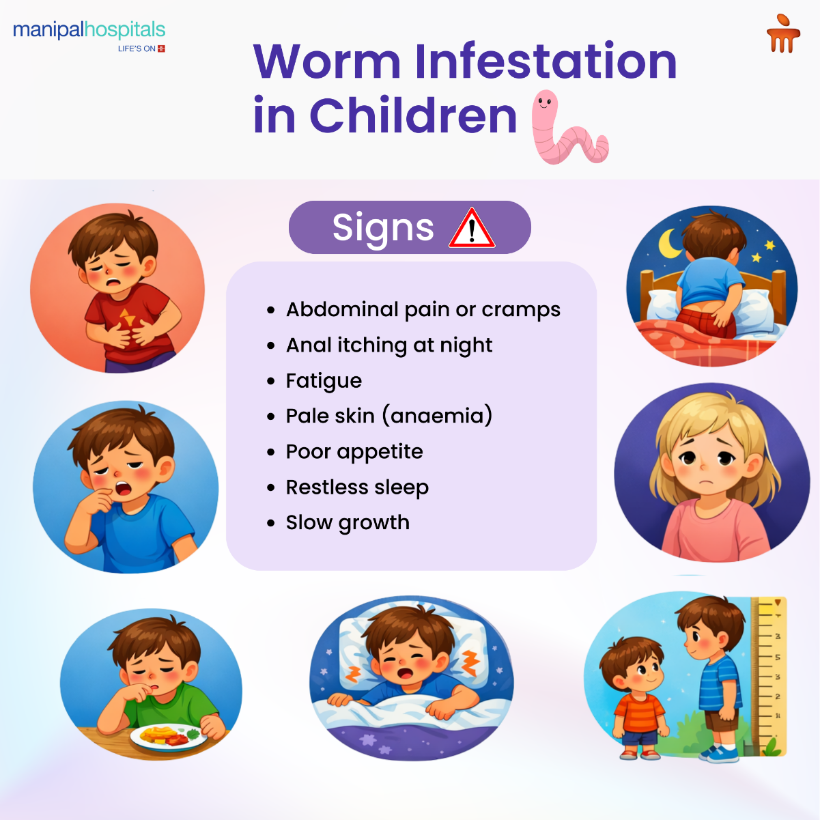
Signs and Symptoms of Worm Infestation in Children
Early symptoms can be subtle, which is why worm infections often remain unnoticed for long periods. Many children may not complain clearly about what they feel, and the signs may resemble everyday health issues.
As the infection progresses, certain patterns begin to appear. Paying attention to these clues can help you recognise signs and symptoms of worm infestation in children before the condition affects growth and nutrition.
Common warning signs include:
-
Persistent abdominal discomfort or cramps
-
Pale skin caused by developing anaemia
-
Unusual fatigue or low energy levels
-
Unexplained weight loss or poor appetite
-
Anal itching, especially at night
-
Restlessness or disturbed sleep
-
Slower height or weight gain over time
In long-standing infections, parasites interfere with how the body absorbs nutrients from food. This can gradually lead to malnutrition, which may affect physical development and even academic performance at school.
What Causes Worm Infestation in Children?
Children are naturally curious and active. They tend to spend time playing at outdoor places, exploring their surroundings, and closely associating with other children. While doing this, they expose themselves to parasites from the environment.
The causes of worm infestation in children are often linked to hygiene and environmental conditions rather than a single behaviour. Parasite eggs can survive in soil, water, or contaminated surfaces and enter the body through the mouth.
Some common transmission routes include:
-
Playing in soil that contains parasite eggs
-
Eating food that has not been washed properly
-
Drinking contaminated water
-
Walking barefoot on soil where hookworm larvae may be present
-
Poor hand hygiene after using the toilet or before meals
Because reinfection can occur easily in environments where parasites are common, public health programmes emphasise routine deworming alongside hygiene education.
How Deworming in Children Supports Healthy Growth
Removing intestinal parasites allows the body to regain control over nutrient absorption. Once worms are eliminated, the digestive system can function normally again, enabling children to benefit fully from the food they eat.
Regular deworming in children is therefore not just about removing parasites—it helps restore balance in the body. Many children show noticeable improvements in appetite, energy levels, and concentration once treatment clears the infection.
The benefits of consistent deworming include:
-
Reduced intestinal blood loss caused by parasites
-
Improved absorption of iron and other nutrients
-
Increased haemoglobin levels in children with anaemia
-
Better weight gain and physical growth
-
Improved attention and learning capacity
School-based deworming programmes have demonstrated remarkable outcomes. In some communities, the prevalence of anaemia dropped dramatically after consistent deworming combined with nutritional support.
Recommended Deworming Schedule for Children
Appropriate age-based dosing is critical for administration of medication. Authorities have set appropriate guidelines to ensure the right medication is administered to children in the right phase of development.
|
Age Group |
Recommended Dose |
Frequency |
Why It Matters |
|
Below 12 months |
Deworming not recommended |
|
The digestive system is still developing, and treatment is usually avoided unless advised by a doctor. |
|
13-23 months |
200 mg single dose |
Every 6 months |
Helps eliminate early parasitic infections during a stage of rapid physical growth. |
|
2-5 years |
400 mg single dose |
Every 6 months |
Prevents nutritional loss during early childhood development. |
|
6 - 14 years |
400 mg single dose |
Every 6 months |
Supports growth, learning ability, and energy levels during school years. |
|
High-risk communities |
Maybe more frequent |
Used when reinfection rates are particularly high. |
These schedules form the backbone of national deworming initiatives aimed at protecting children across schools and communities.
Prevention of Worm Infestation in Children
While treatment removes existing infections, prevention reduces the chances of worms returning. Often, simple lifestyle habits can significantly lower the risk of exposure.
Parents can support the prevention of worm infestation in children by encouraging everyday hygiene practices at home.
Some helpful preventive measures are:
-
Children should be taught to wash their hands before eating.
-
Fruits and vegetables should be washed properly.
-
Barefoot walking on the ground should be avoided.
-
Proper sanitation facilities should be maintained in the home.
-
Nails should be kept short to avoid the accumulation of dirt.
Schools and communities also play an important role in the prevention and spread of this disease.
Management of Worm Infestation in Children
As soon as the presence of the infection is confirmed, the management of the infection, which involves the elimination of the worms as well as the nutritional balancing of the child, becomes important.
The management of the worm infestation in children includes:
-
The administration of the recommended medication for the elimination of the worms
-
The nutritional balancing of the child
-
Monitoring the levels of haemoglobin if the presence of anaemia is suspected
-
Iron therapy is recommended by the doctor
Iron therapy, as suggested by the doctors, is usually recommended for the management of the nutritional anemia. While the medication eliminates the worms, iron therapy helps in building up the healthy levels of haemoglobin, which may have been lowered due to the continuous blood loss.
Conclusion
National Deworming Day highlights a simple yet powerful step in protecting children’s health. Regular deworming in children helps prevent nutritional loss, reduces anaemia risk, and supports healthy growth during the most important years of development. When combined with proper hygiene, balanced nutrition, and medical guidance, it becomes a strong defense against worm infestation in children. Parents play a crucial role by recognising early warning signs, ensuring routine deworming schedules are followed, and seeking professional advice when symptoms persist. If a child shows signs of persistent fatigue, poor growth, or anaemia, consulting a paediatric specialist at Manipal Hospitals Whitefield can provide clarity and the right care plan.
FAQ's
Yes, worm infections can still occur despite excellent household hygiene. Parasite eggs often exist in soil, contaminated water, or public spaces such as playgrounds. Children may accidentally ingest these microscopic eggs while playing outdoors or touching contaminated surfaces. Even in urban environments, exposure can occur through improperly washed vegetables or shared environments like schools and parks.
Transmission within families is possible, particularly when hygiene practices are inconsistent. Children may share toys, bedding, or bathroom spaces where parasite eggs can linger. If one child is diagnosed with a worm infection, doctors sometimes recommend evaluating other children in the household and reinforcing strict hygiene routines to reduce the risk of reinfection.
In many tropical regions, infections tend to increase during warmer and more humid months because parasite eggs survive longer in moist soil. Rainy seasons can also contribute to contamination of water and soil, increasing exposure risk. However, because parasites can persist in the environment for extended periods, infections can occur throughout the year.
Yes, children with intestinal parasites often experience changes in appetite. Some may lose interest in food due to abdominal discomfort, while others may feel constantly hungry because parasites are consuming nutrients from the digestive tract. Both situations can interfere with proper nutrition and lead to weight changes over time.
Absolutely. Many worm infections remain silent in the early stages. Children may appear generally healthy while parasites slowly affect nutrient absorption. Because symptoms may not appear immediately, routine deworming programmes are recommended to prevent infections from progressing unnoticed.
Share this article on: