9 Min Read
Have you been trying to put on weight, but the scale simply refuses to move? You are eating more, yet nothing seems to change. Gaining weight the right way, especially when you want to do it fast, requires a clear strategy. It is about choosing the right foods, planning your meals intelligently, and pairing your diet with exercise that builds muscle rather than just storing fat.
This blog explains the science behind healthy weight gain, gives practical weight gain diet and meal-planning steps, and shares realistic weight gain tips you can start right away.
Synopsis
- How Weight Gain Works: The Simple Science
- Realistic Targets: How Fast is Safe?
- Build Your Weight Gain Diet: What to Eat and Why
- High-Calorie Foods for Weight Gain
- Meal Planning: A Day to Start Putting On Weight Fast
- Weight Gain Exercise: Build Muscle, Not Just Fat
- Practical Weight Gain Tips That Actually Work
- Conclusion
How Weight Gain Works: The Simple Science
To reliably gain weight, you need a sustained calorie surplus: consume more calories than the body burns. But what kind of weight matters? Aiming for healthy weight gain focuses on building muscle and adding some healthy fat rather than only storing excess calories as fat.
That means:
-
Eating more energy-dense foods and increasing portion sizes.
-
Prioritising protein to support muscle growth.
-
Doing resistance weight-gain exercise to turn extra calories into muscle.
-
Spacing meals and snacks so total calories increase comfortably without digestive upset.
If you want to know how to gain weight fast, these factors must work together. Rushing with sugary snacks may raise the scale temporarily, but it will not give you the strength, energy, or health benefits you actually want.
Realistic Targets: How Fast is Safe?
Aiming to gain 0.25–0.5 kg per week is a practical and safer pace for most people who want mostly muscle and limited fat. This translates to about half a kilogram to one kilogram every two weeks. If you have a medical reason for needing a weight gain diet quickly, your doctor may give you different guidelines that allow for faster weight gain while under close supervision. Rapid, unmonitored weight gain (e.g., trying to gain 5 kg in a month) creates stress on your body's metabolism and should be avoided at all costs.
Build Your Weight Gain Diet: What to Eat and Why
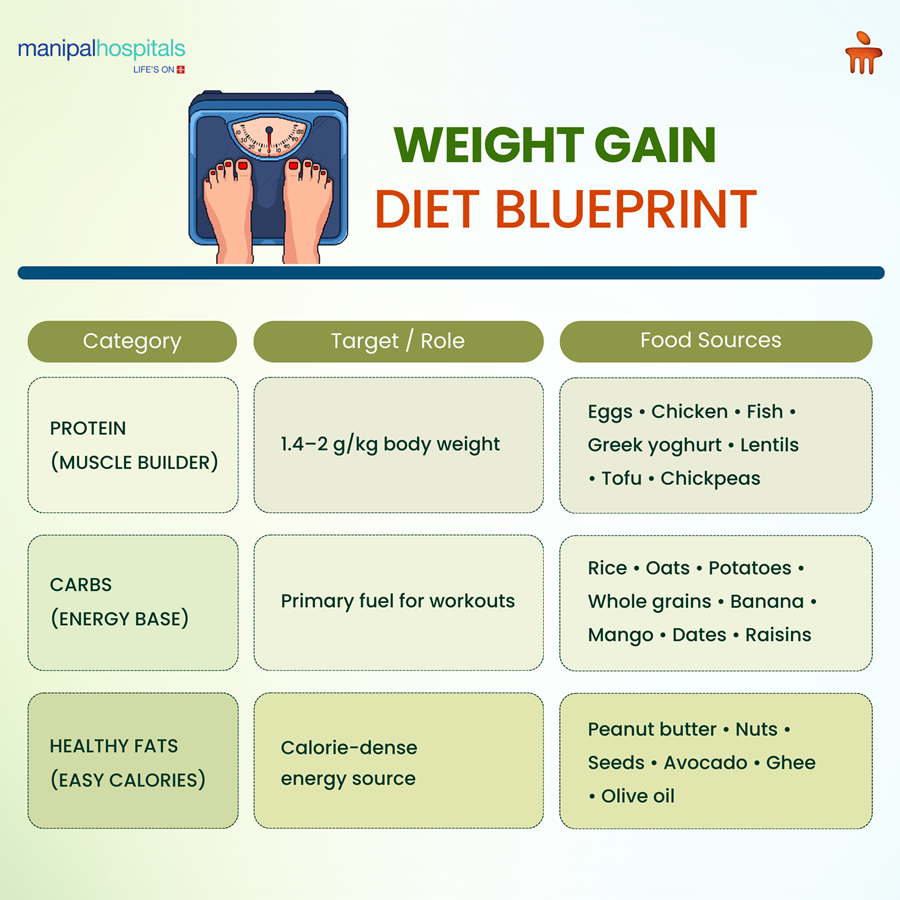
The ideal weight gain diet combines calorically dense food choices with adequate amounts of protein, healthy fats, and nutrient-rich carbohydrate options. Here’s the blueprint:
Protein: The Muscle Builder
Aim for 1.4–2.0 g of protein per kg of body weight daily. Good sources include:
-
Eggs, dairy (Greek yoghurt, cheese), lean meats, poultry, fish
-
Plant options: lentils, chickpeas, tofu, tempeh, edamame, quinoa
Protein helps the body convert extra energy into muscle when paired with resistance training.
Carbohydrates: The Energy Base
Carbohydrates are your primary fuel source. They replenish your energy stores and power your workouts so you can train hard enough to stimulate growth.
-
Whole grains (oats, rice, whole-wheat bread), potatoes, pasta, millets
-
Include fruits for weight gain, like bananas, mangoes, and dried fruits (dates and raisins), which add calories and micronutrients.
Healthy Fats: High-Calorie, Nutrient-Dense
Fats are the easiest way to increase calories without huge meal volumes:
-
Nuts, nut butters, seeds, avocado, full-fat dairy, olive oil, ghee
-
Add oils or nut butter to smoothies, porridge, and cooked meals for easy calorie boosts.
Calorie-Dense Snacks
Trail mix, granola, smoothies with milk/yoghurt, peanut butter sandwiches, cheese, and crackers.
High-Calorie Foods for Weight Gain
Choose foods that pack lots of calories in small amounts:
-
Nut butters: 1 - 2 tbsp added to smoothies, oats, toast
-
Oils: Drizzle olive or avocado oil on rice, pasta, or veggies
-
Full-fat dairy: Milk, yogurt, cheese
-
Avocados: High in calories
-
Dried fruits: Raisins, dates, figs, apricots
-
Smoothies/milkshakes: Liquid calories are easier to consume than solids. (e.g., smoothies with milk, oats, peanut butter, banana, honey)
-
100% fruit juice or smoothies (not diet drinks)
-
Protein in every meal/snack: eggs, yoghurt, milk, chicken, tofu, beans, lentils, or protein powder.
Meal Frequency
-
5-6 smaller meals/snacks instead of 3 large ones
Track Progress
-
Weigh yourself once per week, at the same time, under the same conditions.
-
Aim for ~0.25–0.5 kg gain per week.
Note:
-
Eat in a relaxed environment (stress can reduce appetite).
-
Add flavour and variety—sauces, herbs, and cheese.
-
Avoid filling up on low-calorie foods (like plain veggies or broth).
-
Mild exercise (like resistance training) can boost appetite naturally.
Don'ts:
-
Don't Rely on Junk Food or Fast Food
-
Instead: Focus on nutrient-dense, high-calorie foods—nuts, dairy, eggs, avocados, olive oil, and whole grains.
Meal Planning: A Day to Start Putting On Weight Fast
Knowing what to eat is helpful, but seeing how it all fits together makes it actionable. Here is an example of a solid meal plan for weight gain diet. Aim to eat every 2.5 to 3 hours to maintain a steady flow of calories.
-
Breakfast: Oat porridge made with whole milk, 2 tbsp peanut butter, sliced banana, and honey.
-
Mid-Morning Snack: Smoothie: whole milk, 1 banana, Greek yoghurt, 2 tbsp oats, and a handful of nuts.
-
Lunch: Rice or chapati, a generous serving of dal or chickpea curry, sautéed vegetables with ghee or olive oil, and salad with avocado.
-
Afternoon Snack: Peanut butter sandwich on whole-grain bread + a glass of milk.
-
Pre-Workout: Small banana + 1 tbsp honey or a small energy bar.
-
Post-Workout Dinner: Grilled chicken or tofu, mashed potatoes with butter, steamed greens, and a bowl of curd.
-
Evening Snack: Full-fat yoghurt with granola and dried fruits, or trail mix.
Adjust portion sizes as you progress. If the scale does not move in a week or two, add another 300 to 500 calories per day until you see consistent results.
Weight Gain Exercise: Build Muscle, Not Just Fat
A crucial point that often surprises people is that you cannot simply eat your way to a better body. If your goal is how to gain weight fast in a way that looks good and leaves you feeling strong, you must include exercise. Without resistance training, most of the weight you gain will be fat rather than muscle.
Key Principles
-
Focus on compound lifts: squats, deadlifts, bench presses, rows, and overhead presses. These stimulate large muscle groups.
-
Train 3–5 times per week with progressive overload (gradually increase weight or reps).
-
Include 8–12 reps per set for hypertrophy (muscle growth) with 3–4 sets per exercise.
-
Prioritise recovery: muscles grow during rest. Get 7–9 hours of sleep and space sessions to avoid overtraining.
-
Pair workouts with immediate post-workout nutrition (20–40 g protein + carbs).
Sample Weekly Plan
-
Day 1: Leg Work (squats, lunges, and leg press)
-
Day 2: Upper Body Push (bench press, overhead press, and tricep exercises)
-
Day 3: Active or Rest Recovery (walking, stretching)
-
Day 4: Upper Body Pull (rows, pull-ups, and bicep curls)
-
Day 5: Total Body Compound (full body exercises) + Core Work
-
Saturday and Sunday: Low to Moderate Activity and/or Mobility/Active Recovery
If you are new to strength training, have a trainer or expert supervise your technique to avoid injury.
Practical Weight Gain Tips That Actually Work
Here are some practical weight gain tips that real people find sustainable:
-
Eat more often, 5–6 meals/snacks daily.
-
Liquid calories help: smoothies, milkshakes, lassi, and sips between meals.
-
Add a spoonful of nut butter, cream, or oil to meals for extra calories.
-
Choose dense carbs and fats over empty sugars.
-
Track intake for 1–2 weeks to estimate deficits; use an app to guide increases.
-
Prioritise protein at every meal.
-
Be patient: small sustainable increases are better than binge eating.
-
Consider a multivitamin if appetite is low; check with a clinician.
-
Monitor weight weekly and adjust calories gradually.
-
If appetite is a problem, eat favourite foods first and set small achievable targets.
Conclusion
If your priority is how to gain weight fast, combine a calorie-rich, balanced weight gain diet with regular strength training and sensible supplements. Focus on nutrient-dense calories, protein for muscle growth, and steady, monitored increases rather than crash tactics. If appetite, digestion, or medical issues limit progress, get professional support. For in-person guidance and personalised meal planning or training plans, book a weight gain consultation in Whitefield at Manipal Hospital.
FAQ's
Yes, a calorie surplus alone will increase weight, but without resistance exercise, most gains will be fat. Combining diet with strength training gives you better results.
High-calorie fruits like bananas, mangoes, grapes, and dried fruits such as dates and raisins add natural sugars and nutrients. They work well as snacks or in smoothies.
Roughly an extra 500 kcal per day above maintenance can produce about 0.5 kg gain weekly, though individual needs vary. Track your progress and adjust accordingly.
Quality shakes can help meet calorie needs. Choose products with balanced protein and limited added sugars, and use them alongside training and medical advice.
With consistent diet and training, noticeable changes often appear in four to eight weeks. Muscle gain takes time, so persistence and progressive overload are essential.
Share this article on: