8 Min Read
Reaching 10 weeks pregnant marks a meaningful point in early pregnancy. Many women are beginning to adjust to the reality of pregnancy, even though the journey may still feel new and uncertain. Physical changes may be subtle from the outside, yet internally, the body is working intensely to support a developing life. Hormones are rising, organs are forming, and the baby is rapidly growing from a tiny cluster of cells into a recognisable human form.
This stage can bring excitement, curiosity, and sometimes worry about whether everything is progressing as it should. Understanding what typically happens during this week often helps ease those concerns. From how the baby is developing to the changes a pregnant woman may experience, there is a lot unfolding at this stage.
This blog explores what life looks like at 10 weeks pregnant, including the baby’s development, common pregnancy symptoms, and more.
Synopsis
Baby Development at 10 Weeks Pregnant
By week ten, the embryo is now called a foetus, a change that reflects a shift from forming major structures to refining them. The baby already looks distinctly human: the head is still proportionally large because the brain is developing rapidly, and facial features are becoming more defined. Inside, systems are making quick progress:
-
The brain is producing thousands of nerve cells each minute.
-
Fingers and toes have separated and are no longer webbed.
-
Tiny fingernails and the beginnings of hair follicles appear.
-
The heart is beating steadily and circulating blood.
-
Small movements begin, though they are too faint to feel yet.
On an ultrasound, these tiny wriggles and stretches may be visible, giving an early glimpse of the foetus’s activity.
10 Weeks Pregnant: Baby Size
One of the most common questions expectant parents have during early pregnancy is about growth. By the tenth week, the baby has grown rapidly compared to just a few weeks earlier.
The 10-week-old baby's size is often compared to a small fruit for easier visualisation. From crown to rump (head to bottom), the baby usually measures around 3 to 4 centimetres in length and weighs approximately 4 to 5 grams. That sounds tiny, but the pace of development is remarkable:
-
Limbs lengthen, and joints such as elbows and knees can bend.
-
The digestive system is beginning to function.
-
The liver starts producing blood cells.
Growth will continue rapidly, and by the end of the first trimester, the foetus will have increased noticeably in both length and weight.
What Happens During a 10-Week Pregnant Ultrasound?
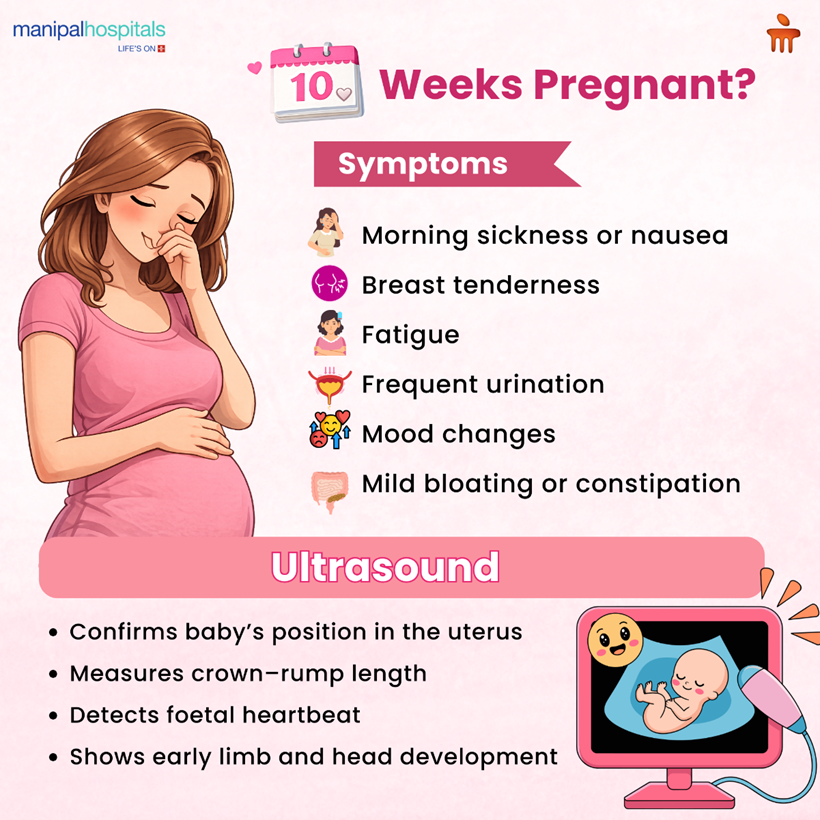
Seeing the baby on a scan can be one of the most reassuring experiences during early pregnancy. Around this stage, doctors may recommend a 10-week pregnancy ultrasound to confirm that the pregnancy is progressing normally. Typical objectives of the scan include:
-
Confirming the foetus’s position inside the uterus.
-
Measuring crown–rump length to improve gestational dating.
-
Detecting and assessing the heartbeat.
-
Observing early limb and head development.
-
Checking surrounding structures, for example, the yolk sac and placental beginnings.
Parents often see a clear head, body, and small limb buds on the screen and may notice the foetus moving slightly during the scan. When a heartbeat is visible, it significantly lowers the estimated risk of early pregnancy loss, though individual risks always depend on personal health and history. Consult a gynecologist in Whitefield, Bangalore for personalised guidance and monitoring.
Common 10-Week Pregnant Symptoms
For many women, the tenth week continues to be part of the first trimester when hormonal changes are most noticeable. While every pregnancy is different, certain 10-week pregnancy symptoms are commonly reported.
These symptoms occur because the body is adjusting to high levels of pregnancy hormones such as human chorionic gonadotropin (hCG) and progesterone.
Symptoms Frequently Experienced Around Week 10
|
Morning sickness |
Nausea and occasional vomiting may still be present, particularly in the morning or when the stomach is empty. |
|
Breast tenderness |
The breasts may feel fuller or more sensitive due to increased blood flow and hormonal changes. |
|
Fatigue |
Many women feel unusually tired because the body is using extra energy to support the pregnancy. |
|
Frequent urination |
The growing uterus and hormonal shifts increase the urge to urinate. |
|
Mood fluctuations |
Emotional changes may occur as hormone levels fluctuate. |
Although these symptoms can be uncomfortable, they usually begin to ease gradually as the second trimester approaches.
Subtle Changes Happening Inside Your Body
Alongside foetal development, your body is adapting in ways that aren’t always visible. These changes support the placenta and the baby’s growing needs:
-
Blood volume rises to carry oxygen and nutrients more efficiently, and you may feel warmer or notice more visible veins.
-
The uterus is expanding; by week ten, it’s roughly the size of a small orange and still mostly within the pelvis.
-
Progesterone slows down digestion by relaxing the muscles in the intestines. This can lead to bloating or constipation.
-
The placenta continues to develop, slowly taking on the role of nutrient and oxygen transfer.
These internal shifts are essential for maintaining a healthy pregnancy, even when they’re not obvious on the outside. Click here to check the important scans during pregnancy.
Weekly Pregnancy Milestones Around Week 10
Tracking pregnancy week by week can help parents understand how quickly development progresses. The following table highlights some milestones and health markers that healthcare professionals monitor during this stage
|
Pregnancy marker |
Typical observation at 10 weeks |
Why it matters |
|
Crown–rump length measurement |
~30–40 mm |
Helps confirm gestational age accurately |
|
Foetal heart rate |
Usually 160–180 beats per minute |
Shows healthy cardiac activity |
|
Placental development |
Ongoing formation and improving blood flow |
Critical for nutrient and oxygen transfer |
|
Amniotic fluid volume |
Gradually increasing |
Cushions and protects the foetus |
|
Neural development |
Rapid nerve connection formation |
Foundation for brain and spinal cord function |
|
Limb formation |
Arms and legs identifiable |
Begins early skeletal and muscular growth |
Taking Care of Yourself at 10 Weeks Pregnant
At ten weeks, simple, steady habits make a big difference. Focus on nutrition, rest, and the appointments that monitor progress. Useful tips include:
-
Eat small, frequent meals to help manage nausea.
-
Stay hydrated throughout the day.
-
Continue prenatal vitamins, especially folic acid, iron, and a source of protein.
-
Aim for gentle physical activity like walking or prenatal yoga if your pregnancy is uncomplicated.
-
Prioritise sleep and short naps when fatigue is strong.
-
Keep up with scheduled prenatal visits and discuss any concerns with your clinician.
These choices help support both your well-being and the baby’s steady growth.
Conclusion
Hitting 10 weeks pregnant is a meaningful checkpoint: the foetus looks recognisably human, organs are developing and refining, and your body is steadily adjusting to meet these demands. While some first-trimester symptoms may continue, many people find gradual relief as the weeks pass. Regular care, balanced nutrition, and sensible rest give the best support at this stage. For personalised guidance and follow-up, speak with our trusted gynaecology team at Manipal Hospital Whitefield.
FAQ's
Yes. At ten weeks, the uterus is still relatively small and often remains within the pelvis. Some people notice mild fullness, but a clearly visible bump usually appears later, commonly between 12 and 16 weeks, depending on body type and prior pregnancies.
Not in the way we understand pain. The nervous system is forming, but the complex brain connections required to perceive pain develop much later in pregnancy.
Risk falls significantly after the earliest weeks. If a heartbeat has been seen on ultrasound around this time, the chance of miscarriage is lower than in the very early weeks, though individual factors still matter. Regular prenatal care helps monitor and address risks.
For most uncomplicated pregnancies, moderate exercise like walking, prenatal yoga, and swimming is safe and beneficial. Avoid high-risk activities with a fall or abdominal impact risk, and check with your clinician if you have concerns.
Many first-trimester screenings are scheduled between 11 and 13 weeks. These often combine ultrasound measurements with blood tests to assess risks for certain chromosomal conditions.
Share this article on: