7 Min Read
Is your body trying to tell you something about your kidneys?
What if the tiredness you’ve been ignoring, the swelling in your feet, or the subtle change in your urine is your body’s quiet way of asking for attention?
Kidney failure usually develops gradually. In most cases, it develops gradually, often beginning with mild kidney disease symptoms that are easy to dismiss. Many people attribute these signs to stress, ageing, dehydration, or a busy lifestyle. But when kidneys begin to lose their ability to filter waste and excess fluid from the blood, the body starts showing signals, sometimes subtle, sometimes persistent. When kidney disease symptoms are identified early, progression toward kidney failure can often be slowed or even prevented.
This blog explains the common kidney disease symptoms, what causes kidney failure, how doctors confirm a diagnosis, and the treatment choices from lifestyle measures to dialysis and transplant.
Synopsis
From Healthy Kidneys to Kidney Failure
Your kidneys are remarkable organs. Every single day, they filter nearly 150 litres of blood, removing waste products, balancing electrolytes, regulating blood pressure, and helping produce red blood cells. When these functions begin to decline significantly, the condition is referred to as kidney failure.
Kidney failure can be:
-
Acute - Sudden and often reversible if treated promptly
-
Chronic - Gradual, progressive damage over months or years
Chronic kidney disease (CKD) is particularly concerning because it progresses silently. Many people do not recognise early kidney disease symptoms until the damage becomes advanced. This is why awareness matters. Identifying signs of kidney failure early allows for timely intervention, which can slow progression and reduce complications.
Symptoms of Kidney Failure
One of the challenges with kidney problems is that early kidney disease symptoms are often vague. They don’t cause dramatic pain or obvious discomfort in the beginning. Instead, they appear as small but persistent changes in how you feel.
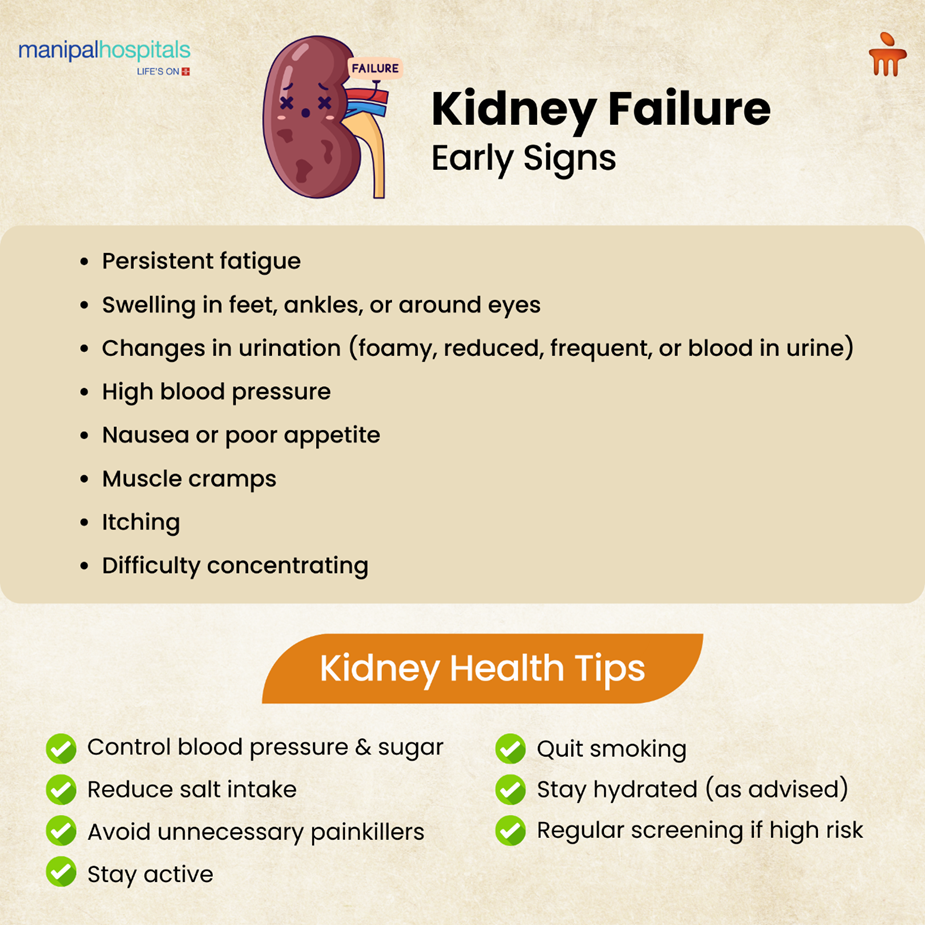
Common early signs of kidney failure include:
-
Persistent fatigue or low energy
-
Swelling in the feet, ankles, hands, or around the eyes
-
Changes in urination (frequency, foamy urine, blood in urine)
Beyond what you can see, kidney failure causes a buildup of toxins and waste in your bloodstream, which affects your entire body.
You may notice other such related kidney disease symptoms:
-
Difficulty concentrating
-
Poor appetite or nausea
-
Muscle cramps, especially at night
-
Persistent itching
-
High blood pressure that is difficult to control
You might also notice an unpleasant metallic taste in your mouth or have really bad breath. Some people describe a persistent "pins and needles" feeling in their fingers or toes, or painful muscle cramps, especially at night.
If you notice multiple symptoms lasting more than two weeks, a medical evaluation is strongly recommended.
What Causes Kidney Failure?
Understanding the cause is crucial because treatment focuses on addressing the underlying problem. In India and globally, the leading causes of kidney failure include:
1. Diabetes
High blood sugar damages small blood vessels in the kidneys over time. Diabetic kidney disease is one of the most common causes of chronic kidney failure.
2. High Blood Pressure
Long-standing uncontrolled hypertension weakens kidney blood vessels, impairing their filtering ability.
3. Recurrent Infections or Obstruction
Repeated urinary infections, kidney stones, or prostate enlargement can obstruct urine flow and damage kidney tissue.
4. Autoimmune Conditions
Diseases such as glomerulonephritis cause inflammation of the kidney filters.
5. Long-Term Medication Use
Excessive use of certain painkillers (NSAIDs) or nephrotoxic drugs can gradually impair kidney function.
By controlling these conditions early, the risk of progressing to kidney failure reduces significantly.
How is Kidney Failure Diagnosed?
If kidney disease symptoms raise concern, doctors perform simple yet effective tests to confirm the diagnosis.
Diagnostic evaluation typically includes:
-
Blood test – checks your Glomerular Filtration Rate (GFR) by looking at the level of creatinine in your blood. This tells the doctor how well your kidneys are filtering.
-
Urine tests – look for protein or blood to detect early damage
-
Electrolyte levels – check potassium and sodium balance
-
Ultrasound scan – assess kidney size and structure
In select cases, a kidney biopsy
These tests thus help determine the stage of disease and guide planning for kidney failure treatment.
Stages of Kidney Disease and What They Mean
Kidney disease is divided into stages based on a blood test called 'eGFR', which shows how well your kidneys are filtering waste. The stage helps determine how serious the condition is, from early prevention and monitoring to planning advanced kidney failure treatment when needed. The following are the stages:
|
Stage |
eGFR Range (ml/min) |
What It Means |
|
Stage 1 |
90 or above (normal/high) |
The kidneys are functioning well, but there are early signs of damage, such as protein in the urine |
|
Stage 2 |
60–89 |
Mild reduction in kidney function with evidence of damage |
|
Stage 3 |
30–59 |
Moderate reduction in kidney function |
|
Stage 4 |
15–29 |
Severe reduction in kidney function |
|
Stage 5 (Kidney Failure) |
Below 15 |
Kidneys can no longer effectively filter waste |
Understanding stage guides urgency: early stages focus on prevention and slowing decline; later stages prepare for kidney failure treatment like dialysis or transplant.
Treatment Options for Kidney Failure
Treatment depends on the cause, stage, and the person’s overall health. Goals are to treat reversible causes, manage symptoms, slow progression, and replace kidney function if needed.
Conservative and Medical Management (all stages)
-
Control blood pressure (ACE inhibitors or ARBs are kidney-protective unless contraindicated).
-
Tight diabetic control to reduce progression.
-
Treat proteinuria (medication and dietary measures).
-
Correct anaemia (iron, erythropoiesis-stimulating agents).
-
Manage bone-mineral disorder with phosphate binders and vitamin D.
-
Dietary measures
-
Avoid nephrotoxic drugs and adjust medication doses to kidney function.
Dialysis (Kidney Replacement Therapy)
When kidney function falls to levels incompatible with normal life or symptoms are severe, dialysis replaces lost activity.
-
Haemodialysis: blood is filtered through an external machine, typically done in a centre 3 times/week; home haemodialysis is an option for some.
-
Peritoneal dialysis: uses the peritoneal membrane inside the abdomen as a filter; can be done at home and offers lifestyle flexibility.
Both are effective; the choice depends on medical suitability, lifestyle, vascular access, and personal preference. Kidney failure treatment teams will explain the pros and cons.
Kidney Transplant
Transplant gives the best quality of life and survival compared with long-term dialysis for suitable candidates. A matched donor kidney (living or deceased) is implanted, and immunosuppression prevents rejection. Not everyone is eligible; the assessment includes fitness and comorbidities.
Managing Daily Life with Kidney Disease
Simple steps make a big difference in slowing the decline and preparing for treatment. Follow these kidney health tips for managing your kidney health:
-
Blood pressure and sugar control are crucial.
-
Salt moderation helps reduce fluid retention and blood pressure.
-
Protein intake should be adjusted per the dietitian's advice (not too high if kidney function is low).
-
Stay active; walking or low-impact exercise helps heart and metabolic health.
-
Quit smoking; smoking worsens kidney and vascular disease.
-
Avoid over-the-counter NSAIDs unless advised.
-
Stay hydrated, but follow specific fluid advice if on dialysis or with fluid restrictions.
-
Keep vaccinations up to date (influenza, pneumococcal, hepatitis B) because infection risk is higher.
Work with a renal dietitian and nephrology team for a tailored plan.
When to Seek Urgent Help?
Seek prompt care if you have:
-
Sudden reduction in urine output or anuria
-
Shortness of breath at rest or sudden swelling of the face/legs
-
Severe nausea/vomiting, confusion, or seizures (signs of severe uraemia)
-
Sudden high potassium on blood tests (palpitations and muscle weakness)
These may indicate advanced kidney failure or complications that need immediate treatment.
Conclusion
Recognising kidney disease symptoms early, such as changes in urine, swelling, tiredness, or rising blood pressure, gives you the best chance to slow or prevent kidney failure. Treatment ranges from lifestyle and medical management to dialysis and transplant; choice depends on stage, cause, and personal circumstances. If you are worried about any signs of kidney failure, seek evaluation and early specialist care.
For assessment and comprehensive kidney failure treatment in Whitefield, consult the renal team at Manipal Hospitals Whitefield. Early action protects kidney function and quality of life.
FAQ's
Early signs include increased nighttime urination, foamy urine, mild ankle swelling, and unexplained fatigue. If several appear together, get urine and blood tests promptly.
High blood sugar damages tiny kidney blood vessels over the years, causing protein leakage and scarring. Tight glucose control significantly lowers the risk of progressive kidney failure.
Yes. Some episodes of acute kidney injury heal fully, but repeated or severe injury can cause permanent scarring, increasing the chance of chronic kidney disease and eventual kidney failure.
No. Dialysis replaces the filtering function but not other kidney roles. A transplant gives a working kidney, often improving quality of life, though not everyone is eligible.
Control blood pressure and sugar, avoid chronic NSAID use, reduce salt, stay active, keep a healthy weight, and follow your doctor’s advice on tests and medications.
Share this article on: