7 Min Read
Childhood is a time for carefree play, school days, and the formation of dreams. But for thousands of families around the world, an unexpected diagnosis shatters this reality in an instant. In India, childhood cancer strikes an estimated 50,000 to 75,000 children every year, or nearly 4 to 5 percent of the total cancer burden in the country. For parents, the first warning signs are often nonspecific and similar to other common childhood ailments, which is why awareness is the key.
The good news is that with the advances in medical science, the prognosis in the case of childhood cancer is now much better. For children, the survival rate is between 70 and 80 percent, and in some types of cancer, it is even higher with the right treatment and diagnosis. However, challenges such as delayed diagnosis, limited access to specialised care, and treatment interruptions still affect outcomes. In this blog, we will discuss the types of childhood cancers, warning signs that parents should be aware of, why early detection of childhood cancers is so important, and how parents can help.
Synopsis
Understanding Childhood Cancer
Most people who hear the term ‘cancer’ think of diseases related to older age groups, but childhood cancers are quite different from those related to older age groups, as they are related to developing cells and tissues, rather than those related to lifestyle habits.
Childhood cancers can develop rapidly, but they also tend to respond well to treatment when diagnosed early. Advances in paediatric oncology have significantly improved survival over the past few decades. Yet awareness remains one of the most powerful tools in improving outcomes.
Children may not always express symptoms clearly, especially younger ones. Subtle behavioural changes, persistent discomfort, or unusual physical signs may be the first clues. Recognising these early changes helps families seek medical evaluation sooner rather than later.
Common Types of Childhood Cancer
Children can develop several different cancers, each affecting specific organs or blood cells. Some of the common childhood cancers that exist globally include:
|
Leukaemia |
A cancer that develops in blood-forming tissues and bone marrow. Leukaemia is the most commonly diagnosed cancer among children. |
|
Brain and spinal cord tumours |
These affect the central nervous system and may influence vision, balance, or behaviour. |
|
Lymphomas |
Cancers that begin in the lymphatic system, including Hodgkin and non-Hodgkin lymphoma. |
|
Neuroblastoma |
Often develops in young children and begins in nerve cells, commonly affecting the abdomen or adrenal glands. |
|
Wilms tumour |
This is a kidney tumour, and it is mostly seen in young children who are below the age of five years. |
|
Bone cancers |
Such as osteosarcoma or Ewing sarcoma, typically appearing during periods of rapid growth in adolescence. |
Each condition presents differently and requires specialised treatment approaches. Despite these differences, one shared truth remains: early recognition improves the chances of successful treatment.
Warning Signs Parents Should Never Ignore
Many childhood cancer symptoms resemble common childhood conditions like infections or minor injuries. This overlap often leads to delays in diagnosis. The idea is not to create panic but to make parents and caregivers observe carefully.
Parents and caregivers should look for warning signs of childhood cancer that persist or worsen over time.
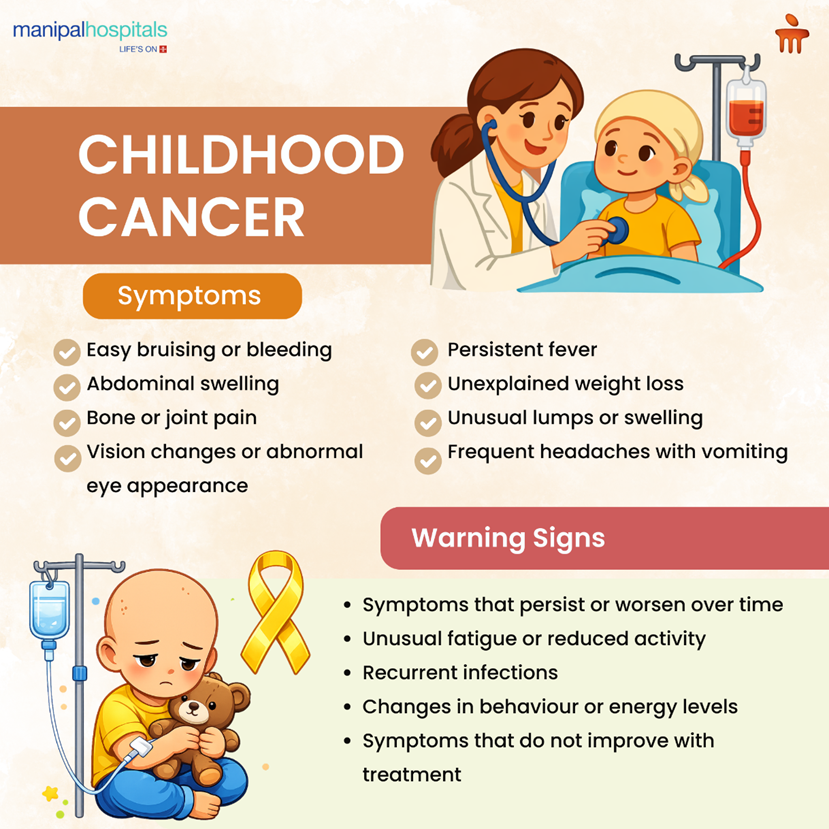
Possible early warning signs include:
-
Prolonged presence of fever without a cause
-
Unexplained loss of weight or appetite
-
Unusual lumps or swelling in the neck, abdomen, groin, or limbs
-
Headaches with vomiting, especially in the morning
-
Unusual changes in the way the patient sees or the way the eyes look
-
Easy bruising or bleeding
-
A distended abdomen
-
Painful or swollen joints and bones
It is important to note that these signs alone do not mean that cancer is present. In fact, these signs can be caused by other common childhood diseases. However, if these signs do not go away with treatment, especially if they occur together,
it is important to have a medical evaluation.
The key message is simple: persistent or unusual symptoms deserve attention.
Why Early Detection in Childhood Cancers Changes Outcomes
Early diagnosis can dramatically transform how a child experiences treatment and recovery. If childhood cancers are detected early, the specialists will be able to act before the cancer spreads.
There are several significant advantages associated with the early detection of childhood cancers.
-
Higher survival rates: Some paediatric cancers have cure rates approaching 80–90% when diagnosed early.
-
Less intensive treatment: Earlier stages may require shorter or less aggressive therapy.
-
Less toxicity from treatment: The children will experience less chemotherapy and radiation, protecting their organs from damage.
-
Less risk of health problems: The children will experience fewer health problems when they become adults.
-
Better quality of life: The children will return to their normal activities, such as school and play, sooner.
The difference between delayed and early childhood cancer treatment is huge, both for the children and their families.
International Childhood Cancer Day 2026: From Challenge to Change
Every year on Childhood Cancer Day, healthcare professionals, patient groups, and families around the world come together to raise awareness about the realities faced by children with cancer.
The 2026 theme—"Demonstrating Impact: From Challenge to Change"—reflects the progress already made and the work still ahead. Across many countries, collaborative efforts are improving survival through stronger health systems, better diagnostic access, and expanded pediatric oncology services.
Some of the major areas that need to be improved include:
-
Increasing early childhood cancer treatment programmes
-
Providing medical practitioners with the appropriate skills in the treatment of childhood cancers
-
Increasing access to treatment facilities for childhood cancers
-
Providing support for the children during the long treatment journey
-
Reducing treatment abandonment through the provision of appropriate support
Communities need to strengthen such efforts to ensure all children receive timely and effective care.
How Parents Can Support Early Recognition
Parents may sense small changes in their child before anyone else does. Their parental instincts play an important role in identifying possible health concerns for their child.
A few simple habits can help families remain attentive to their child’s well-being:
-
Stay informed about symptoms: Awareness of childhood cancer symptoms helps parents recognise unusual changes.
-
Trust your parental instincts: If you are worried about your child’s health, trust your parental instincts and talk to your child’s doctor.
-
Carry on with regular pediatric check-ups: These check-ups help you keep an eye on your baby’s health.
-
Monitor development: Changes in your baby’s growth patterns, energy levels, and behavior may also offer clues.
-
Encourage open communication: Older children should feel comfortable sharing symptoms or discomfort they experience.
These small but consistent steps support earlier diagnosis and ultimately better outcomes.
Conclusion
Awareness of childhood cancer is, therefore, not just an awareness of the disease. It is an opportunity for the children to have the disease addressed at the right time, ensuring they have a healthy future. While the disease manifests through general symptoms, paying attention to changes can make an enormous difference. The message behind Childhood Cancer Day 2026 is one of hope. While the challenges remain, they can be turned into opportunities for change through enhanced awareness, care, and support systems. In case of persistent changes, the best option is always to seek the advice of a specialist at Manipal Hospital Whitefield. For the best information and care, parents can consider speaking to our paediatric haematologist and oncologist for the diagnosis and management of the disease.
FAQ's
Yes, some cancers in children develop quietly in the early stages. Symptoms may initially be subtle, such as fatigue, mild pain, or small behavioural changes. Because these signs can be mistaken for routine childhood illnesses, persistent symptoms lasting several weeks should be evaluated by a doctor.
Most childhood cancers are not inherited. In the majority of cases, they occur due to random genetic changes during cell growth. A small proportion of children may have genetic conditions that increase cancer risk, but these cases are relatively uncommon.
Diagnosis usually involves several steps. Doctors begin with a detailed medical history and physical examination, followed by tests such as blood investigations, imaging scans, and sometimes biopsies. These tests help determine the exact type of cancer and guide treatment planning.
Treatment plans depend on the type and stage of the disease. Options may include chemotherapy, surgery, radiation therapy, targeted therapy, or immunotherapy. Many children receive a combination of these treatments under the care of specialised paediatric oncology teams.
Many children go on to live full and active lives after completing treatment. With proper follow-up care, monitoring, and rehabilitation support, survivors can return to school, participate in sports, and pursue their long-term goals. Advances in paediatric oncology continue to improve both survival and quality of life for survivors.
Share this article on: