7 Min Read
What is more precious than the moment you hold your newborn close and wonder about the best way to nourish them?
Learning about the benefits of breastfeeding and how it compares to formula feeding can help families feel more confident. Specialists recommend exclusive breastfeeding for the first 6 months. With appropriate healthcare support, both breastfeeding and formula feeding can help babies grow well, build strong bonds, and stay healthy in the long run. This blog covers the pros and cons of breast milk and formula, explains their differences, and offers pediatric advice to support your baby’s healthy growth.
Synopsis
- What is Breastfeeding?
- What is Feeding With Formula?
- Differences Between Breast Milk and Formula
- Tips for Breastfeeding
- Problems When Breastfeeding
- Formula Feeding Pros and Cons
- Is it Possible to Combine Feeding?
- When is Formula Medically Necessary?
- Feeding Choices and Emotional Well-Being
- Monitoring Infant Growth and Feeding Adequacy
- Conclusion
What is Breastfeeding?
Breastfeeding is the natural way for a mother to feed her baby. Breast milk contains a unique mix of nutrients, antibodies, enzymes, and hormones that are well-suited for a baby’s needs. Breast milk contains immunoglobulins and immune cells that help reduce infection risk and support immune system development.
Some of the key breastfeeding benefits are:
-
Gives newborns the best nutrition
-
Has antibodies that keep you from getting sick
-
Lowers the chance of getting diarrhea and respiratory illnesses
-
Aids in brain growth
-
May lower the risk of allergies in some babies
-
Supports bonding between mother and baby
What is Feeding With Formula?
Formula feeding means giving babies store-bought infant formula that is made to be as close as possible to the nutritional makeup of breastmilk. Experts develop and test modern baby formulas to ensure their safety and adequate nutrition. It’s important to remember that formula can be opted as an alternative for a baby only if breastfeeding isn’t possible.
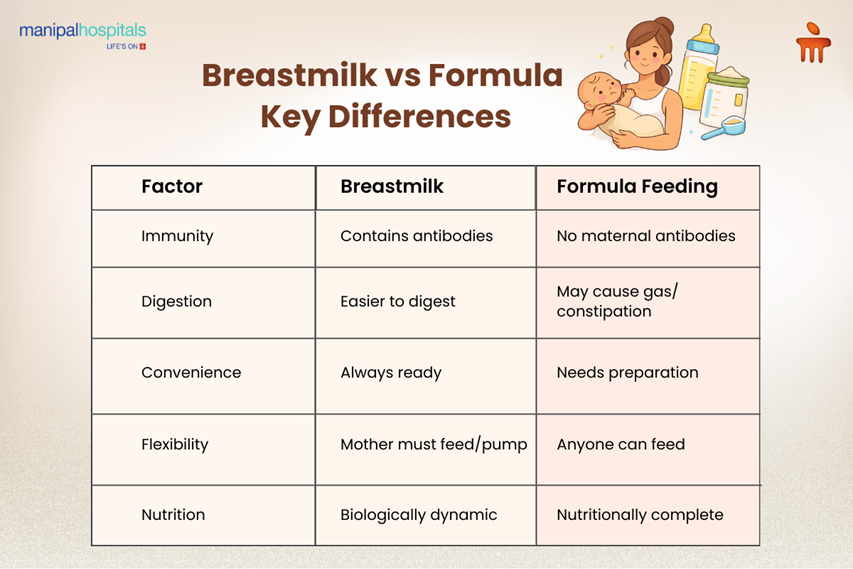
Differences Between Breast Milk and Formula
To understand the difference between breast milk and formula, you need to look at a few important things.
-
Food: The formula is designed to provide essential nutrients required for infant growth but doesn’t fully replicate the biological components present in breastmilk.
-
Immunity: Breastmilk contains antibodies, while formula doesn’t have antibodies from the mother.
-
Digestion: Easier to digest, it could make you gassier or more constipated
-
Ease of use: Breastmilk is always ready and doesn’t require preparation, while formula needs to be prepared and bottles cleaned.
-
Flexibility: With breastfeeding, the mother needs to be present or pump milk. With a formula, anyone can feed the baby.
Both breast milk and formula can help babies grow well, but breastfeeding offers immune-boosting benefits that formula can’t fully match.
Tips for Breastfeeding
New mums should learn how to help their baby latch properly, feed on demand, stay hydrated, and seek breastfeeding support early. Breastfeeding adapts naturally, and formula feeding is designed carefully to meet nutrition requirements.
-
Get Started Early
If possible, begin breastfeeding within the first hour after birth. Early skin-to-skin contact can help increase milk production.
-
Pay attention to the right latch
A good latch makes feeding easier and helps prevent nipple pain. If you’re unsure, ask a lactation expert for guidance.
-
Feed when needed
Newborns usually feed every 2 to 3 hours. Feeding on demand helps maintain your milk supply.
-
Keep yourself hydrated and fed
Both mother and baby benefit when the mother stays hydrated and eats a balanced diet while breastfeeding.
-
Get Help
If you have any problems, don’t hesitate to ask a paediatrician or lactation consultant for help.
Following these breastfeeding tips for new mums can make you more comfortable and support a healthy milk supply.
Problems When Breastfeeding
There are many benefits of breastfeeding, but some mothers may have:
-
Nipples that hurt
-
Swelling
-
Worries about low milk supply
-
Mastitis
-
Trouble with the latch
In these situations, it’s important to talk to a health expert. You should never feel guilty about considering both breast milk and formula. The main goal is to keep your baby healthy and well-fed
Formula Feeding Pros and Cons
Families can make confident plans when they understand the pros and cons of formula feeding. The formula allows for shared feeding and precise measurement, but it must be prepared and stored carefully to stay safe.
|
Pros |
Cons |
|
1. Allows shared feeding responsibility among caregivers. |
1. Lacks natural antibodies found in breast milk. |
|
2. Formula feeding allows you to measure exactly how much your baby is eating. |
2. The formula needs to be prepared, and bottles must be cleaned. |
|
3. Removes concerns related to breastmilk supply adequacy. |
3. Can cost a lot. |
|
4. Good option for mothers who can’t breastfeed for medical reasons. |
4. Some babies may have difficulty digesting formula. |
Is it Possible to Combine Feeding?
Yes. Many families choose to combine breastmilk and formula feeding. This approach can support breastfeeding while offering more flexibility.
Combined feeding can be helpful in situations such as:
-
Mother is going back to work.
-
There isn't enough milk.
-
Supplementation is necessary for medical conditions.
In these cases, a paediatrician can help ensure your child gets a balanced diet.
When is Formula Medically Necessary?
Although exclusive breastfeeding is strongly recommended for 6 months of life, formula may be medically necessary in certain situations:
-
Early birth with problems feeding.
-
Maternal infections that make breastfeeding unsafe.
-
Some metabolic problems in the baby.
-
Not enough breast milk is being made.
In these situations, paediatricians can help families make the safest feeding choices for their baby.
Feeding Choices and Emotional Well-Being
Infant feeding decisions can be emotionally complex. Parents may experience pressure to choose a particular feeding method. Pediatric guidance emphasizes that safe nutrition and parental well-being are equally important for infant health. Key aspects to look into:
-
A baby who eats well is healthy.
-
The mental health of the mother is just as important.
-
Feeding should work well for both the baby and the family.
Whether you choose breastfeeding, formula, or both, it’s important to make an informed decision and watch the baby grow.
Monitoring Infant Growth and Feeding Adequacy
No matter which feeding method you choose, it is important to see your doctor regularly, especially if you are consulting a paediatrician in Whitefield. Look for these signs that your baby is feeding well:
-
Weight gain that stays the same
-
6 to 8 wet diapers every day
-
Staying alert and active
-
Going to the bathroom regularly.
If you have any concerns, a paediatrician can help you adjust your feeding plan.
Conclusion
Caring for your baby is a journey. You should make your own feeding choices, guided by medical advice rather than pressure. With the right information, professional support, and regular check-ins, parents can feel confident about feeding their baby. Manipal Hospital Whitefield remains a trusted healthcare partner, supporting families from the beginning with evidence-based advice and caring staff.
FAQ's
Breastfeeding helps protect the immune system, makes digestion easier, and lowers the risk of infection. Breast milk changes to meet a baby's needs and helps them grow healthy, especially during the first six months of life.
Deciding between breastmilk and formula involves both medical advice and personal factors. Based on the health, lifestyle, and needs of the baby, paediatricians help families pick the safest choice.
New moms who are breastfeeding should feed their babies on demand, make sure they latch on correctly, drink enough water, get enough sleep, and get help with breastfeeding as soon as possible if they have problems.
There are pros and cons to formula feeding. On the plus side, it is flexible and allows for shared feeding. On the minus side, it requires careful planning and costs money. When made the right way, a formula is a safe choice.
Yes. Many families are able to use both methods successfully. Mixed feeding can meet nutritional needs and help the mother's and baby's health and growth if done correctly.
Share this article on: