7 Min Read
Do you often feel bloated or sluggish after meals or notice inconsistent digestion?
Your gut plays a central role in how you feel, from energy levels to immune resilience. Choosing the right foods for gut health can make a meaningful difference in daily comfort and long-term well-being.
This article explains how certain foods support the gut microbiome, why fibre and fermented choices matter, and provides a practical list you can use on your next grocery run. You will also find simple ways to include prebiotic foods and other gut-friendly foods in everyday meals, along with guidance on seeking local support for gut health in Whitefield if you need in-person advice.
Synopsis
Connection Between Food and Your Gut
Your digestive tract hosts trillions of microbes — including bacteria, yeasts, and other microorganisms - collectively known as the gut microbiome. These microbes help digest fibre, produce certain vitamins, and support the immune system. When this microbial community is balanced, digestion tends to be smoother, energy levels are steadier, and overall well-being improves. However, when the balance is disrupted, you may experience bloating, irregular bowel movements, discomfort, or low energy.
This is where foods for gut health play an important role. The right foods nourish beneficial bacteria, reduce inflammation, and promote efficient digestion, helping restore and maintain a healthy gut environment.
What Harms the Gut Microbiome?
While it is tempting to focus only on “good” foods, reducing harmful influences on your microbiome is equally important. Think of it as clearing weeds before planting seeds.
The list below highlights common dietary factors and habits that can negatively affect gut health:
|
Repeated or unnecessary antibiotics |
They wipe out beneficial bacteria along with pathogens. Always discuss the necessity and protective strategies with your doctor. |
|
High intake of ultra-processed foods and added sugars |
These feed undesirable microbes and reduce microbial diversity. |
|
Excessive alcohol |
It alters gut permeability and microbiome balance. |
|
Chronic stress and poor sleep |
The gut responds quickly to stress hormones; poor sleep disrupts repair cycles. |
|
Very low-fibre diets |
Fibre is the main fuel for beneficial microbes; without it, they decline. |
|
Frequent antacid use without guidance |
Long-term suppression of stomach acid can change gut bacterial patterns and increase infection risk. |
Cutting these pressures gives beneficial microbes room to recover while encouraging the helpful changes you’ll add through food.
How to Choose Gut-Friendly Foods?
Not all healthy foods support the microbiome equally. When selecting foods, focus on the following:
-
Foods high in fibre (especially soluble fibre): These are fermented by gut microbes and converted into short-chain fatty acids that nourish the cells lining the gut.
-
Natural prebiotic foods: Ingredients such as onions, garlic, and asparagus feed beneficial bacteria and support microbial balance.
-
Probiotic and fermented foods: Options like yogurt, kefir, and naturally fermented idli or dosa batter provide live, helpful microbes to the gut.
-
Whole, minimally processed foods: Choose fruits, vegetables, legumes, and whole grains. Avoid highly processed foods that may starve or harm the microbiome.
These principles help you select the best foods for digestive health rather than relying on a single “superfood.”
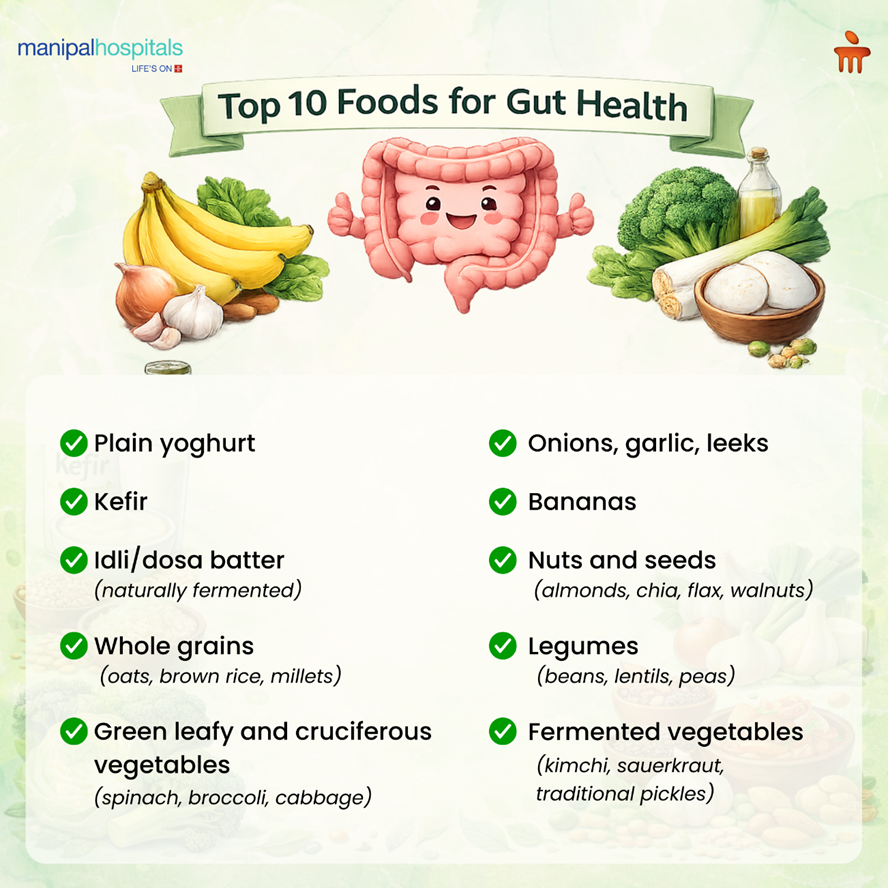
Top 10 Foods for Gut Health
Below are 10 food groups that are especially effective for your gut, with quick notes on why they help and how to include them in your meals.
-
Plain Yoghurt (Probiotic Foods) - Plain, unsweetened yoghurt with live cultures introduces beneficial bacteria such as Lactobacillus and Bifidobacterium. Choose natural yoghurt and add fresh fruit or a drizzle of honey. Regular small servings help support microbial diversity.
-
Kefir (Fermented Foods) - Kefir is a drinkable fermented milk rich in probiotics. It often contains more bacterial strains than yoghurt and can be easily included as a morning drink or blended into smoothies.
-
Idli/Dosa Batter (Fermented, Gut-Friendly Foods) - Naturally fermented batter used for idlis and dosa provides gentle probiotics when traditionally prepared. Pair with sambar and chutney for a balanced, gut-friendly meal.
-
Whole Grains (High-Fibre Foods) - Oats, brown rice, millets, and whole wheat provide fibre that feeds beneficial gut bacteria. Overnight oats, millet khichdi, or brown rice bowls are practical ways to increase intake.
-
Legumes (Supports Digestion) - Beans, lentils, and peas are rich in fibre and resistant starch, which help maintain a healthy gut microbiome. If prone to gas or bloating, start with small portions and gradually increase intake.
-
Onions, Garlic, and Leeks (Prebiotic Foods) - These vegetables contain inulin and fructooligosaccharides that selectively feed beneficial microbes. Use them raw in salads or cooked in stews for prebiotic benefits.
-
Bananas (Digestive Support – Raw & Ripe) - Ripe bananas provide soluble fibre, while slightly underripe bananas contain resistant starch that supports gut bacteria. They are easy to digest and make a simple gut-friendly snack.
-
Fermented Vegetables (Gut-Friendly Foods) - Traditional fermented pickles (not vinegar-based), kimchi, and sauerkraut contain live cultures and help improve microbial diversity while adding flavour to meals.
-
Nuts and Seeds (High-Fibre Foods) - Almonds, chia seeds, flaxseeds, and walnuts provide fibre, healthy fats, and polyphenols that benefit gut bacteria. Add them to cereals, salads, or yoghurt.
-
Green Leafy Vegetables and Cruciferous Vegetables - Spinach, methi, broccoli, and cabbage supply fibre, micronutrients, and plant compounds that support digestion and indirectly nourish gut microbes.
Signs Your Gut May Need Attention
Occasional bloating or a one-off upset stomach is normal. What matters more is pattern and persistence. If the same concerns keep repeating, your gut may be signalling the need for change.
Look for these red flags:
-
Ongoing bloating or excessive gas: May indicate incomplete fermentation of foods, low digestive enzymes, or an imbalance in gut bacteria.
-
Irregular bowel movements (constipation or diarrhoea): Could point to fibre imbalance, dehydration, medication effects, or microbiome disruption.
-
Frequent heartburn or indigestion: Often linked to reflux, delayed stomach emptying, or bacterial overgrowth higher in the digestive tract.
-
Unexplained fatigue or poor sleep linked to meals: Systemic inflammation or food-triggered immune responses may affect overall energy levels.
-
Recurring urinary or yeast infections: May suggest that microbial balance beyond the gut is affected.
-
New food sensitivities or skin flares (eczema, rashes): The gut and immune system are closely connected; changes in gut barrier function can manifest through skin symptoms.
Special Considerations
If you have IBS, small intestinal bacterial overgrowth (SIBO), or severe food intolerances, certain categories of foods may temporarily worsen symptoms. Individualised dietary planning is important in such cases.
-
High-FODMAP prebiotic foods: Foods such as garlic, onion, and certain beans may aggravate symptoms in sensitive individuals.
-
Low-FODMAP approach: A short elimination phase followed by structured reintroduction can help identify specific dietary triggers.
-
Probiotic supplements: Probiotics are strain-specific, and not all strains benefit every condition. Clinical guidance helps determine the appropriate strain and dosage.
Working with a clinician or dietitian can help tailor fibre choices and food rotation strategies. If you are on blood thinners or have food allergies, always check for potential interactions or allergy risks before increasing fermented or herb-rich foods.
When to Seek Medical Help?
Consult a gastroenterologist in Whitefield if you experience any of the following:
-
Blood in stool, severe abdominal pain, or high fever
-
Unintentional weight loss or persistent vomiting
-
New or severe bloating or bowel changes lasting more than 2–3 weeks
-
Symptoms that interfere with daily life despite dietary adjustments
These warning signs may indicate underlying conditions that require further evaluation, such as stool analysis, breath tests for SIBO, endoscopy, or colonoscopy.
Conclusion
Making deliberate choices about foods for gut health is one of the most practical steps you can take to improve digestion and overall well-being. Focus on dietary variety by including prebiotic foods, fermented options, and high-fibre whole foods across your meals.
If you experience persistent digestive symptoms or require a personalised nutrition plan, consulting a specialist is important for proper evaluation and guidance. For reliable clinical support and expert dietetic advice, consider reaching out to the Gastrointestinal Sciences team at Manipal Hospital Whitefield to receive a plan tailored to your health needs and lifestyle.
FAQ's
You may feel small benefits, less bloating, or more regularity within days or weeks, but significant shifts in the microbiome and lasting changes usually take several weeks of consistent eating habits.
Fermented foods deliver a range of bacterial strains and additional nutrients; supplements can help in specific conditions or when you need targeted strains. Discuss with a clinician to choose an approach for your needs.
Not always. Some high-FODMAP items (like garlic and certain legumes) can trigger symptoms in IBS. Work with a dietitian to identify triggers and suitable substitutes.
A practical target is 25–35 grams daily for most adults, obtained from whole grains, fruits, vegetables, and legumes. Increase gradually to let your gut adapt.
Only traditionally fermented pickles (made without large amounts of vinegar) contain live cultures. Many commercial pickles are vinegar-based and do not provide probiotics.
Share this article on: