7 Min Read
High blood pressure, often called the “silent killer,” is one of the most significant risk factors for stroke. Many people may not notice symptoms until serious complications occur. When blood pressure remains consistently high, it damages blood vessels and increases the chances of blockages or bleeding in the brain. This makes stroke prevention closely tied to managing blood pressure effectively. Good news! With some simple lifestyle changes coupled with timely medical assistance, we can make a big difference.
At Manipal Hospital Sarjapur Road, experts offer well-rounded management options that help patients take control of their hypertension and provide a level of protection for long-term brain health.
High Blood Pressure and Stroke
Blood pressure is the amount of force blood puts on the arteries. High blood pressure creates 2 types of strokes:
-
Ischemic strokes are due to clots blocking blood from flowing to the brain.
-
Hemorrhagic strokes, which occur when blood vessels break due to weakness.
In either stroke type, they are all emergencies in need of medical attention. High blood pressure is clearly a factor for stroke; therefore, preventing high blood pressure by living healthier, getting check-ups, and seeking medical advice is mandatory to prevent causes of stroke in hypertension.
7 Steps to Control High Blood Pressure
Managing blood pressure includes a commitment to healthy choices and behaviour. Here are eight stroke prevention tips to limit your risk.
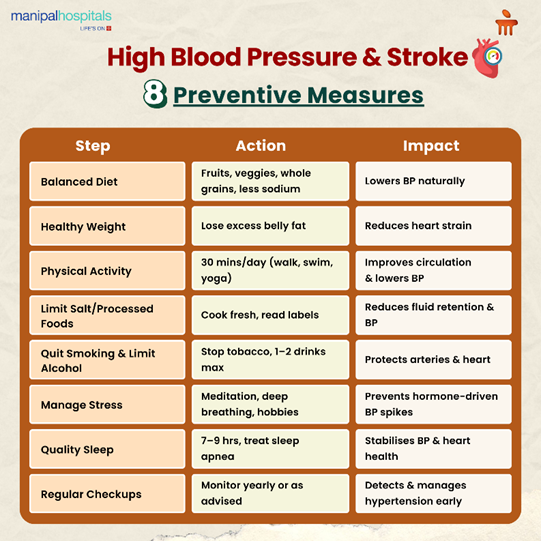
1. Follow a Balanced Diet
What your diet consists of plays a direct role in blood pressure. Diets comprising fruits, vegetables, whole grains, lean proteins, and low-fat dairy are considered some of the beneficial options. It is oftentimes advised that you reduce your sodium intake to control your blood pressure. Blood pressure is also affected by the amount of saturated fat in your diet; reducing processed foods and fried foods helps in removing the same.
Even small lifestyle shifts, like cooking food while reading food labels, can have a lasting impact. Small changes in daily food choices reduce the risk of high blood pressure and stroke significantly.
2. Maintain a Healthy Weight
The rate of excess fat in your body is a direct contributor to rising blood pressure as it forces the heart to work harder. Start with small exercises to try and reduce small amounts of weight, as it can still be very helpful in lowering some of the stress the cardiovascular system has to manage. Weight loss should be gradual and sustainable and involve healthy eating with some form of exercise.
Each of us needs to focus on the storage of extra fat around the waist because of the close links to hypertension. A little extra weight and belly fat can go a long way in preventing stroke, increasing energy, helping with sleep, and providing overall health benefits in your lifetime.
3. Maintain Physical Activity
Regular physical activity works to enhance the efficiency of the heart. If a body is physically active, the heart can deliver blood into arteries with much better efficiency and less demand under stress. An activity only needs to last 30 minutes a day (or as often as possible). Engaging in physical activities such as brisk walks, bike rides, swims, or yoga is crucial for our health.
Regularly participating in physical activity will lower blood pressure, and even though the intensity does help, it is more important to continuously engage in an enjoyable activity. Some of the added benefits of physical activity are also weight management, stress relief, and help to improve mood. Physical activity should encompass every one of us as a part of our daily lives and, by doing so, help to reduce the risk of high blood pressure and stroke.
4. Limit Salt and Processed Foods
Excess sodium is one of the biggest contributors to rising blood pressure. Salt triggers the body to retain water, which increases blood volume and puts stress on the arteries. Processed foods like chips, boxed soups, packaged sauces, frozen meals, and prepared entrees often have sodium added to cover up the taste of expired food. You can reduce your sodium intake by cooking fresh meals, using herbs and spices for food flavoring, or using aqua flavouring with sodium, and checking labels for sodium content. Decreasing your salt intake daily is one of the easiest but most profound ways to support brain and heart health.
5. Stop Smoking and Reduce Alcohol Consumption
Tobacco damages blood vessel walls, speeds up hardening of arteries, and increases the chance of stroke. Heavy alcohol use can raise blood pressure and cause arrhythmia. Stopping smoking will lower blood pressure right away, and limiting alcohol consumption to mild (1 drink for women, 2 for men) levels can reduce risks from alcohol consumption.
If you can stop tobacco or limit alcohol use and sustain it over time, or replace it with healthier options, such as herbal drinks or hobbies that engage in stress relievers, then it is much easier to maintain change over the long run. These methods are among our most impactful protectors against hypertension and stroke with the help of a specialist doctor in Sarjapur Road.
6. Manage Stress Levels
Chronic stress releases hormones that increase blood pressure and may put strain on the heart. Short-term stress is completely normal and, in fact, can be beneficial; however, long-term stress can certainly be damaging. Relaxation techniques, such as meditation, deep breathing exercises, or yoga, can provide relief. Establishing a positive work-life balance and staying in touch with family and friends can all help prevent stress, too. When you manage stress, you not only save your heart, but you also reduce your chance of developing high blood pressure and stroke.
7. Get Good Quality Sleep
Both poor quality sleep and sleep disorders, such as sleep apnea, have been linked to hypertension. When you do not get enough sleep, your body is unable to regulate stress hormones, which means your blood pressure rises. Aim for 7–9 hours of sleep each night. Creating a calming bedtime routine, limiting screen time before bed, and sticking to regular sleep schedules improve rest. Dealing with snoring or sleep interruptions due to seeking medical guidance is also important, as adequate sleep supports the heart, brain, and overall well-being.
Conclusion
There is definitely a link between high blood pressure and stroke, so the best way to protect yourself is to incorporate preventative strategies that include modifying your lifestyle and getting regular checkups. Small changes like eating better, exercising, avoiding stress, and avoiding dangerous behaviours can help prevent a stroke due to high blood pressure. Regular examinations allow for the prevention of problems, and they present the best opportunities to make necessary changes that might decrease complications. At Manipal Hospital Sarjapur Road, our doctor, specialist, and quality of care allow for holistic care options with accompanying medical services.
FAQ's
High blood pressure puts constant strain on the blood vessels, making them stiff, narrow, or weak. This raises the chance of blockages that cut off blood flow to the brain (ischemic stroke) or of vessels bursting and bleeding into the brain (hemorrhagic stroke).
Controlling blood pressure greatly lowers your stroke risk, but it doesn't eliminate it entirely. Stroke risk also depends on age, lifestyle, and other health conditions. Still, keeping blood pressure in check is one of the most powerful ways to protect your brain and heart.
Most people are advised to aim for readings below 120/80 mmHg. However, your doctor may suggest a different target depending on your age, overall health, and other medical conditions.
Adults should check their blood pressure at least once a year. If you already have high blood pressure or risk factors like diabetes, obesity, or a strong family history, your doctor may recommend more frequent monitoring—sometimes even at home with a digital BP machine.
Yes. Genetics and family history can raise your likelihood of developing high blood pressure and stroke. However, adopting a healthy lifestyle—such as regular exercise, a balanced diet, avoiding smoking, and managing blood pressure—can significantly reduce that inherited risk.
Share this article on: