7 Min Read
Small changes in the body often carry more meaning than they first appear to. A slight tremor in the hands, brief moments of unexplained dizziness, or sudden difficulty remembering familiar things may feel easy to brush aside as stress, fatigue, or simply a busy life. Yet sometimes, these subtle shifts are the body’s early way of signalling that something within the brain or nervous system needs attention. Neurological conditions affect the brain, spinal cord, and nerves that control movement, sensation, balance, and thinking. Because this system influences almost every function in the body, the early warning signs of neurological disorders can appear in many different ways. Some develop gradually over months, while others appear suddenly and demand immediate medical care.
Understanding these early signals can make a meaningful difference. If these conditions are recognised early, they can be managed better, and you can avoid complications that may interfere with your independence and quality of life. This blog explores the signs of neurological disorders, what triggers them, how they appear in adults and infants, and when it may be time to seek medical evaluation.
Synopsis
- Why Neurological Disorders Often Begin with Subtle Symptoms
- Common Early Warning Signs of Neurological Disorders
- What Can Trigger Neurological Disorders?
- Neurological Warning Signs in Infants and Newborns
- Diagnostic Tools Used to Identify Neurological Disorders
- When to Consider Consulting a Neurologist
- Conclusion
Why Neurological Disorders Often Begin with Subtle Symptoms
The human nervous system functions in a highly coordinated manner involving electrical and chemical signals. Even a slight disruption in the nervous system can have a significant effect on the communication process between the brain and the other parts of the body. As a result, the early signs of neurological disorders tend to begin gradually and may not be dramatic at the beginning.
In many situations, these symptoms reflect early changes in how nerve cells communicate. Reduced blood flow, inflammation, genetic factors, or degenerative changes may begin affecting neural pathways long before a condition becomes obvious.
You might initially notice:
-
Mild numbness or tingling in the hands or feet
-
Occasional imbalance while walking
-
Changes in coordination or hand control
-
Episodes of blurred or double vision
-
Unusual fatigue or difficulty concentrating
These early changes are not always serious on their own, but patterns that persist or gradually worsen may indicate underlying brain and nerve disease symptoms that deserve medical attention.
Common Early Warning Signs of Neurological Disorders
When neurological conditions begin to develop, the body often sends signals through physical, cognitive, or sensory changes. Recognising these signals early can help prevent delays in diagnosis.
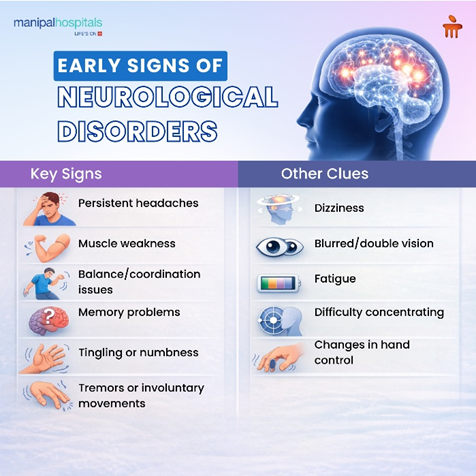
Some of the most important early warning signs of neurological disorders include:
-
Persistent Headaches with Unusual Patterns: Headaches are common, and neurological issues may be of concern in cases where headaches change suddenly in terms of frequency, severity, or pattern. Severe headaches with vision changes, vomiting, or confusion may be indicative of underlying neurological issues.
-
Unexplained Muscle Weakness: Gradual weakening of muscle power in the arms or legs may be suggestive of underlying issues with nerve or muscle communication. Activities like lifting objects, walking upstairs, or gripping objects may become increasingly difficult.
-
Changes in Balance and Coordination: Difficulty in maintaining balance, tripping, or coordination issues may be suggestive of underlying problems in the cerebellum or nerves.
-
Memory and Cognitive Changes: Difficulty in remembering recent events, issues in following conversations, or getting confused with routine activities may be suggestive of underlying neurological changes in cognitive functions.
-
Sensory Disturbances: Tingling, burning sensations, or numbness can occur when sensory nerves become irritated or damaged.
-
Involuntary Movements: Tremors, muscle twitching, or unusual jerking movements sometimes appear in conditions affecting motor control.
While any one of these symptoms can occur temporarily, persistent combinations of these signs of neurological disorders should prompt further evaluation.
What Can Trigger Neurological Disorders?
Neurological conditions arise from many different mechanisms. Understanding the causes of neurological disorders can help explain why symptoms develop and how doctors approach treatment.
Several major factors can cause neurological diseases. They include:
-
Genetic influences: Some diseases may run in families as a result of genetic mutations that affect nerve cells.
-
Autoimmune reactions: Sometimes, the immune system may attack the nervous system mistakenly.
-
Infections: Viral or bacterial infections may cause inflammation in the nervous system or the brain.
-
Traumatic Injuries: In some instances, injury to the brain or spine can disrupt nerve pathways.
-
Vascular Problems: A lack of proper blood supply to brain cells can damage nerve cells.
-
Degenerative Diseases: In some conditions, like Parkinson’s or Alzheimer’s, degeneration of nerve cells may be the cause.
Often, more than one factor contributes to the development of neurological disease. That is why a thorough medical evaluation remains essential when persistent brain and nerve disease symptoms appear.
Neurological Warning Signs in Infants and Newborns
Neurological disorders can also be present at very young ages. The nervous system of an infant is very sensitive, and this is the reason why it is so important to quickly detect neonatal neurological disorders.
The symptoms of neurological disorders may be quite different in newborns and young infants. Babies cannot describe symptoms, so parents often notice behavioural or developmental differences.
Warning signs may include:
-
Inadequate feeding or difficulty in swallowing
-
Weak or stiff muscles
-
Recurring seizures or jerking movements
-
Developmental delays, such as rolling or sitting
-
Prolonged irritability or too much sleepiness
-
Atypical head growth patterns
A significant number of newborns suspected to have NNDs require special neurological examinations and developmental assessments. Early treatment is known to have a significant impact on their lives.
Diagnostic Tools Used to Identify Neurological Disorders
Modern medicine employs various tests to check for neurological disorders. These tests offer unique insights into how the nervous system is functioning. Below are the commonly used neurological investigations and what they reveal:
|
Diagnostic Test |
What It Examines |
When It Is Typically Recommended |
Key Insight It Provides |
|
MRI Brain Scan |
Detailed structure of brain tissues |
Persistent headaches, seizures, and unexplained neurological deficits |
Detects tumours, inflammation, strokes, or degenerative changes |
|
CT Scan |
Rapid imaging of brain structures |
Emergency evaluation after a head injury or suspected bleeding |
Identifies bleeding, fractures, or swelling quickly |
|
EEG (Electroencephalogram) |
Electrical activity of the brain |
Unexplained seizures or abnormal movements |
Helps diagnose epilepsy and abnormal brain wave activity |
|
Nerve Conduction Study |
Electrical signals travelling through the peripheral nerves |
Numbness, weakness, or suspected nerve damage |
Measures nerve speed and detects neuropathy |
|
Lumbar Puncture |
Cerebrospinal fluid surrounds the brain and spinal cord |
Suspected infections or inflammatory disorders |
Detects infections, immune disorders, and certain cancers |
These tests allow neurologists to identify structural, electrical, and biochemical abnormalities that may explain the early symptoms of neurological disorders.
When to Consider Consulting a Neurologist
Recognising when to seek expert care can prevent delays in diagnosis. Many neurological conditions progress slowly, which means symptoms may be dismissed until they interfere with daily life.
You may benefit from neurological consultation if:
-
Symptoms persist for several weeks without improvement
-
Multiple neurological symptoms appear together
-
Physical coordination or memory begins to affect routine tasks
-
Sensory disturbances become frequent or widespread
-
Headaches occur alongside neurological symptoms
Expert neurologists in Sarjapur road, Bangalore can help you access specialised care if you notice recurring early warning signs of neurological disorders. Early consultation allows doctors to investigate symptoms before significant nerve damage occurs.
Conclusion
The nervous system quietly manages countless functions every second, from movement and balance to memory and emotional responses. When something disrupts this intricate network, the body often sends early signals. Recognising the early warning signs of neurological disorders allows you to act sooner rather than later. Paying attention to persistent weakness, unexplained sensory changes, cognitive shifts, or coordination problems can help identify problems while they are still manageable.
If you notice early symptoms of neurological disorders, seeking timely medical advice from a neurophysician near me can bring clarity and reassurance. Early diagnosis opens the door to better monitoring, targeted therapies, and supportive care that protects brain function over time. A trusted neurological disorder treatment hospital in Sarjapur Road, Bangalore, like Manipal Hospitals, can help you with all your needs.
FAQ's
Chronic stress, poor sleep, heavy alcohol use, and prolonged nutritional deficiencies can affect the nervous system over time. While these factors may not directly cause neurological diseases, they can worsen existing conditions or trigger symptoms.
Not always. Some neurological conditions remain stable for years or respond well to treatment, while others may progress slowly over time. Early diagnosis allows doctors to monitor changes closely and introduce therapies that slow progression or control symptoms effectively.
Yes. The brain regulates mood, behaviour, and emotional responses. When neurological changes occur, people may experience anxiety, depression, irritability, or personality changes. Addressing emotional well-being is often an important part of neurological care.
Many neurological conditions develop without significant pain. Instead, they may affect coordination, sensation, memory, or speech. This is one reason neurological diseases can go unnoticed initially, as the symptoms may seem unrelated or mild.
While recovery depends on the type and severity of the condition, many people regain important functions and improve their quality of life with rehabilitation, medication, and supportive therapies.
Share this article on: