6 Min Read
.webp "Weak Urine Stream, Incomplete Bladder Emptying & Frequent Urination: When Is It Time to See a Specialist?")
Changes in urine pattern, like weak urine flow, problem in bladder emptying, and frequent urination can likely be a sign of urinary problems in men. While some changes can warrant from natural aging process, understanding when these symptoms warrant a visit to a specialist is crucial for maintaining your health and quality of life.
Synopsis
Urinary Problems in Men
Weak Urine Stream
One of the most common signs of urinary problems in men is a weak urine stream. It is characterised by a trickle, spray, or a stream that starts and stops, often requiring straining. The principal reason behind a weak urine flow is likely Benign Prostatic Hyperplasia (BPH), or an enlarged prostate, which compresses the urethra. Urethral stricture or nerve damage causing bladder malfunction are some other reasons.
Incomplete Bladder Emptying
BPH causes the prostate gland to increase in size and obstruct the bladder, leading to incomplete bladder emptying. An underactive bladder muscle can also be a factor, where the bladder lacks the strength to contract effectively. Chronic incomplete emptying can lead to urine stasis, increasing the risk of urinary tract infections (UTIs).
Frequent Urination
Frequent urination is described as the need to urinate frequently, both during the day and night. An enlarged prostate, principally due to BPH, can irritate the bladder, making it feel full more often. Overactive bladder (OAB) is another significant cause, where bladder muscles contract involuntarily. Other factors such as diabetes, UTIs, certain diuretics, and even excessive fluid intake can lead to frequent urination. This can significantly disrupt daily activities and sleep patterns.
Prostate and Urine Problems Symptoms: When to Be Concerned
While these symptoms can be common, it is vital to get medical attention timely. Symptoms of prostate and urine problems, if left untreated, can worsen and lead to more serious conditions.
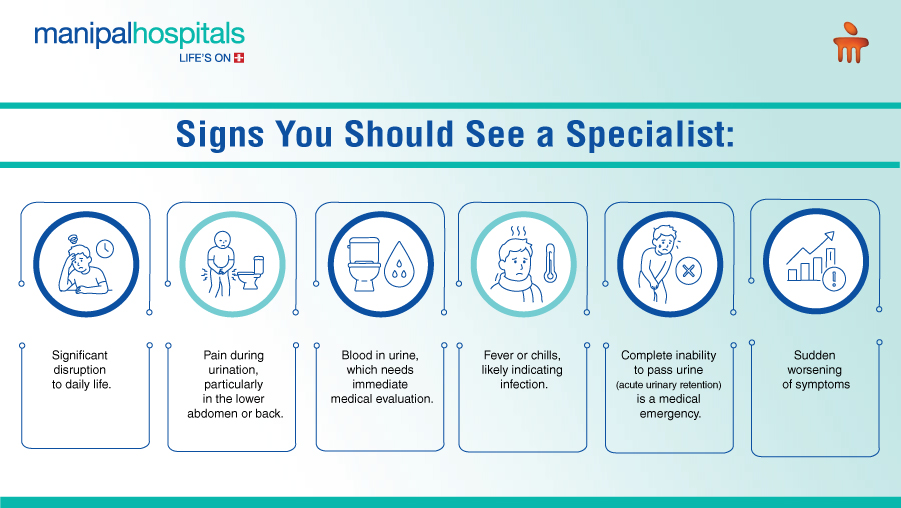
Signs You Should See a Specialist:
-
Significant disruption to daily life.
-
Pain during urination, particularly in the lower abdomen or back.
-
Blood in urine, which needs immediate medical evaluation.
-
Fever or chills, likely indicating infection.
-
Complete inability to pass urine (acute urinary retention) is a medical emergency.
-
Sudden worsening of symptoms.
Diagnosis and Treatment of Urinary Problems in Men
Diagnosis
Symptoms of urinary problems in men are evaluated through accurate diagnostic measures for accurate results. Some of the common diagnostic procedures include:
-
Physical Examination (including DRE)
-
Urine Tests (for infection, blood)
-
Blood Tests (including PSA)
-
Uroflowmetry (measures urine stream)
-
Post-Void Residual (PVR) Volume (measures residual urine for incomplete bladder emptying)
-
Urodynamic Studies (evaluate bladder function)
Treatment
Treatment approaches for urinary problems in men involves a mix of medications, lifestyle changes, and even surgical intervention if required.
-
Lifestyle Modifications: Dietary changes, fluid management, and bladder training.
-
Medical Management: Therapeutic approaches to relax bladder muscles or shrink the prostate.
-
Minimally Invasive Procedures: Advanced options for conditions like BPH to relieve obstruction.
-
Surgical Interventions: For more severe cases, conventional surgical procedures to remove prostate tissue or correct structural issues are used for better results.
Care Essentials: Do's and Don'ts
Some simple yet essential guidelines should be followed while being under treatment for urinary problems.
Do's:
-
Stay adequately hydrated.
-
Practice bladder training.
-
Eat a healthy diet.
-
Exercise regularly.
-
Maintain a healthy weight.
-
Consult your doctor promptly if symptoms persist or worsen.
Don'ts:
-
Don't hold urine for too long.
-
Don't ignore symptoms.
-
Don't self-medicate.
-
Don't consume excessive caffeine or alcohol.
-
Don't strain during urination.
Conclusion
At Manipal Hospitals Salt Lake, we understand the impact these conditions can have. Our expert urologists are dedicated to providing compassionate, comprehensive care for urinary problems in men, ensuring accurate diagnosis and effective treatment. If you are experiencing these symptoms, it is crucial to seek timely medical advice. Book an appointment with our expert urologist at Manipal Hospitals Salt Lake today.
FAQ's
A weak urine stream is frequently caused by Benign Prostatic Hyperplasia (BPH), an enlarged prostate that compresses the urethra. Other potential causes include urethral strictures (narrowing of the urethra), bladder muscle weakness, or nerve damage affecting bladder control.
You might experience incomplete bladder emptying if you feel the need to urinate again shortly after going, or if you strain to empty your bladder. This condition is often associated with BPH or an underactive bladder muscle.
If bladder problems are left untreated, chronic incomplete emptying can lead to urinary tract infections, bladder stones, and kidney problems due to urine stasis.
You should seek medical attention if frequent urination significantly disrupts your daily life or sleep (nocturia), or if it's accompanied by pain, blood in urine, fever, chills, or difficulty passing urine. These symptoms, especially when combined with a weak stream or incomplete emptying, can indicate underlying prostate issues like BPH or other urinary problems that require professional diagnosis and treatment.
No, not all prostate and urine problems symptoms indicate cancer. Many common symptoms, such as frequent urination, weak stream, or incomplete bladder emptying, are often caused by benign conditions like Benign Prostatic Hyperplasia (BPH), which is an enlargement of the prostate gland that is not cancerous. While these symptoms can overlap with prostate cancer, only a thorough medical evaluation, including PSA blood tests and possibly a biopsy, can definitively diagnose prostate cancer. It is important to see a doctor for any persistent symptoms to get an accurate diagnosis.
Share this article on: