




 6 Min Read
Hearing the words “mantle cell lymphoma” for the first time can leave anyone feeling anxious and uncertain. Questions about treatment, recovery, survival, and the future begin to surface immediately. For many families, it becomes an emotional journey filled with fear, hope, and countless medical decisions. At Manipal Hospitals Pune, patients diagnosed with rare blood cancers receive compassionate support, advanced diagnostics, and personalised treatment plans designed to improve both survival and quality of life.
Mantle cell lymphoma (MCL) is considered a rare and aggressive form of non-Hodgkin lymphoma. While the diagnosis may sound frightening, modern medicine has brought remarkable advancements in treatment over the last decade. Today, many patients are living longer, healthier, and more fulfilling lives thanks to newer therapies and specialised cancer care.
Synopsis
Understanding Mantle Cell Lymphoma
Mantle cell lymphoma develops from abnormal B-lymphocytes, which are white blood cells responsible for helping the body fight infections. These cancerous cells usually originate in the “mantle zone” of the lymph node, giving the disease its name.
Unlike slow-growing lymphomas, MCL tends to behave aggressively and may spread quickly to different organs,, such as
-
Bone marrow
-
Liver
-
Spleen
-
Gastrointestinal tract
-
Blood circulation
Although mantle cell lymphoma accounts for only around 6% of all non-Hodgkin lymphoma cases, it often requires prompt diagnosis and specialised treatment because of its rapid progression.
The good news is that medical research and targeted cancer therapies have transformed the treatment landscape significantly in recent years.
Early Symptoms That Should Not Be Ignored
One of the biggest challenges with MCL is that its symptoms may appear gradually. Many people initially mistake them for general fatigue or minor infections.
Some common mantle cell lymphoma symptoms include the following:
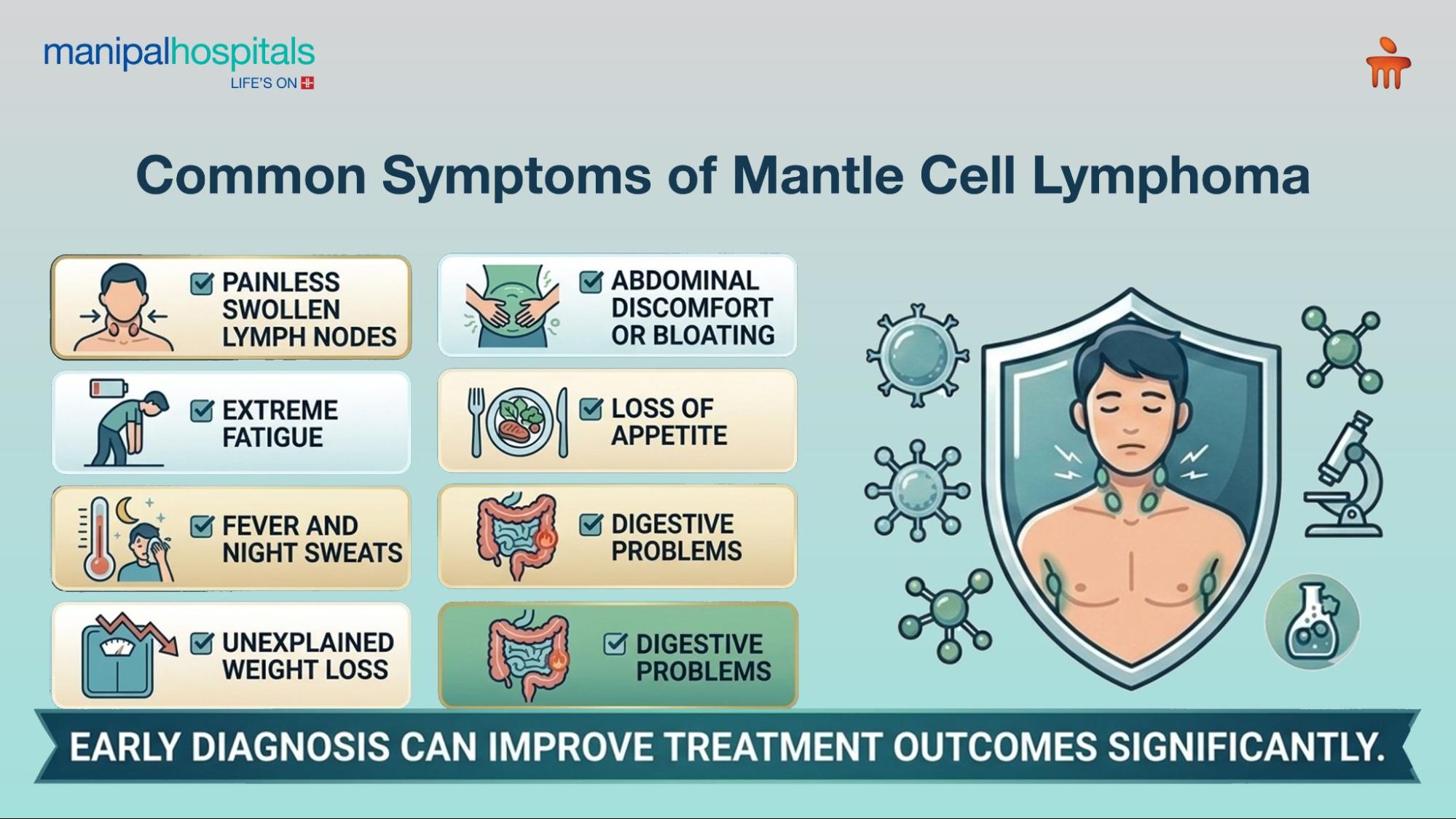
Swollen Lymph Nodes
Painless swelling in the neck, underarms, or groin is one of the most common warning signs.
Extreme Fatigue
Persistent tiredness that does not improve with rest may indicate underlying blood disorders.
Fever and Night Sweats
Many lymphoma patients experience recurring fever and drenching night sweats.
Unexplained Weight Loss
Sudden weight loss without dieting or increased exercise should always be medically evaluated.
Abdominal Discomfort
An enlarged spleen or liver may cause bloating, stomach pain, or a feeling of fullness.
Digestive Problems
Since MCL may involve the gastrointestinal tract, symptoms such as nausea, diarrhoea, or abdominal cramps can occur.
At Manipal Hospitals Baner, specialists encourage patients not to ignore persistent symptoms, especially when they continue for several weeks without improvement.
How Mantle Cell Lymphoma is Diagnosed
Accurate diagnosis is essential because treatment planning depends heavily on disease stage and molecular characteristics.
Doctors usually recommend a combination of advanced tests, including:
Lymph Node Biopsy
A biopsy is considered the gold standard for diagnosing lymphoma. Tissue samples are carefully examined under a microscope to identify cancerous cells.
PET-CT and CT Scans
Imaging scans help doctors determine how far the disease has spread throughout the body.
Bone Marrow Examination
This test checks whether lymphoma cells have reached the bone marrow.
Blood Tests
Blood investigations help evaluate overall health, organ function, and immune system status.
Molecular and Genetic Testing
One hallmark feature of MCL is the chromosomal translocation involving chromosomes 11 and 14.
t(11;14)t(11;14)t(11;14)
This genetic abnormality leads to overproduction of cyclin D1 protein, which drives uncontrolled cell growth. Advanced molecular testing helps specialists confirm the diagnosis accurately and choose the most suitable treatment strategy.
Treatment Approaches for Mantle Cell Lymphoma
Treatment for mantle cell lymphoma is highly individualised. Doctors consider factors such as the following:
-
Age
-
Overall health
-
Disease stage
-
Presence of symptoms
-
Genetic findings
At Manipal Hospitals Pune, multidisciplinary teams of oncologists, haematologists, pathologists, and radiation specialists work together to create customised treatment plans for every patient.
Chemotherapy
Combination chemotherapy remains one of the most commonly used treatments for aggressive lymphoma. These medicines target rapidly growing cancer cells and help induce remission.
Immunotherapy
Immunotherapy uses the body’s immune system to attack lymphoma cells more effectively. Monoclonal antibodies are often combined with chemotherapy for improved outcomes.
Targeted Therapy
Targeted therapy has become one of the biggest breakthroughs in MCL treatment. Medicines such as BTK inhibitors specifically block pathways that help
lymphoma cells survive.
Compared to traditional chemotherapy, targeted therapies are often more precise and may cause fewer side effects.
Stem Cell Transplantation
For younger and medically fit patients, stem cell transplantation may provide longer-lasting remission after intensive chemotherapy.
CAR T-Cell Therapy
In certain relapsed or resistant cases, CAR T-cell therapy offers new hope. This innovative treatment modifies a patient’s immune cells to recognise and destroy cancer cells more effectively.
Is mantle cell lymphoma curable?
One of the most emotional questions patients ask is whether mantle cell lymphoma can be cured completely.
The reality is that MCL can be difficult to cure permanently because it tends to relapse. However, tremendous progress in treatment has dramatically improved survival outcomes.
Today, many patients achieve long-term remission and maintain a good quality of life for several years after diagnosis.
Modern treatment goals focus on:
-
Controlling disease progression
-
Achieving remission
-
Managing symptoms effectively
-
Improving quality of life
-
Extending survival
With continuous advancements in oncology research, the future for MCL patients is far more hopeful than it was a decade ago.
Living with Mantle Cell Lymphoma
Cancer treatment affects not only the body but also emotional and mental well-being. Patients often experience fear, stress, and uncertainty during treatment.
Simple lifestyle habits can help support recovery:
Healthy Practices
-
Follow treatment schedules carefully
-
Eat nutritious meals
-
Stay hydrated
-
Get adequate rest
-
Engage in light physical activity if approved by doctors
-
Maintain regular follow-ups
Things to Avoid
-
Smoking and alcohol
-
Self-medication without medical advice
-
Ignoring new symptoms
-
Skipping appointments
-
Isolating emotionally from loved ones
Family support, counselling, and support groups often play a major role in helping patients stay emotionally strong throughout their cancer journey.
FAQ's
The exact cause is unknown, but it is linked to a genetic abnormality involving chromosomes 11 and 14.
No, MCL is generally not inherited from parents. The genetic changes usually develop during a person’s lifetime.
It is considered rare and accounts for approximately 6% of all non-Hodgkin lymphoma cases.
Yes, relapse can occur, but newer therapies provide effective options for disease control and extended remission.
Yes, targeted therapies, CAR T-cell therapy, immunotherapy, and stem cell transplantation have significantly improved outcomes.
A balanced diet, proper hydration, emotional support, infection prevention, and regular medical follow-up can help patients cope better during treatment.
Share this article on:


.webp "Heart Attack vs Cardiac Arrest: What to Do in the First 10 Minutes")





