




 6 Min Read
A stroke can feel like life has suddenly paused. One moment, everything is normal, and the next, simple actions like speaking, walking, or even holding a cup become challenging. Often called a “brain attack,” a stroke occurs when the blood supply to a part of the brain is interrupted, either due to a clot or a ruptured blood vessel. While the impact can be overwhelming, the story does not end here. With the right care, timely intervention, and consistent rehabilitation, recovery is not just possible, it can be transformative.
At Manipal Hospital Pune, we often meet patients and families who feel uncertain after a stroke diagnosis. What we tell them is simple: recovery is a journey, and every small step matters.
Synopsis
Understanding Stroke and Its Impact
Every stroke is different. The effects depend on which part of the brain is affected and how severe the damage is. Some people may experience weakness on one side of the body, while others may struggle with speech, memory, or balance.
For example, a stroke affecting the left side of the brain may impact speech and language, while one on the right side can affect movement on the left side of the body. Emotional changes, fatigue, and difficulty concentrating are also common during the early stages.
This is where structured rehabilitation plays a crucial role. It helps the brain adapt, relearn, and rebuild lost connections through a process known as neuroplasticity.
Why Early Rehabilitation Makes a Difference
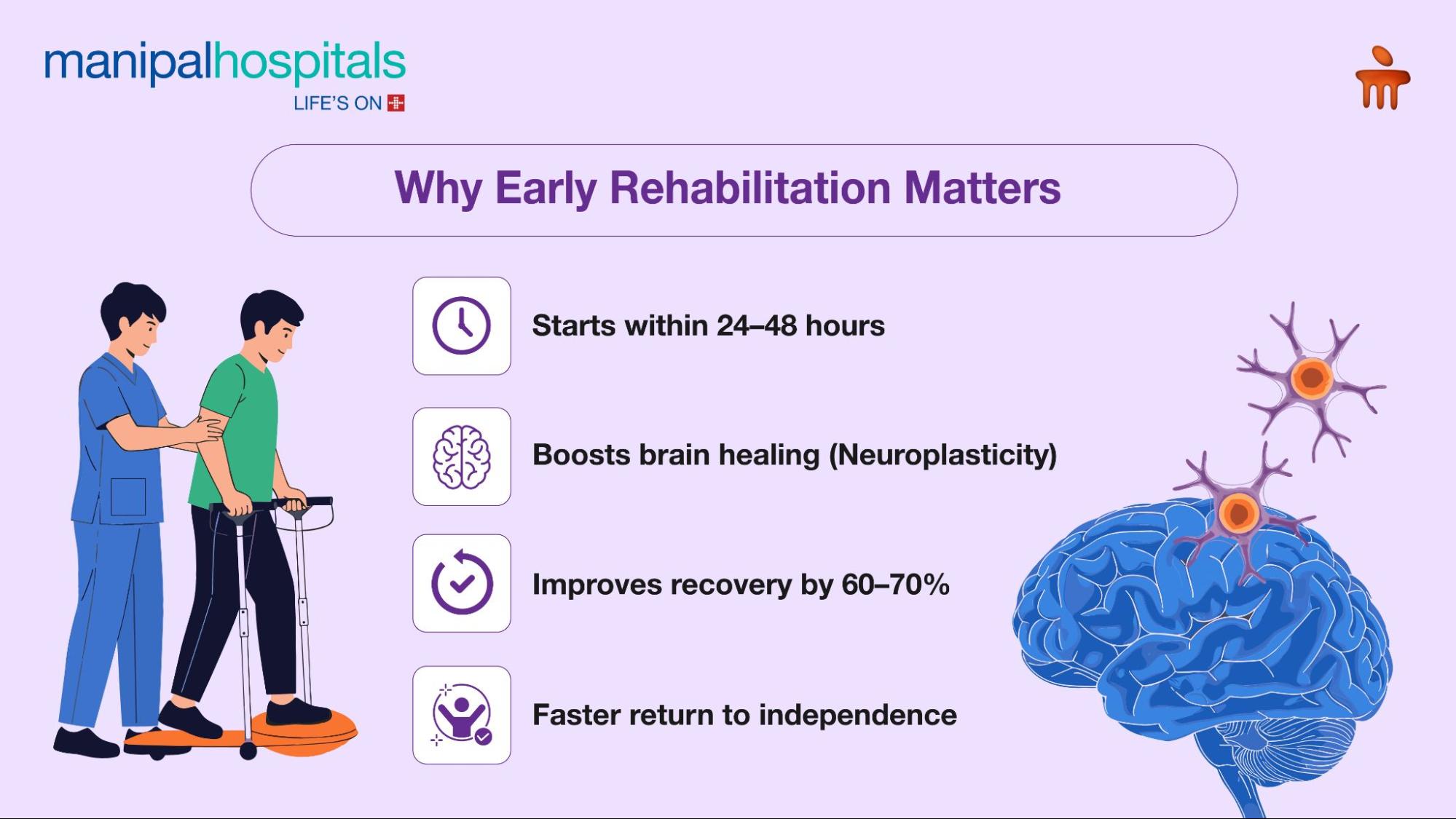
One of the most important things to understand is that timing matters. Rehabilitation usually begins within 24 to 48 hours once the patient is medically stable.
Why so early? Because the brain is most responsive during the initial weeks after a stroke. Starting therapy early can improve recovery outcomes by up to 60–70%. In fact, studies show that nearly 90% of stroke survivors benefit significantly from early rehabilitation.
At Manipal Hospital Pune, early rehabilitation is integrated into stroke care, ensuring patients begin their recovery journey without delay.
The Core of Stroke Rehabilitation
Stroke rehabilitation is not a one-size-fits-all approach. It is a carefully designed programme involving multiple specialists working together to help patients regain independence.
1. Physical Therapy: Relearning Movement
For many patients, regaining movement is the first goal. Physical therapy focuses on improving strength, balance, and coordination.
Exercises may include:
-
Gentle stretching to prevent stiffness
-
Strength training for weakened muscles
-
Balance exercises to reduce fall risk
-
Walking practice with support
Over time, these exercises help patients move more confidently and independently.
2. Speech Therapy: Finding Your Voice Again
Speech difficulties can be one of the most frustrating effects of a stroke. Patients may struggle to speak clearly, understand language, or even swallow properly.
Speech therapists work patiently with individuals to
-
Improve communication skills
-
Strengthen facial and throat muscles
-
Address swallowing difficulties
Progress may feel slow, but with consistent practice, many patients regain their ability to communicate effectively.
3. Occupational Therapy: Returning to Daily Life
Sometimes, it’s the little things that feel the hardest: buttoning a shirt, holding a spoon, or brushing your hair. Occupational therapy focuses on helping patients relearn these everyday activities.
Therapists guide patients through:
-
Self-care routines like bathing and dressing
-
Hand and finger coordination exercises
-
Using assistive tools for independence
-
Making home environments safer
At Manipal Hospital Kharadi, occupational therapy is designed with a practical, patient-first approach, ensuring individuals can return to their daily lives with confidence.
The Role of Home-Based Rehabilitation
Hospital care is just the beginning. True recovery continues at home.
Patients are encouraged to follow a structured home exercise plan, which may include:
-
Stretching and mobility exercises
-
Light strength training
-
Walking practice
-
Simple hand coordination tasks
-
Brain activities like puzzles and reading
Consistency is key. Even 20–30 minutes of daily practice can lead to noticeable improvements over time. Families also play a big role here, offering encouragement and support during difficult days.
Emotional recovery matters too.
Stroke recovery is not just physical, it is deeply emotional. Many patients experience frustration, anxiety, or even depression.
It’s important to acknowledge these feelings. Talking to loved ones, joining support groups, or seeking counselling can make a huge difference. A positive environment often accelerates recovery more than we realise.
Do’s and Don’ts During Recovery
Do’s
-
Start rehabilitation as early as possible
-
Follow your therapy routine regularly
-
Eat a balanced and nutritious diet
-
Stay positive and patient
-
Attend follow-up appointments
Don’ts
-
Don’t skip exercises or therapy sessions
-
Don’t ignore pain or discomfort
-
Don’t overexert yourself
-
Don’t isolate yourself emotionally
A Personal Note on Recovery
Many stroke survivors describe recovery as a slow but rewarding journey. There will be days when progress feels invisible, and others when small victories feel monumental standing without support, speaking a full sentence, or taking a few independent steps.
At Manipal Hospital Pune, we’ve seen patients who once needed full assistance gradually regain independence and confidence. These moments remind us that recovery is not about perfection it’s about progress.
The Road Ahead: Hope and Healing
While a stroke can change life in unexpected ways, it also opens a path toward resilience and strength. With early rehabilitation, expert care, and consistent effort, many patients rebuild their lives in meaningful ways.
Remember, recovery does not happen overnight. It takes time, patience, and the right support system. But every effort counts.
If you or a loved one has experienced a stroke, don’t wait to begin rehabilitation. Early care can significantly improve outcomes and quality of life.
Reach out to the expert neurologist in Pune Manipal Hospital Pune and take the first step towards a stronger, more independent future.
Disclaimer: This article is for informational purposes only and should not replace professional medical advice. Always consult a qualified healthcare provider for diagnosis and treatment.
FAQ's
Recovery timelines vary. Some patients improve within weeks, while others may take months or longer depending on the severity.
Full recovery is possible in some cases, but most patients achieve significant improvement with the right therapy.
Yes, but only with exercises recommended by your therapist to ensure safety and effectiveness.
Early rehabilitation combined with consistency and a positive mindset plays a crucial role.
Family support is vital. Helping with exercises, providing emotional encouragement, and staying involved in the recovery process makes a big difference.
Share this article on:


.webp "Nerve Pain: Causes, Symptoms, and Treatment Options")


.webp "Heart Attack vs Cardiac Arrest: What to Do in the First 10 Minutes")





