6 Min Read
Migraines are commonly known for causing severe headaches, nausea, and sensitivity to light or sound. However, there is one rare type of migraine that can be especially frightening because it affects movement and speech as well. This condition is known as hemiplegic migraine, a neurological disorder that can temporarily cause weakness or paralysis on one side of the body. At Manipal Hospitals Pune, specialists often see patients who initially mistake these symptoms for a stroke because the warning signs can appear very similar.
Hemiplegic migraine is uncommon, but for the people living with it, the impact can be significant. The condition affects the nervous system and causes temporary disruptions in brain function. During an attack, a person may suddenly struggle to move one arm or leg, experience slurred speech, or notice visual disturbances before the headache even begins. These episodes can last from a few hours to several days, creating anxiety and uncertainty for both patients and their families.
The good news is that with early diagnosis, proper treatment, and lifestyle management, most people recover fully after each episode and can successfully manage the condition over time.
Synopsis
- Understanding Hemiplegic Migraine Symptoms
- Common symptoms include:
- What Causes Hemiplegic Migraine?
- Common Triggers That May Cause an Attack
- Hemiplegic Migraine Treatment and Management
- Managing Symptoms During an Attack
- Preventive Treatment Options
- Living with Hemiplegic Migraine
- Care Tips: Do’s and Don’ts
Understanding Hemiplegic Migraine Symptoms
The most defining feature of hemiplegic migraine is temporary weakness on one side of the body. This weakness may affect the face, arm, or leg and can range from mild heaviness to complete inability to move the affected side.
Because these symptoms closely resemble stroke symptoms, immediate medical attention is always necessary, especially during the first attack.
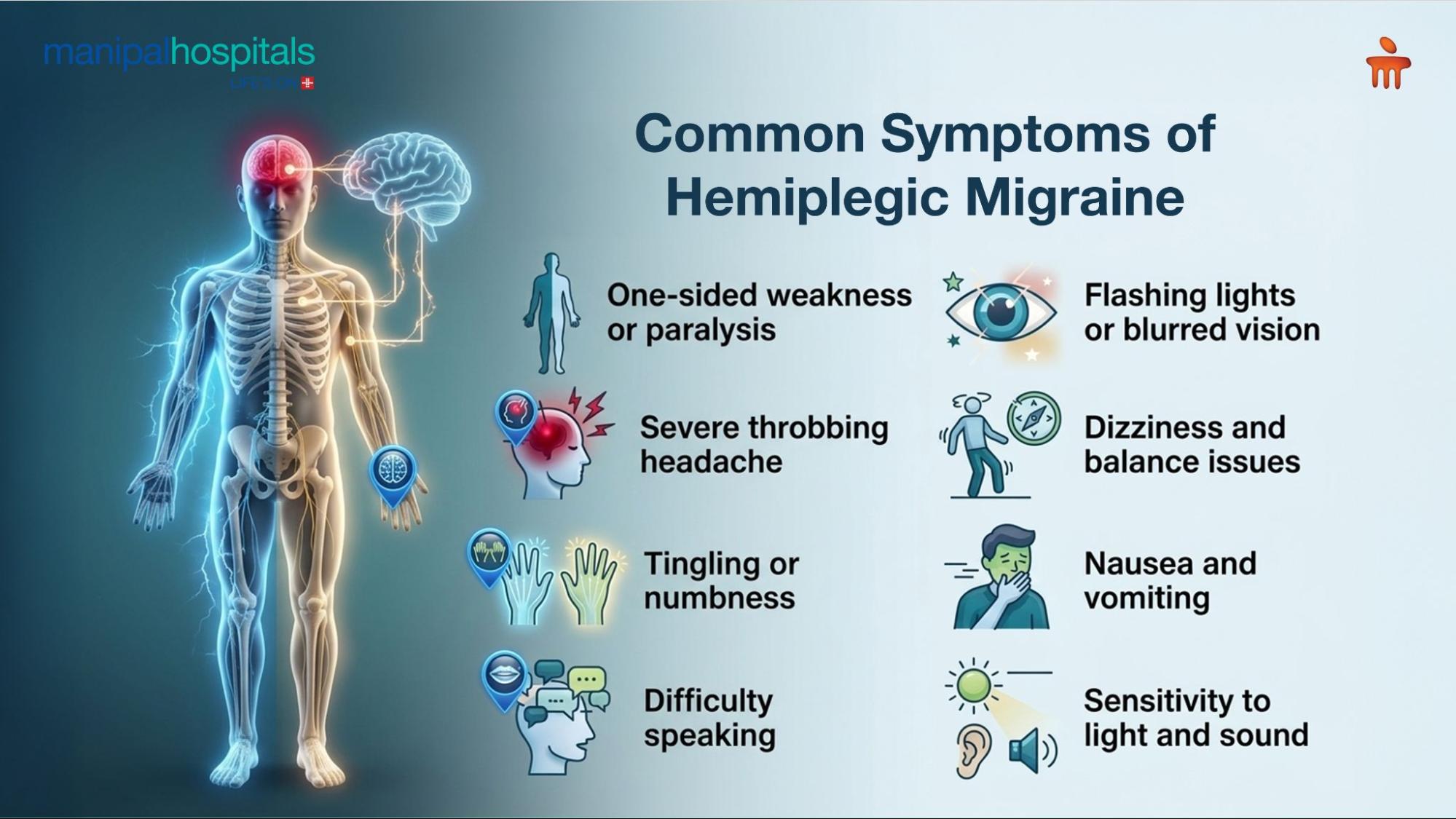
Common symptoms include:
One-Sided Weakness or Paralysis
This is the hallmark symptom of hemiplegic migraine. Some people feel numbness or heaviness, while others temporarily lose movement completely on one side of the body.
Severe Headache
The migraine headache is usually throbbing and intense. It may occur before, during, or after the neurological symptoms.
Visual Aura
Many patients experience:
-
Flashing lights
-
Zig-zag lines
-
Blind spots
Speech Difficulties
Patients may struggle to form sentences, pronounce words clearly, or understand conversations during an attack.
Numbness and Tingling
Pins-and-needles sensations often spread slowly from the fingers to the face.
Dizziness and Loss of Balance
Some individuals feel extremely unsteady or experience vertigo during episodes.
Sensitivity to Light and Sound
Bright lights and loud noises may worsen symptoms significantly.
Cognitive Changes
Confusion, memory issues, and difficulty concentrating are also common during severe attacks.
At Manipal Hospitals, neurologists in Baner, Pune, use advanced neurological assessment and imaging techniques to identify hemiplegic migraine accurately and rule out conditions such as stroke or epilepsy.
What Causes Hemiplegic Migraine?
Researchers believe that genetics and abnormal electrical activity in the brain play an important role in hemiplegic migraine.
There are two major forms of this condition:
Familial Hemiplegic Migraine (FHM)
This type runs in families and is linked to inherited gene mutations. If one parent has the condition, children may inherit it as well.
Sporadic Hemiplegic Migraine (SHM)
This occurs without any known family history. Scientists believe spontaneous genetic changes or neurological factors may contribute.
During an attack, nerve cells in the brain temporarily malfunction, leading to disruptions in communication between brain regions. This causes the neurological symptoms seen during an episode.
Common Triggers That May Cause an Attack
Although genetics increases susceptibility, several lifestyle and environmental factors can trigger hemiplegic migraine episodes.
Common triggers include:
-
Emotional stress
-
Anxiety
-
Lack of sleep
-
Hormonal changes
-
Bright lights
-
Loud sounds
-
Strong smells
-
Dehydration
-
Skipping meals
-
Excessive screen exposure
-
Intense physical activity
-
Certain foods and beverages
Many patients find that maintaining a migraine diary helps identify personal triggers. Once triggers are recognised, attack frequency can often be reduced significantly.
Hemiplegic Migraine Treatment and Management
Treatment for hemiplegic migraine focuses on managing acute attacks and preventing future episodes. Since symptoms vary from person to person, treatment plans are highly individualised.
At Manipal Hospitals Pune, neurologists carefully design treatment approaches based on attack severity, frequency, medical history, and overall neurological health.
Managing Symptoms During an Attack
During an episode, patients are usually advised to:
-
Rest in a quiet, dark room
-
Stay hydrated
-
Avoid strenuous activity
-
Follow prescribed medications carefully
Unlike standard migraines, some medications may not always be suitable for hemiplegic migraine. Doctors, therefore, select treatments cautiously to ensure patient safety.
Preventive Treatment Options
For individuals experiencing frequent attacks, preventive care becomes very important.
Lifestyle Modifications
Simple changes in daily routine can make a major difference:
-
Maintaining consistent sleep schedules
-
Eating balanced meals regularly
-
Staying hydrated
-
Managing stress effectively
-
Exercising moderately
Many patients report noticeable improvement after consistently making these changes.
Preventive Medications
Doctors may prescribe:
-
Calcium channel blockers
-
Anti-seizure medications
-
Blood pressure-regulating medicines
-
Other migraine-prevention therapies
Treatment is monitored closely and adjusted based on how well symptoms improve.
Living with Hemiplegic Migraine
Living with hemiplegic migraine can feel emotionally exhausting because attacks often occur suddenly and unpredictably. Many patients become anxious about travelling, working, or attending social events due to fear of another episode.
Support from family members, awareness about triggers, and regular neurological follow-up can make coping easier. Understanding the condition also helps reduce fear and improve confidence in managing symptoms.
At Manipal Hospitals Pune, patients receive comprehensive neurological care, personalised treatment plans, and long-term support to help improve their quality of life.
Care Tips: Do’s and Don’ts
Do:
-
Seek immediate medical care during sudden weakness
-
Follow your neurologist’s treatment plan carefully.
-
Maintain regular sleep and meal timings
-
Manage stress through yoga, meditation, or relaxation exercises
-
Track symptoms and triggers in a migraine diary
Don’t:
-
Ignore new neurological symptoms
-
Stop medications without consulting your doctor
-
Skip meals or remain dehydrated
-
Overexert yourself during an attack
-
Self-medicate frequently with painkillers
Hemiplegic migraine is a rare neurological condition that can be frightening because of its stroke-like symptoms. Temporary paralysis, speech difficulties, and severe headaches can interfere with daily life and create emotional stress. However, with timely diagnosis, appropriate treatment, trigger management, and ongoing neurological care, most individuals can successfully manage the condition and continue to lead active lives.
If you or a loved one experiences symptoms suggestive of hemiplegic migraine, consult the neurology experts at Manipal Hospitals Pune for accurate diagnosis and compassionate care.
Disclaimer: This article is for informational purposes only and should not replace professional medical advice. Please consult a qualified healthcare professional for diagnosis and treatment.
FAQ's
The symptoms can resemble a stroke, which is why immediate medical evaluation is important. However, most patients recover fully after an episode.
Yes, especially if there is a family history of the condition.
No. The weakness associated with hemiplegic migraine is temporary and usually resolves completely.
Yes. Emotional stress is one of the most common migraine triggers.
Certain foods, alcohol, caffeine withdrawal, and processed foods may trigger attacks in some individuals.
Share this article on:


.webp "Nerve Pain: Causes, Symptoms, and Treatment Options")


.webp "Heart Attack vs Cardiac Arrest: What to Do in the First 10 Minutes")