5 Min Read
For patients living with end-stage kidney disease, a transplant often represents a new beginning. While dialysis sustains life, a transplant offers the possibility of improved longevity, better quality of life, and greater independence. However, kidney transplant surgery is a major medical decision that requires careful consideration, thorough preparation, and a long-term commitment. With guidance from our nephrologists in Patiala, patients receive expert counselling to understand whether transplantation is the right option for them.
This comprehensive guide explains everything you need to know before kidney transplant surgery, including eligibility, evaluation, testing, surgical steps, recovery, and long-term care. Being informed helps patients and families approach this life-changing procedure with clarity and confidence.
Synopsis
- Understanding Kidney Transplant Surgery
- Who Is Eligible? Understanding Kidney Transplant Criteria
- Pre-Transplant Evaluation: Tests You Must Know About
- Living Donor vs Deceased Donor Transplant
- Kidney Transplant Procedure Steps Explained
- Recovery After Kidney Transplant Surgery
- Risks and Complications to Be Aware Of
- Emotional and Psychological Preparation
- Why Timely Transplant Evaluation Matters
- Conclusion
Understanding Kidney Transplant Surgery
Kidney Transplant Surgery involves placing a healthy kidney from a living or deceased donor into a patient whose kidneys no longer function adequately. Unlike dialysis, which replaces only some kidney functions, kidney transplant surgery restores near-normal kidney activity, allowing the body to regulate fluids, electrolytes, and waste more effectively.
Patients who undergo kidney transplant surgery often experience improved energy levels, fewer dietary restrictions, and better overall health compared to long-term dialysis. However, the success of kidney transplant surgery depends on careful patient selection, strict adherence to medical guidance, and lifelong follow-up.
Who Is Eligible? Understanding Kidney Transplant Criteria
Not every patient with kidney disease is immediately eligible for kidney transplant surgery. Doctors assess eligibility using well-defined kidney transplant criteria to ensure safety and long-term success.
Key kidney transplant criteria include:
-
End-stage kidney disease or irreversible kidney failure
-
Acceptable heart, lung, and liver function
-
Absence of active infections or untreated cancers
-
Ability to adhere to lifelong medications
-
Psychological readiness and social support
Meeting kidney transplant criteria does not guarantee immediate surgery, but it allows patients to be listed for transplantation. Our nephrologists in Patiala carefully evaluate each patient to ensure kidney transplant criteria are met safely and ethically.
Pre-Transplant Evaluation: Tests You Must Know About
Before kidney transplant surgery, patients undergo extensive testing to assess their overall health and compatibility with the donor kidney. These evaluations reduce complications and increase graft survival.
The Importance of the HLA Test for Kidney Transplant
One of the most critical investigations is the HLA test for a kidney transplant. Human Leukocyte Antigen (HLA) matching helps determine how well the donor kidney matches the recipient’s immune system.
The HLA test for a kidney transplant reduces the risk of rejection by identifying genetic markers. A closer match improves long-term outcomes after kidney transplant surgery, though modern immunosuppressive therapy allows successful transplants even with partial mismatches.
Other evaluations include:
-
Blood grouping and cross-matching
-
Cardiac and pulmonary assessment
-
Imaging studies
-
Infection screening
The HLA test for a kidney transplant is repeated when necessary and plays a key role in donor selection.
Living Donor vs Deceased Donor Transplant
Kidney Transplant Surgery can be performed using kidneys from either living or deceased donors.
Living Donor Transplant
-
Planned surgery
-
Shorter waiting time
-
Better long-term outcomes
Deceased Donor Transplant
-
Requires waiting on a transplant list
-
Allocation based on urgency and compatibility
-
Depends heavily on the HLA test for a kidney transplant
Both options follow the same kidney transplant criteria and surgical standards.
Kidney Transplant Procedure Steps Explained
Understanding the kidney transplant procedure steps helps reduce anxiety and prepares patients mentally for surgery.
Step-by-Step Overview:
-
Pre-operative preparation - Final tests and consent
-
Anaesthesia - Surgery is performed under general anaesthesia
-
Placement of the kidney - The new kidney is placed in the lower abdomen
-
Vascular connection - Blood vessels are connected to restore circulation
-
Ureter attachment - Urine flow is established
-
Closure and monitoring
The original kidneys are usually left in place unless medically indicated. The kidney transplant procedure typically takes three to four hours, depending on itscomplexity.
Recovery After Kidney Transplant Surgery
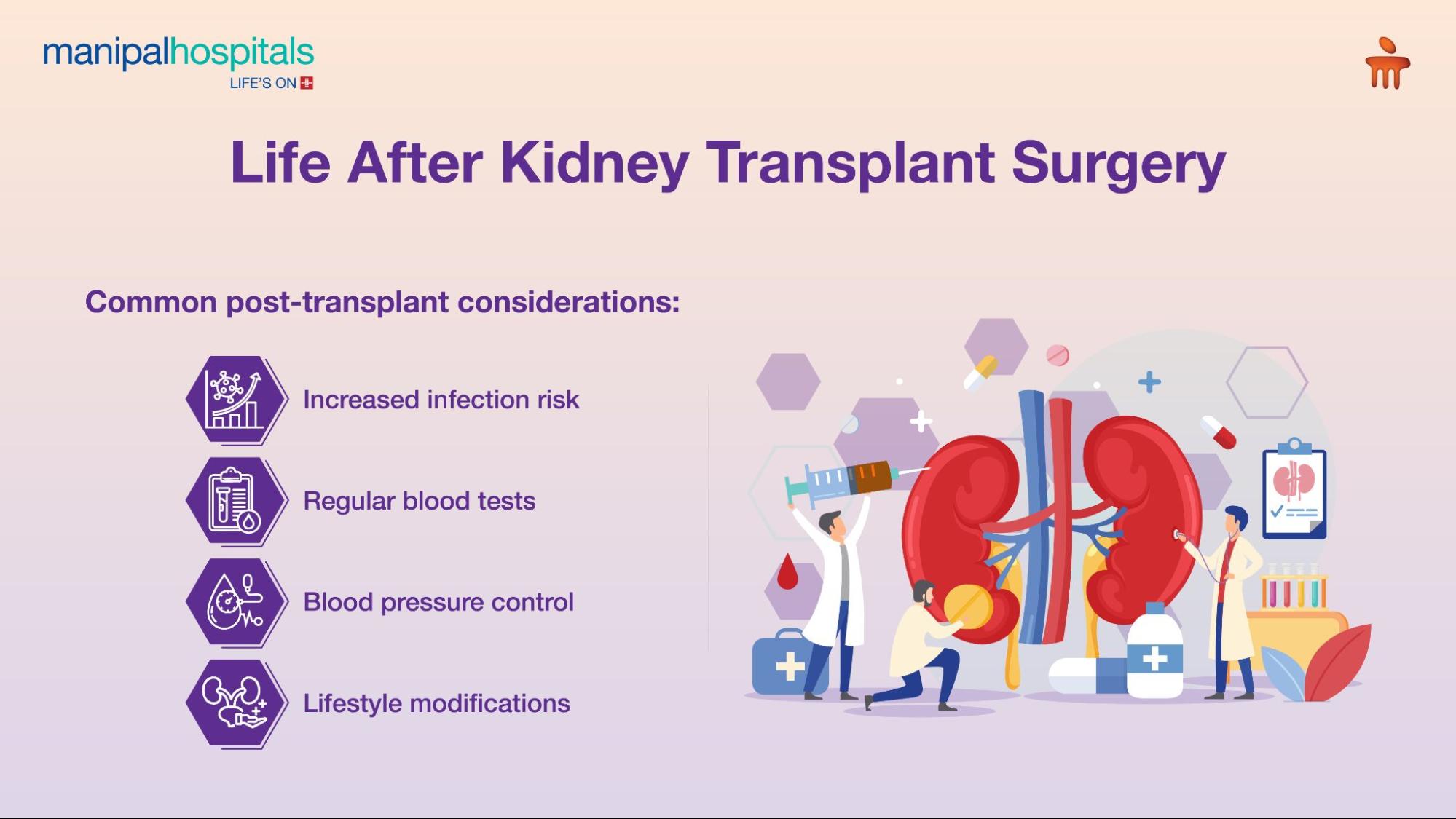
Recovery after kidney transplant surgery begins immediately. Most patients stay in the hospital for one to two weeks for close monitoring.
Key aspects of recovery include:
-
Monitoring urine output and kidney function
-
Managing pain and wound healing
-
Starting immunosuppressive medications
-
Preventing infection
Following the kidney transplant procedure steps correctly during recovery is essential for long-term success. Our nephrologists in Patiala guide patients through each recovery milestone with structured follow-up care.
Risks and Complications to Be Aware Of
Like any major surgery, kidney transplant surgery carries risks, including:
-
Rejection episodes
-
Infections
-
Surgical complications
-
Medication side effects
Most complications are manageable with early detection. Regular follow-ups, especially after reviewing the HLA test for kidney transplant results, help minimise long-term risks.
Emotional and Psychological Preparation
Preparing for kidney transplant surgery is not just physical. Emotional readiness plays a significant role in recovery. Anxiety, fear, and uncertainty are normal, especially while waiting for surgery.
Support systems, counselling, and clear communication with your care team help patients cope better. Our nephrologists in Patiala emphasise holistic care, addressing both physical and emotional well-being.
Why Timely Transplant Evaluation Matters
Early referral for kidney transplant surgery improves outcomes. Patients evaluated sooner are more likely to meet kidney transplant criteria and undergo successful transplantation before complications arise.
Understanding the kidney transplant procedure steps and completing the HLA test for kidney transplant early reduces waiting time and stress.
Conclusion
Kidney Transplant Surgery is a transformative procedure that offers renewed life for patients with advanced kidney disease. By understanding kidney transplant criteria, undergoing the necessary evaluations, including the HLA test for kidney transplant, and being aware of the kidney transplant procedure steps, patients can approach transplantation with confidence.
With expert care, disciplined follow-up, and patient commitment, kidney transplant surgery can provide long-term health, independence, and improved quality of life.
FAQ's
Kidney transplant surgery usually takes three to four hours, depending on complexity.
Key kidney transplant criteria include end-stage kidney disease, overall medical fitness, and ability to take lifelong medications.
The HLA test for a kidney transplant helps reduce rejection risk by matching donor and recipient immune markers.
The kidney transplant procedure steps include donor kidney placement, blood vessel connection, and urinary tract attachment.
With proper care, a transplanted kidney can function for 10–20 years or longer after kidney transplant surgery.
Share this article on: