7 Min Read
Receiving a cancer diagnosis can be an overwhelming experience, and understanding the various treatment options is a crucial step in the journey. Radiation therapy, often a cornerstone of cancer care, plays a vital role in destroying cancer cells and shrinking tumours. At Manipal Hospitals, our dedicated team, including our oncologists in Patiala, is committed to providing compassionate care and empowering patients with knowledge every step of the way. This guide aims to demystify radiation therapy, helping you understand what to expect during your treatment and how to effectively manage potential side effects.
Modern advancements have significantly refined radiation techniques, making them more precise and tolerable than ever before. In fact, studies show that over 70% of cancer patients will receive radiation therapy at some point during their treatment, often leading to improved outcomes and enhanced quality of life.
Synopsis
- Understanding Radiation Therapy: How It Works
- Understanding Radiation Therapy Side Effects: What to Expect
- Specific Concerns: Side Effects of Radiation Therapy for Breast Cancer
- After Radiation Therapy: Side Effects and Long-Term Considerations
- How to Reduce Side Effects of Radiation Therapy
- The Role of Advanced Technology in Reducing Side Effects
Understanding Radiation Therapy: How It Works
Radiation therapy uses high-energy particles or waves, such as X-rays, gamma rays, or protons, to damage the DNA of cancer cells, preventing them from growing and dividing. While it targets cancer cells, it can also affect healthy cells in the treatment area, leading to side effects. However, careful planning and advanced technology minimise this impact.
-
External Beam Radiation Therapy (EBRT): This is the most common type, delivered by a machine outside the body. It allows precise targeting of tumours from various angles.
-
Internal Radiation Therapy (Brachytherapy): Involves placing a radioactive source inside the body, directly within or near the tumour. This delivers a high dose of radiation to a very localised area, sparing surrounding healthy tissues.
Understanding Radiation Therapy Side Effects: What to Expect
The experience of radiation therapy side effects varies greatly among individuals, depending on the dose of radiation, the part of the body being treated, and overall health. It's important to remember that these side effects are usually temporary and manageable. Open communication with your care team is key to successfully navigating them.
General Short-Term Side Effects
Many patients experience some common side effects that typically emerge a few weeks into treatment and subside within a few weeks to months after treatment concludes. These are part of the body's natural response to healing and cell repair.
-
Fatigue: This is one of the most common complaints, often described as an overwhelming tiredness not relieved by rest. It can affect up to 90% of patients undergoing radiation therapy, but manageable with rest and light activity.
-
Skin Changes: The skin in the treated area may become red, dry, itchy, sensitive, or peel, similar to a sunburn. This can range from mild irritation to more pronounced reactions.
-
Hair Loss: Hair loss only occurs in the area being treated. For example, radiation to the head may cause hair loss on the scalp, but not on other parts of the body.
-
Nausea and Vomiting: More common when the abdomen or brain is treated.
-
Sore Throat and Difficulty Swallowing: If radiation is directed at the head, neck, or chest.
-
Changes in Blood Counts: Less common with modern techniques, but can occur if large areas of bone marrow are irradiated.
Specific Concerns: Side Effects of Radiation Therapy for Breast Cancer
For patients undergoing treatment for breast cancer, specific side effects related to the chest area are common. Our expert oncologists at Manipal Hospitals focus on minimising these impacts while maximising therapeutic efficacy.
-
Skin Reactions: Similar to general skin changes but localised to the treated breast and underarm area, often peaking in the last weeks of treatment and resolving afterwards.
-
Breast Swelling and Tenderness: The treated breast may feel heavier, swollen, and tender.
-
Breast Firmness/Fibrosis: Over time, the treated breast may become firmer due to scar tissue formation.
-
Armpit Discomfort: If lymph nodes in the armpit are treated, some discomfort or tightness may occur.
-
Lymphedema: A less common but potential long-term side effect, where fluid build-up causes swelling in the arm or hand on the side of treatment. Modern techniques and early intervention have reduced its incidence significantly.
-
Fatigue: As with other forms of radiation, general tiredness is common.
After Radiation Therapy: Side Effects and Long-Term Considerations
While most side effects resolve within weeks or months, some individuals may experience side effects that persist or develop later. These are generally less common and depend heavily on the treated area and individual factors.
-
Persistent Fatigue: Some patients report lingering fatigue for several months post-treatment.
-
Skin Changes: Permanent skin discolouration, increased sensitivity, or a leathery texture in the treated area can occur.
-
Fibrosis: Hardening of tissues in the treated area due to scar tissue, which can affect organ function if significant (e.g., lung fibrosis, rarely).
-
Lymphedema: As mentioned, it can be a long-term complication, particularly after breast or pelvic radiation.
-
Secondary Cancers: A very rare long-term risk (less than 1% over decades), but one that modern techniques continue to minimise.
How to Reduce Side Effects of Radiation Therapy
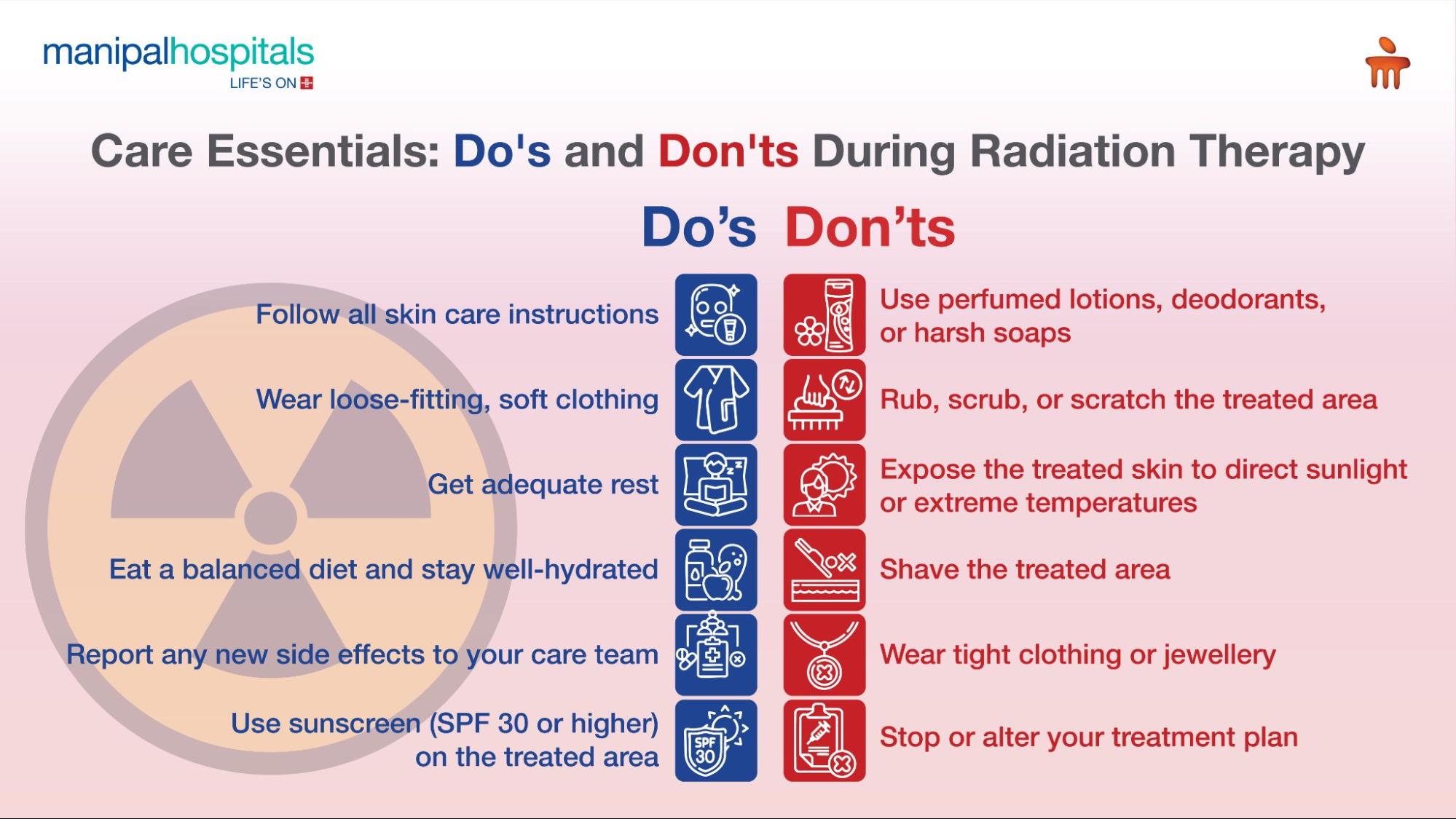
Managing and reducing side effects is a key part of your treatment plan. Your care team at Manipal Hospitals will provide personalised advice, but here are general strategies to help:
-
Prioritise Rest: Listen to your body and rest when needed. Short naps can be helpful.
-
Maintain Good Nutrition: A balanced diet supports your body's healing process. Stay hydrated by drinking plenty of water.
-
Gentle Skin Care: Use mild, unscented soaps and lotions recommended by your care team. Avoid harsh scrubbing, direct sun exposure, and tight clothing on the treated area.
-
Stay Hydrated: Drinking plenty of fluids is crucial, especially if experiencing nausea or mouth sores.
-
Light Exercise: Gentle walks or light activities can help combat fatigue and improve mood.
-
Communicate with Your Team: Report any new or worsening side effects immediately. Your doctors can prescribe medications or suggest interventions to alleviate discomfort.
-
Avoid Irritants: Refrain from smoking and alcohol, especially if receiving head and neck radiation.
Remarkably, studies show that proactive management and patient education can reduce the severity of common side effects, like skin reactions and fatigue, by up to 30% for a significant majority of patients.
The Role of Advanced Technology in Reducing Side Effects
Manipal Hospitals utilises state-of-the-art radiation therapy technologies designed to maximise cancer cell destruction while sparing healthy tissue. Techniques like Intensity-Modulated Radiation Therapy (IMRT), Image-Guided Radiation Therapy (IGRT), and Stereotactic Body Radiation Therapy (SBRT) allow for highly precise targeting. These advancements have been shown to reduce the volume of healthy tissue receiving radiation by an average of 25-40%, significantly lowering the risk and severity of side effects, especially for complex cases.
Radiation therapy is a powerful and effective tool in the fight against cancer. While the prospect of side effects can be daunting, understanding them and knowing how to manage them can significantly improve your treatment experience. Remember, you are not alone on this journey. The comprehensive and compassionate care teams, including our oncologists in Patiala, at Manipal Hospitals, are here to support you with expert guidance and advanced treatment options.
If you are experiencing these symptoms or have questions about your radiation therapy, it's crucial to seek timely medical advice. Book an appointment with our expert oncologists at Manipal Hospitals today.
FAQ's
Most short-term side effects typically resolve within a few weeks to a few months after your treatment concludes. Some long-term effects can persist or develop later, but these are generally less common and manageable.
Many patients can maintain a relatively normal routine, including light work and social activities. However, you may need to adjust your schedule based on fatigue levels and appointment times. Listen to your body and prioritise rest.
The radiation treatment itself is not painful; you won't feel anything during the sessions. Any discomfort experienced would be from positioning on the treatment table or the side effects that develop over time.
A well-balanced, nutritious diet is important. Focus on high-protein foods, fruits, vegetables, and whole grains. Avoid overly spicy, acidic, or fatty foods that might irritate the digestive system. Stay well-hydrated.
You will typically have weekly check-ups with your radiation oncologist to monitor your progress, manage side effects, and make any necessary adjustments to your treatment plan.
Share this article on: