7 Min Read
Experiencing persistent shoulder pain and stiffness that make everyday tasks challenging? You might be dealing with what medical professionals call adhesive capsulitis, more commonly known as frozen shoulder. This condition, often characterised by distinct frozen shoulder symptoms, can severely limit your arm movement, impacting your quality of life. Understanding the reason for frozen shoulder and exploring effective management strategies, including home remedies for frozen shoulder, is key to recovery. At Manipal Hospitals, we understand the frustration and discomfort it brings, and we're here to provide clarity and guidance on how to cure frozen shoulder quickly.
Synopsis
What is Frozen Shoulder (Adhesive Capsulitis)?
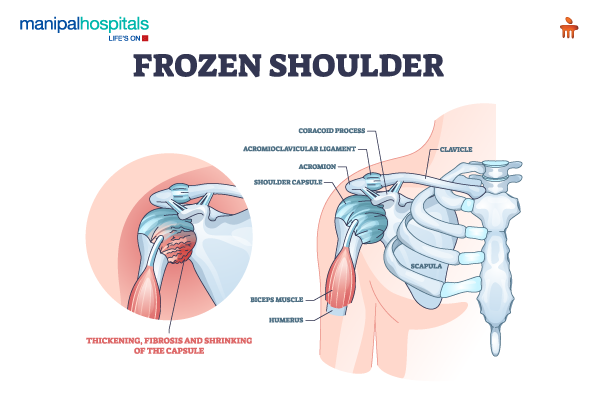
Frozen shoulder, medically known as adhesive capsulitis, is a debilitating condition characterised by significant stiffness and pain in the shoulder joint. The primary reason for frozen shoulder lies in the thickening and tightening of the connective tissue capsule that surrounds the shoulder joint. This constricts the joint, severely restricting movement. It's like the smooth mechanics of your shoulder becoming 'stuck' due to inflammation and the formation of scar tissue within the capsule. This progressive loss of both active and passive range of motion is a hallmark of the condition, often developing without a clear preceding injury, making it crucial to recognise the early frozen shoulder symptoms.
Understanding Frozen Shoulder Symptoms
Recognising the specific frozen shoulder symptoms early can be crucial for effective management and can influence how to cure frozen shoulder quickly. This condition typically develops slowly in three distinct stages, each presenting with unique characteristics and impacting overall recovery.
Phases of Frozen Shoulder: A Detailed Overview
|
Stage Name |
Typical Duration |
Key Characteristics & Frozen Shoulder Symptoms |
|
Freezing Stage (Painful Stage) |
6 weeks to 9 months |
This initial phase is marked by increasing pain in your shoulder, often worse at night, and a gradual, progressive loss of shoulder motion. The pain is usually dull or aching but can become sharp with certain movements. This is often when individuals first notice significant frozen shoulder symptoms and seek a diagnosis. |
|
Frozen Stage (Adhesive Stage) |
4 to 12 months |
During this stage, the intense pain from the freezing stage might decrease, but the stiffness significantly worsens. Moving your shoulder becomes extremely difficult, making daily activities like dressing or reaching challenging. The shoulder truly becomes "frozen" in its mobility, further reinforcing the impact of the frozen shoulder symptoms on daily life. |
|
Thawing Stage (Recovery Stage) |
6 months to 2 years |
This final stage involves a slow but steady improvement in your shoulder's range of motion. While recovery is gradual, consistent rehabilitation efforts are vital for regaining function. Studies suggest that over 90% of patients experience substantial improvement in movement and pain reduction with appropriate management, highlighting the potential to understand how to cure frozen shoulder quickly through dedicated therapy. |
While the precise reason for frozen shoulder isn't always fully understood, especially in cases of primary (idiopathic) frozen shoulder where no clear cause is identified, a number of factors significantly increase your risk. It’s crucial to understand these potential contributing factors to better comprehend the condition and strategise effective management to address frozen shoulder symptoms and explore pathways for how to cure frozen shoulder quickly.
|
Risk Factor Category |
Specific Risk Factors & Explanation |
|
Metabolic and Endocrine Conditions |
Diabetes: This is arguably the most significant risk factor. Individuals with diabetes are at a significantly higher risk, with up to 10-20% developing frozen shoulder, often affecting both shoulders sequentially or simultaneously. Thyroid Disorders: Both an overactive (hyperthyroidism) and an underactive (hypothyroidism) thyroid can increase susceptibility to developing frozen shoulder. |
|
Other Medical Conditions |
Cardiac Disease: People with heart conditions, particularly those who have had a heart attack or undergone open-heart surgery, are also observed to be at a higher risk, potentially due to associated inflammation or periods of reduced arm movement. Parkinson's Disease: Neurological conditions like Parkinson's can also increase the likelihood due to changes in muscle tone and movement patterns. |
|
Shoulder Trauma or Immobilisation |
Prolonged Immobilisation: Any period of reduced shoulder movement due to injury (e.g., rotator cuff tear, fracture), surgery (e.g., mastectomy, arm fracture repair), or stroke can contribute to the development of frozen shoulder. Injury or Surgery: Direct trauma or surgery to the shoulder or chest can trigger the inflammatory response that leads to capsule tightening. |
|
Demographic Factors |
Age and Gender: Frozen shoulder most commonly affects people between the ages of 40 and 60. It is also more prevalent in women than in men, though the exact reason for frozen shoulder's gender disparity is still being researched. |
Effective Home Remedies for Frozen Shoulder & Management Tips
While professional medical consultation is vital for an accurate diagnosis and comprehensive treatment plan, several proven home remedies for frozen shoulder and self-management strategies can offer significant relief from frozen shoulder symptoms and improve shoulder stiffness, particularly during the thawing stage or as part of a broader rehabilitation program. These approaches are crucial for those wondering how to cure frozen shoulder quickly, as consistent application can accelerate recovery. Remember, consistency is key, and never push through sharp pain.
Key Home Strategies for Frozen Shoulder Relief:
-
Gentle Exercises and Stretches: These are paramount to restoring limited shoulder movement gradually. Perform them slowly and gently, several times a day. Specific exercises that form effective home remedies for frozen shoulder include:
- Pendulum Stretch: Lean over slightly, allowing the affected arm to hang down. Gently swing the arm in small circles (10 times each direction) or forward and backwards. As your frozen shoulder symptoms improve, you can gradually increase the swing size.
- Finger Walk: Face a wall a few inches away. With the fingers of your affected hand, "walk" them up the wall, keeping your arm slightly bent, until you've raised your arm as high as comfortable. Hold for a few seconds, then slowly walk your fingers back down.
- Cross-Body Reach: Use your good arm to lift your affected arm at the elbow, and bring it up and across your body, applying gentle pressure to stretch the posterior capsule. Hold for 15-20 seconds.
- Doorway Stretch: Stand in a doorway with your hands on the doorframe, slightly above shoulder height. Lean forward gently, feeling a stretch in your chest and shoulders. Hold for 20-30 seconds. This is an excellent stretch for anterior shoulder tightness.
- Heat and Cold Therapy: Effective management of pain and inflammation is another cornerstone of home remedies for frozen shoulder.
- Heat Packs
- Cold Packs
- Posture and Activity Modification: Protecting your shoulder and preventing further irritation is critical.
- Maintain Good Posture
- Avoid Overuse
- Ergonomic Adjustments
FAQ's
Frozen shoulder can last anywhere from 1 to 3 years, progressing through its three distinct stages (freezing, frozen, thawing). The recovery period varies significantly among individuals. To understand how to cure frozen shoulder quickly, consistent management, including professional physical therapy and dedicated application of home remedies for frozen shoulder, is crucial.
While some mild cases may eventually resolve on their own, this often takes a much longer time (sometimes several years), and complete restoration of motion may not be achieved. Ignoring frozen shoulder symptoms and delaying intervention means a prolonged period of pain and stiffness.
There isn't a specific diet that can directly answer how to cure frozen shoulder quickly, but an anti-inflammatory diet rich in fruits, vegetables, lean proteins, and omega-3 fatty acids can help manage inflammation and support overall joint health. Avoiding processed foods, excessive sugar, and unhealthy fats may also be beneficial in reducing inflammation.
A rotator cuff tear involves damage to the tendons around the shoulder, causing pain, weakness, and limited active movement. The reason for frozen shoulder, or adhesive capsulitis, is primarily the thickening and tightening of the joint capsule, leading to widespread stiffness and restricted movement in all directions (both active and passive), often without a specific preceding injury.
High-impact activities or exercises that involve aggressive overhead movements or heavy lifting should be avoided, especially during the painful freezing stage, as they can worsen frozen shoulder symptoms. Gentle, controlled exercises and stretches, which are considered crucial home remedies for frozen shoulder.
Share this article on: