5 Min Read
Heart disease remains one of the leading causes of morbidity worldwide, and blocked coronary arteries are a major contributor. The angioplasty procedure has emerged as a highly effective, minimally invasive solution to restore blood flow to the heart. Understanding the angioplasty procedure, how it works, recovery expectations, and long-term outcomes can help patients make informed decisions and reduce anxiety before treatment.
This blog provides a comprehensive overview of the angioplasty procedure, explains the angioplasty procedure, highlights the difference between angiography and angioplasty, and outlines essential precautions after angioplasty.
Synopsis
- What Is an Angioplasty Procedure?
- Angioplasty Surgery Procedure: Step-by-Step Explanation
- Difference Between Angiography and Angioplasty
- Who Needs an Angioplasty Procedure?
- Types of Angioplasty Procedure
- Recovery After an Angioplasty Procedure
- Precautions After Angioplasty
- Lifestyle Changes After Angioplasty Procedure
- Success Rates of Angioplasty Procedure
- Risks and Complications of Angioplasty Surgery Procedure
- Angioplasty Procedure vs Bypass Surgery
- Conclusion
What Is an Angioplasty Procedure?
The angioplasty procedure is a minimally invasive cardiac intervention performed to open narrowed or blocked arteries supplying the heart. During the angioplasty procedure, a thin catheter with a balloon at its tip is guided to the affected artery. The balloon is inflated to widen the artery, improving blood flow.
In many cases, a stent is placed during the angioplasty procedure to keep the artery open long-term. This makes the angioplasty procedure a cornerstone treatment for coronary artery disease.
Key Objectives of the Angioplasty Procedure
-
Restore adequate blood flow
-
Reduce chest pain (angina)
-
Prevent heart attacks
-
Improve heart function
The angioplasty procedure is often recommended when lifestyle changes and medications are insufficient.
Angioplasty Surgery Procedure: Step-by-Step Explanation
The angioplasty surgery procedure is typically completed within 30–90 minutes and does not require open-heart surgery. Understanding the angioplasty surgery procedure helps patients feel more prepared.
Steps in the Angioplasty Surgery Procedure
1. Accessing the artery
The angioplasty surgery procedure begins with catheter insertion through the wrist or groin.
2. Guiding the catheter
Using imaging guidance, the cardiologist advances the catheter as part of the angioplasty surgery procedure.
3. Balloon inflation
A balloon is inflated to compress plaque during the angioplasty surgery procedure.
4. Stent placement
A stent is deployed during the angioplasty surgery procedure to maintain arterial patency.
5. Completion and monitoring
The catheter is removed, completing the angioplasty surgery procedure.
The angioplasty surgery procedure allows faster recovery than traditional bypass surgery.
Difference Between Angiography and Angioplasty
Understanding the difference between angiography and angioplasty is essential for patients undergoing cardiac evaluation.
|
Aspect |
Angiography |
Angioplasty |
|
Purpose |
Diagnosis |
Treatment |
|
Role |
Identifies blockages |
Opens blocked arteries |
|
Intervention |
Imaging only |
Balloon + stent |
|
Outcome |
Detects disease |
Restores blood flow |
The difference between angiography and angioplasty lies in intent; angiography diagnoses, while angioplasty treats. Doctors often perform angiography first, and based on findings, proceed with angioplasty in the same sitting. Knowing the difference between angiography and angioplasty reduces confusion during treatment planning.
Who Needs an Angioplasty Procedure?
The angioplasty procedure is recommended for individuals with:
-
Severe coronary artery narrowing
-
Persistent chest pain
-
Heart attack due to blocked arteries
-
Reduced blood flow despite medication
Your cardiologist may advise the angioplasty procedure after evaluating angiographic findings.
Types of Angioplasty Procedure
There are different forms of the angioplasty procedure, chosen based on disease severity:
Common Angioplasty Procedure Types
-
Balloon angioplasty procedure
-
Stent-assisted angioplasty procedure
-
Drug-eluting stent angioplasty procedure
-
Primary angioplasty procedure (emergency heart attack care)
Each angioplasty procedure type aims to restore optimal circulation.
Recovery After an Angioplasty Procedure
Recovery after the angioplasty procedure is generally quick. Most patients are discharged within 24–48 hours.
Typical Recovery Timeline
|
Timeframe |
Recovery Milestone |
|
24 hours |
Walking and light movement |
| 3–5 days |
Resume daily activities |
| 1–2 weeks | Return to work |
| 4–6 weeks |
Full recovery |
Following proper precautions after angioplasty ensures smooth healing.
Precautions After Angioplasty
Strict precautions after angioplasty are essential to prevent complications and re-blockage.
Essential Precautions After Angioplasty
-
Take prescribed blood thinners
-
Avoid heavy lifting initially
-
Monitor the puncture site
-
Follow a heart-healthy diet
-
Quit smoking
Long-term precautions after angioplasty also include stress management and regular exercise. Adhering to precautions after angioplasty significantly improves outcomes.
Lifestyle Changes After Angioplasty Procedure
The success of the angioplasty procedure depends heavily on lifestyle modifications.
Recommended Changes
-
Low-salt, low-fat diet
-
Regular physical activity
-
Weight management
-
Blood pressure control
These changes support the angioplasty procedure and reduce recurrence risk.
Success Rates of Angioplasty Procedure
The angioplasty procedure has an excellent success rate.
Angioplasty Procedure Success Statistics
|
Condition |
Success Rate |
|
Single artery blockage |
90–95% |
|
Multiple blockages |
85–90% |
|
Emergency angioplasty procedure |
80–90% |
With adherence to precautions after angioplasty, long-term success improves further.
Risks and Complications of Angioplasty Surgery Procedure
Although safe, the angioplasty surgery procedure carries minimal risks:
-
Bleeding at the insertion site
-
Restenosis
-
Blood clots
Proper patient selection and post-procedure precautions after angioplasty reduce these risks.
Angioplasty Procedure vs Bypass Surgery
The angioplasty procedure is less invasive than bypass surgery.
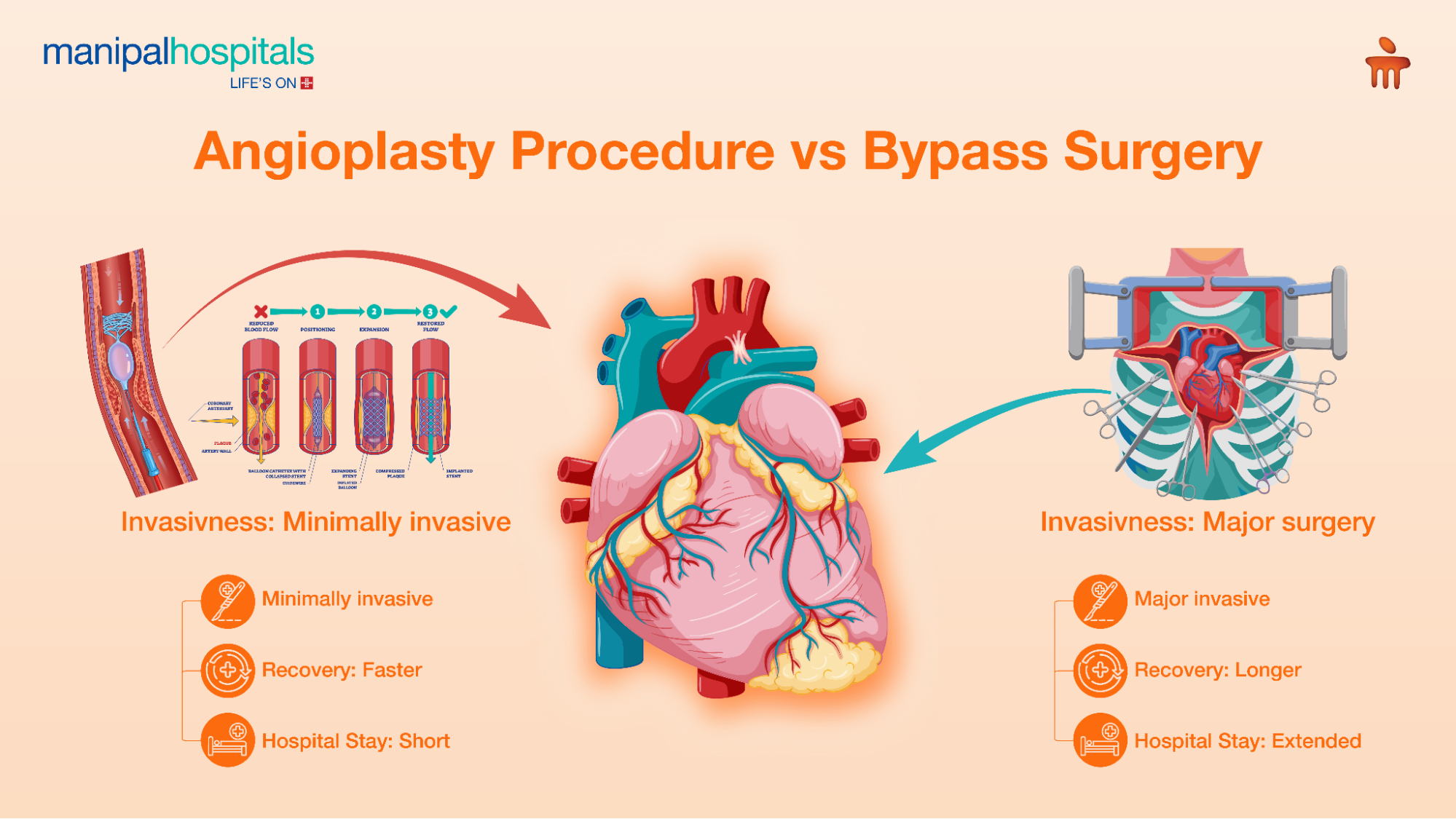
|
Feature |
Angioplasty Procedure |
Bypass Surgery |
|
Level of invasiveness |
The angioplasty procedure requires only a small puncture in the wrist or groin, resulting in minimal tissue trauma and reduced surgical stress. |
Bypass surgery involves opening the chest and, in many cases, temporarily stopping the heart, making it significantly more invasive. |
|
Hospital stay |
Hospital stay after the angioplasty procedure is usually short, often limited to 1–2 days. |
Hospitalisation after bypass surgery generally lasts 5–7 days or longer, including ICU monitoring. |
|
Recovery time |
Recovery after the angioplasty procedure is rapid, with most patients resuming routine activities within a few days to two weeks. |
Recovery after bypass surgery is prolonged, often requiring 6–12 weeks for complete healing. |
Doctors choose the angioplasty procedure when feasible.
Conclusion
The angioplasty procedure is a life-saving, minimally invasive intervention that restores heart health and improves quality of life. By understanding the angioplasty surgery procedure, knowing the difference between angiography and angioplasty, and strictly following precautions after angioplasty, patients can achieve lasting benefits. With high success rates and rapid recovery, the angioplasty procedure remains a cornerstone of modern cardiac care.
Learn More: Angioplasty vs Bypass Surgery | Which Is Right for You?
FAQ's
The angioplasty procedure is usually painless due to local anaesthesia. Mild pressure may be felt.
The difference between angiography and angioplasty is that angiography diagnoses blockages, while angioplasty treats them.
Recovery after the angioplasty surgery procedure typically takes 1–2 weeks, depending on overall health.
Important precautions after angioplasty include medication adherence, avoiding strain, and lifestyle modification.
With proper care and precautions after angioplasty, the angioplasty procedure has excellent long-term success.
Share this article on:


.webp "silent-heart-attack-symptoms-risk-factors")