7 Min Read
--Symptoms,-Causes--Prevention.webp "Urinary Tract Infection (UTI): Symptoms, Causes & Prevention")
A burning feeling while urinating, needing to use the toilet more often, or discomfort in the lower abdomen are symptoms many people tend to ignore at first. However, these can sometimes point to a urinary tract infection (UTI), one of the most common infections affecting the urinary system. If left untreated, it can affect the bladder, urethra, or even the kidneys. Knowing what causes UTIs and understanding UTI symptoms and when to get care can make a huge difference in recovery.
Through this blog, we will help you learn about urinary tract infections, what they are, what causes them, what they feel like, and what effective UTI treatment looks like in real life.
Synopsis
What Is A Urinary Tract Infection
A urinary tract infection, commonly called a UTI, happens when bacteria enter the urinary system and begin to multiply. The urinary system includes the kidneys, ureters, bladder, and urethra.
Most UTIs begin in the bladder, and the symptoms often start off mild. Because of that, many people wait and hope the discomfort goes away on its own. However, if the infection is not treated, it can sometimes spread to the kidneys and become more difficult to manage.
While UTIs are more commonly seen in women, they can affect men and children as well. One reason women are more prone to these infections is that the female urethra is shorter, which allows bacteria to enter the bladder more easily.
UTI Symptoms
The symptoms of a urinary tract infection can vary from person to person, but some signs are quite common. Paying attention to these symptoms early can help prevent the infection from becoming more serious.
UTIs are often characterised by:
-
Pain or a burning sensation when urinating
-
The urge to urinate frequently, but only releasing small amounts
-
Urine that is cloudy or has a pungent smell
-
Lower abdominal pain
-
Sometimes accompanied by a mild fever
-
In some cases, blood is seen in the urine
Conditions That Can Cause Frequent Urination
Many people notice they are urinating more often and immediately think it is a UTI. Although it can indeed be a case of a UTI, there are a few other conditions and factors that can also contribute to frequent urination. If it persists for a few days, particularly with pain or burning, then one needs to pay attention.
Frequent urination causes may include:
-
Urinary tract infection
-
Diabetes
-
Consumption of large volumes of fluid
-
Pregnancy
-
Medicines including diuretics
-
Overactive bladder conditions
Properly understanding all these causes and factors can help prevent any confusion or misinformation and ensure you get the necessary help when needed.
What Causes a UTI?
A urinary tract infection usually happens when bacteria enter the urinary tract and begin to grow. In most cases, the infection starts in the bladder or urethra. If it is not treated on time, it can sometimes spread further into the urinary system.
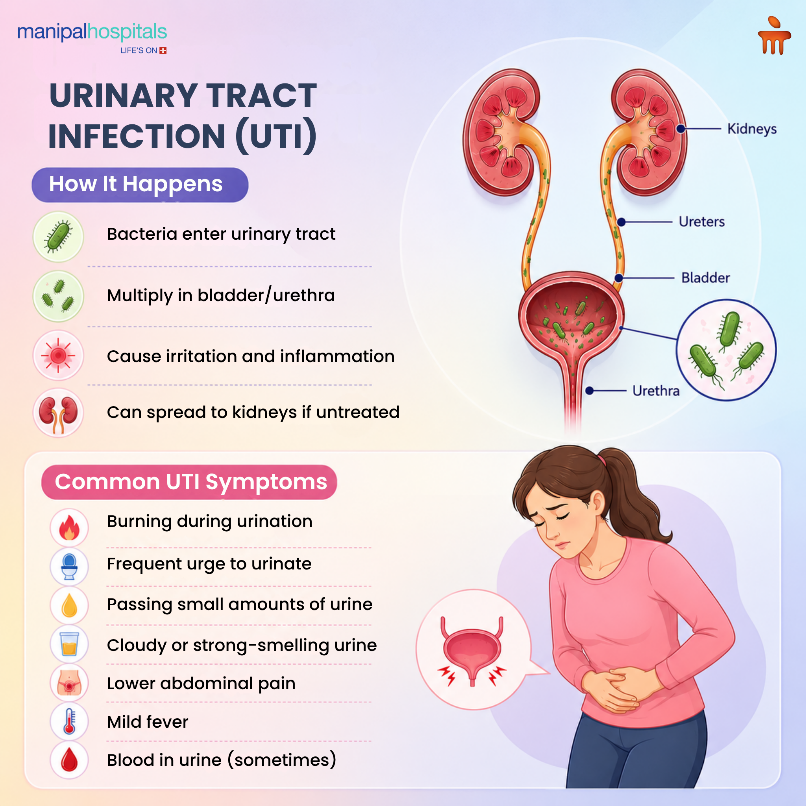
Several factors can increase the chances of developing a UTI. Some of these UTI causes include:
-
Poor hygiene habits
-
Holding urine for long periods
-
Not drinking enough water
-
Sexual activity
-
Kidney stones or blockage in the urinary tract
-
Use of urinary catheters
-
Diabetes or weak immunity
UTIs are more common in women, which is why many people associate them only with women’s health. But infections can happen in anyone, including men and children.
When Can a UTI Become Serious?
A simple UTI can become a serious problem if it spreads to the kidneys. Warning signs include:
-
Elevated temperature
-
Pain in the back or side
-
Nausea or throwing up
-
Shudders
At this point, you’ll need to treat the UTI right away to prevent complications such as a kidney infection. If you are experiencing these symptoms, consult the top urologists in Old Airport Road for timely diagnosis and UTI treatment.
Who Is More Likely to Get a UTI?
Some people have a higher chance of developing urinary tract infections. These include:
-
Women
-
Pregnant women
-
Older adults
-
People with diabetes
-
Individuals with kidney stones
-
People with weak immunity
-
Those who frequently hold urine for long periods
Understanding these risk factors can help people take preventive steps early.
Treatment for Urinary Tract Infection
Not every UTI feels the same, so the treatment can also differ from person to person depending on the severity of the infection.
Mild to Moderate Cases
-
Antibiotics are prescribed by a doctor.
-
Increased intake of fluids
-
Pain relief medicines
-
Avoiding irritants such as caffeine
Severe Cases
-
IV antibiotics: For advanced infection
-
Hospital monitoring: Prevent complications
-
Imaging tests: See if the kidneys are involved
When a UTI is treated early, the symptoms usually settle down much faster, and the infection is less likely to return.
Simple Ways to Prevent UTIs
It’s often easier to prevent than to treat.
-
Stay well hydrated: Drink plenty of water to help flush bacteria from your urinary tract.
-
Don’t hold urine: Emptying your bladder regularly can lower your risk of infection.
-
Keep clean: Practice good hygiene to help prevent bacteria from spreading.
-
Voiding after sexual activity: Urinate after sex to help clear away any bacteria that may have been introduced.
-
Choose cotton underwear: Wear cotton underwear, since this breathable fabric helps keep the area dry.
-
Avoid harsh soaps: Use gentle cleansers instead of harsh soaps to protect your body’s natural balance.
-
Eat probiotic foods: Include probiotic foods in your diet, as healthy bacteria can support urinary health.
-
Limit sugary drinks: Try to limit sugary drinks, since too much sugar may encourage bacterial growth.
These habits may help prevent urinary tract infections.
When Should You See a Doctor
Seek medical attention if:
-
Symptoms persist longer than 2-3 days.
-
You have a fever and/or back pain
-
Blood in urine
-
UTIs keep coming back.
Early assessment is important to ensure the correct treatment of UTI and to avoid complications. f symptoms persist, consult urology doctors at Old Airport Road for expert evaluation and appropriate UTI treatment.
Conclusion
A urinary tract infection may seem insignificant initially, but it can be serious when left untreated. Identifying the symptoms of UTI early, learning about the causes of UTI and treating the causes of frequent urination can help prevent complications.
If symptoms persist or worsen, professional care is essential. UTI treatment in Old Airport Road at Manipal Hospitals offers urine tests for accurate diagnosis, targeted antibiotic therapy, assessment of underlying causes, and prevention in the long term. Timely treatment helps in faster recovery and also reduces the risk of recurrence.
FAQ's
Mild symptoms may occasionally improve with hydration. However, the vast majority require antibiotic therapy. Leaving a UTI without treatment is dangerous since bacteria can multiply and aggravate your condition.
It is due to anatomical features, where the urethra is shorter than in men, making it easier for bacteria to access the urinary system. Hygiene problems can contribute to the development of the disease.
IUTI is not infectious; nevertheless, bacteria can pass from one partner to another sexually. Proper hygiene reduces the risk of passing UTIs.
Unfortunately, some patients develop recurring UTIs due to certain predisposing circumstances. The condition requires proper medical supervision for the future prevention of such infections.
It is necessary to avoid any products that irritate the bladder. It includes coffee, alcohol, and spices, as well as maintaining proper hydration and balanced nutrition.
Share this article on:


2.png)