7 Min Read
It often starts so subtly that you barely notice: dry lips, a mild headache, or just feeling 'off.' Maybe your mouth feels dry, your head aches slightly, or you feel more tired than usual. Sometimes, it’s just a headache. But sometimes, it’s your body desperately asking for water. Dehydration is not always just about feeling thirsty. It is a health condition where the body becomes unable to function normally because of the loss of fluids.
Knowing the fluid loss symptoms, the causes of dehydration, and when to take these symptoms seriously can help you take action quickly. In this blog, we’ll talk you through what to look for, when to get help, and what effective dehydration treatment looks like in the real world.
Synopsis
- Why Hydration Matters More Than You Think
- Early Signs of Dehydration: Don’t Ignore These
- Causes of Dehydration: It’s Not Just About Drinking Less
- When Dehydration Becomes Serious
- Who Is at Higher Risk
- Dehydration Treatment: What Actually Works
- Simple Daily Tips to Stay Hydrated
- When Should You See a Doctor
- Conclusion
Why Hydration Matters More Than You Think
Water makes up nearly 60% of the human body and supports the normal function of every cell, tissue, and organ. Even a minor drop in hydration levels can start to affect how the body works. First, the changes may be subtle, and then they may lead to potentially major health changes.
Losing just 2% of your body’s water can impact memory, concentration, and mood. This is why even mild dehydration can leave you feeling tired, irritable, or mentally unfocused.
In more serious cases, dehydration can become severe and may require medical care, especially in children and older adults.
Early Signs of Dehydration: Don’t Ignore These
Not all symptoms are obvious; some people may not feel thirsty even when dehydrated. The body often gives signs before it gets serious. Early fluid loss symptoms can be recognised to prevent complications.
-
Dry mouth and chapped lips: These are often among the earliest signs that the body needs more fluids.
-
Feeling very thirsty: By the time strong thirst develops, mild dehydration may already have begun.
-
Dark yellow urine: It often suggests dehydration because the body is trying to conserve fluids, leading to concentrated body waste.
-
Tired and exhausted: You may experience unexplained tiredness or be perpetually low on energy.
-
Headache: Can happen when your body's fluids are out of balance, and your brain is affected.
-
Feeling dizzy and lightheaded: May happen when dehydration causes your blood flow to drop.
Though these early warning signs can be overlooked, remember that they are your body’s way of signaling distress. If you notice persistent symptoms, consider consulting experienced internal medicine doctors for timely medical advice and proper treatment.
Causes of Dehydration: It’s Not Just About Drinking Less
Many people believe dehydration happens only when you do not drink enough water. However, dehydration can also occur when the body loses too much fluid through sweating, illness, or other medical conditions. When fluids are lost, the body may also lose important electrolytes such as sodium and potassium, which help the nerves and muscles function properly.
The most common causes are:
-
Excessive sweating: Heavy sweating during hot weather, exercise, or physical activity can lead to significant fluid loss.
-
Fever: When you have a fever, your body temperature rises, and you need more fluids.
-
Diarrhoea and vomiting: These conditions can rapidly reduce fluid and electrolyte levels, especially if they continue for several hours.
-
Certain medications: Some medications, like diuretics, make you urinate more and cause fluid loss.
-
Alcohol and caffeine: Drinks like alcohol and caffeine can also make your body lose more fluids.
-
Diabetes: High blood sugar levels can cause frequent urination, leading to fluid loss.
-
Burn injuries: Severe burns can damage the skin barrier and cause the body to lose fluids quickly.
-
Certain kidney conditions: Some kidney problems can affect the body’s ability to maintain proper fluid balance.
-
Rapid breathing: Fast breathing during illness, exercise, or heat exposure can increase water loss through the lungs.
Understanding the causes helps you prevent them in your everyday life.
When Dehydration Becomes Serious
If early signs are disregarded, dehydration can rapidly turn serious.
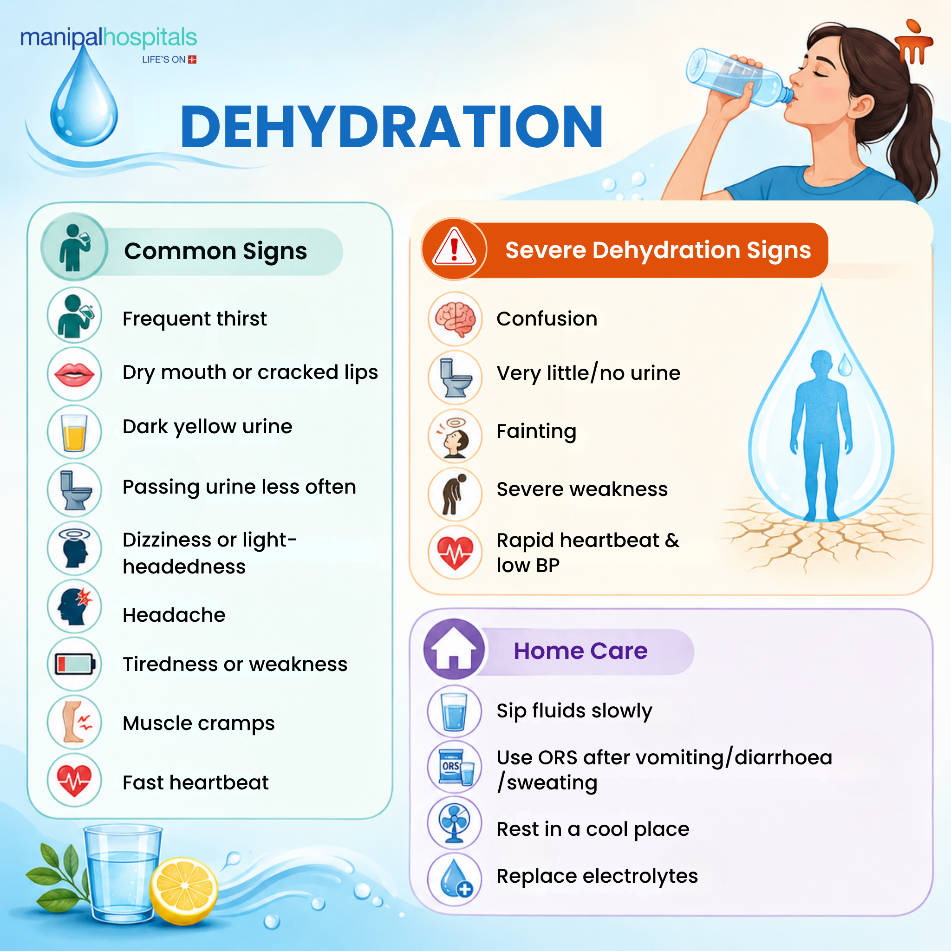
Severe Dehydration Symptoms to Watch For
-
Very dry skin and reduced skin elasticity: Severe fluid loss can make the skin feel dry and less elastic.
-
Little or no urine: This means your kidneys are having trouble conserving water. This is a serious warning sign.
-
Rapid heartbeat: The heart may beat faster to help maintain blood pressure and circulation.
-
Confusion or irritability: May occur when your brain lacks enough fluids to function properly.
-
Dizziness or fainting: Can happen when reduced blood flow causes lightheadedness.
-
Sunken eyes: This can happen when the body loses a significant amount of fluid.
In such a case, when you have these symptoms, home remedies will no longer work. You will require proper treatment to achieve balance and avoid complications such as damaged kidneys or hypotension.
Who Is at Higher Risk
Certain groups are more vulnerable to dehydration:
-
Babies and young children
-
Elderly individuals
-
People with long-term illnesses
-
Athletes or people who work outdoors
-
People with fever or infections
Being aware of these risk groups can help you catch dehydration early before problems develop.
Dehydration Treatment: What Actually Works
Treatment will depend on the severity of the condition. The time it takes for recovery from dehydration varies based on its severity and the timely application of treatment.
-
Mild dehydration: With mild dehydration, oral fluid intake brings about balance, and signs disappear within a few hours.
-
Moderate dehydration: For moderate dehydration, rehydration gradually restores energy levels and cognitive alertness.
-
Severe dehydration: In severe dehydration, intravenous fluid administration and close monitoring are required to ensure safe recovery.
If you treat dehydration early, you can recover faster and lower your risk of problems like kidney stress or low blood pressure.
Simple Daily Tips to Stay Hydrated
Preventing dehydration is much easier than curing it.
-
Drink water often- don’t wait until you are thirsty
-
Increase intake during hot weather
-
Eat water-rich foods (fruit, vegetables)
-
Limit excessive caffeine and alcohol
-
When you are outdoors, take a bottle of water with you
These tiny habits decrease the chance of serious early symptoms.
When Should You See a Doctor
Most of the time, mild dehydration gets better once you drink enough fluids and rest. But there are times when the body needs more help than that.
If you still feel very dizzy after drinking water, cannot stop vomiting, or notice that you have not urinated for a long time, it is better not to wait too long. Feeling unusually weak, confused, or extremely tired can also be signs that dehydration is becoming serious.
Children and older adults can get dehydrated much faster, especially during fever, diarrhoea, or hot weather.
In such situations, doctors may suggest electrolyte drinks or give fluids through an IV so the body can recover properly and avoid further complications. If symptoms persist or worsen, consult an experienced doctor in Old Airport Road for timely medical care and proper dehydration management.
Conclusion
At first glance, dehydration may not look like an issue that needs immediate attention; however, it may turn out to be a more serious one if you ignore its warning signals. These warning signals will range from feeling tired to developing more severe symptoms that require urgent attention.
Getting treated under professional care can help you get back on track. The good thing is that we offer 24/7 dehydration treatment in Old Airport Road. Our hospital provides services such as IV fluid therapy and managing electrolyte levels in the body.
FAQ's
Even a slight level of dehydration could affect one’s cognitive functions, such as focus and memory. The brain is sensitive to alterations in the balance of fluids in the body.
People require different amounts of water every day. Most individuals should consider taking two to three liters of fluids per day. In case you are engaged in physical exercises or if it is hot outside, then more water intake is advisable.
Since dehydration leads to loss of fluids, it can lower blood pressure. Lightheadedness is usually associated with low blood pressure due to dehydration.
Sports drinks can help replace lost electrolytes after intense exercise. But for most daily activities, water is enough unless you sweat a lot.
Even in cold weather, dehydration can happen. People drink less water when it is cold, even if they are not sweating.
Share this article on: