7 Min Read
It can be challenging to start fertility treatment, especially when you keep asking yourself, "Is IVF painful?" This worry is a big source of stress for many couples, even before the process starts.
The truth is, IVF (in vitro fertilisation) is usually not very painful. However, it does involve a number of medical steps that could cause mild discomfort at different points. Knowing what really happens during the process can help you get ready in both your body and mind.
In this blog, a top reproductive medicine and IVF specialist in Mysuru explains each step of IVF, answers the question "Is IVF a painful process?" and tells you what kind of pain (if any) to expect. Most patients describe IVF as manageable, though some steps can feel moderately uncomfortable depending on individual sensitivity.
Synopsis
A Quick Overview Of IVF
To understand whether IVF is painful, it is important to know how the process works. IVF is a type of assisted reproductive technology offered through specialised reproductive medicine services in which fertilisation takes place in a lab rather than inside the body.
Key steps involved:
-
Hormone injections: Stimulate the ovaries to make more than one egg.
-
Egg retrieval: A small procedure is used to collect the eggs.
-
Fertilisation: Eggs are fertilised with sperm in a laboratory setting.
-
Embryo development: Eggs that have been fertilised turn into embryos.
-
Embryo transfer: Placing one or more embryos into the uterus.
The level of discomfort is different at each stage.
Step-by-Step: What Does IVF Feel Like?
1. Ovarian Stimulation Phase
This phase is the first step in which hormone shots are given. What you may feel:
-
Injection Site: You may feel a brief stinging or pinching sensation when the needle enters the skin.
-
Physical Changes: As the ovaries produce more eggs, they increase in size. These changes can lead to abdominal bloating and a feeling of heaviness.
-
Mood changes: Changes in hormones can change how you feel.
2. Monitoring and Scans
Throughout stimulation, you will undergo frequent blood tests and ultrasounds. What to expect:
-
Transvaginal ultrasound: Some pressure, but not usually painful.
-
Frequent visits: While the frequency of clinic visits can be physically tiring, the tests themselves are minimally invasive.
3. Is Egg Retrieval for IVF Painful?
This is usually the stage patients feel most anxious about. Often, they ask, "Does egg retrieval for IVF hurt?" Here’s what actually happens:
-
Under sedation: You won't feel any pain during the procedure.
-
Short duration: It usually takes 15 to 30 minutes to finish.
-
Post procedure: You may feel mild cramping that feels like period pain.
-
Quick recovery: Most patients go home the same day and recover quickly.
The procedure itself usually does not hurt because of sedation, but some people do feel mild cramping afterwards.
4. Fertilisation and Embryo Culture
This stage occurs entirely within the embryology laboratory. Because this occurs outside your body, there is no physical sensation or pain involved during this week of the cycle.
5. Embryo Transfer
The final clinical step is the placement of the embryo into the uterine cavity. This is a simple but important step. What you may feel:
-
Fast process: It only takes a few minutes. Many patients say this step is easier than they thought it would be.
-
Sensation: Most patients report mild pressure or very brief cramping. Anaesthesia is not required because the discomfort is minimal and the procedure only takes a few minutes.
What to Expect During Fertility Treatment
Knowing what to expect during fertility treatment can make the process feel less overwhelming. IVF happens in steps over a few weeks, with regular check-ups and follow-up visits along the way.
Typical treatment timeline:
-
Ovarian stimulation usually lasts around 8 to 14 days
-
Monitoring visits happen every few days during this phase
-
Egg retrieval is a short procedure done once the eggs are ready
-
Embryo transfer usually takes place within 3 to 5 days after fertilisation
Clinic visits and routine:
-
You may need frequent visits for scans and blood tests
-
Most appointments are short but scheduled closely together
-
Doctors track your response to medication and adjust doses if needed
Daily lifestyle during IVF:
-
Light daily activities are usually allowed
-
Heavy exercise and stress should be avoided
-
Eating balanced meals and staying hydrated can help you feel better
After embryo transfer:
-
Mild cramping or fatigue may occur
-
You can return to your normal routine with some precautions
-
A pregnancy test is usually done after about two weeks
Knowing these steps in advance can help you feel more prepared and less uncertain during the treatment process.
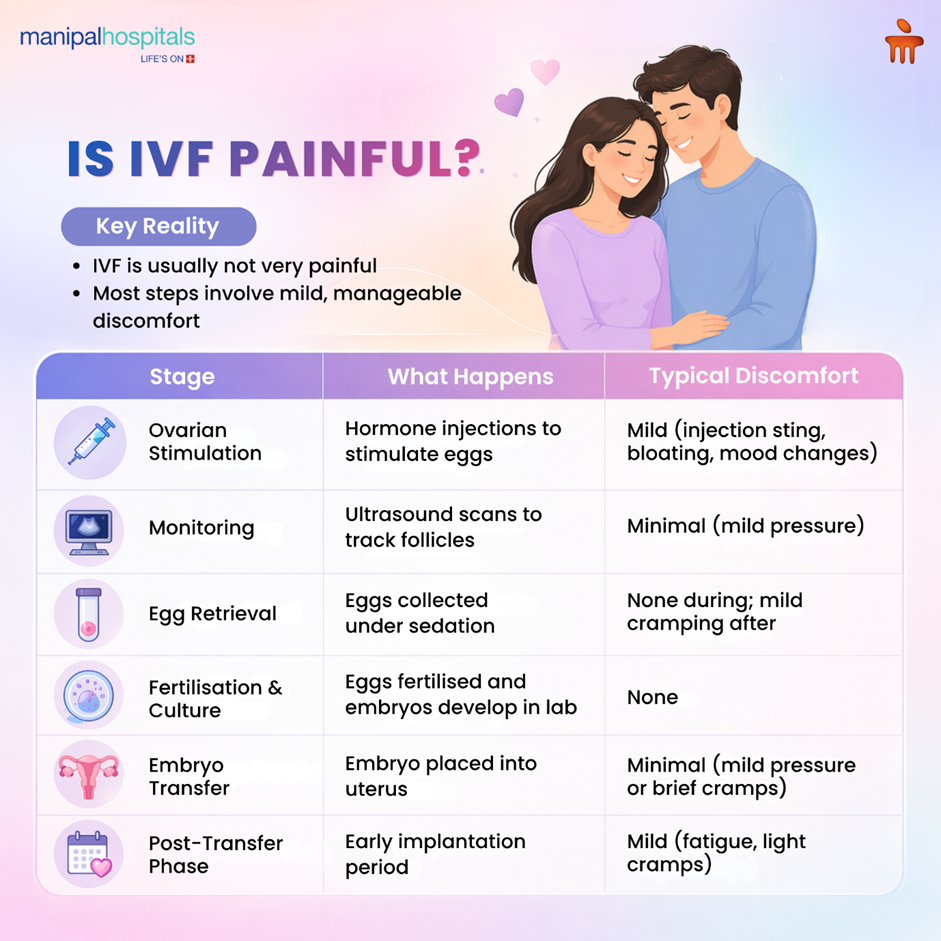
Comparison Table: Pain Level During IVF Stages
Let us understand how painful each IVF step is:
|
IVF Stage |
Pain Level |
What You Feel |
Duration |
|
Ovarian stimulation |
Mild |
Bloating, injection discomfort |
Several days |
|
Monitoring scans |
Minimal |
Pressure during ultrasound |
A few minutes |
|
Egg retrieval |
None during, mild after |
Cramping, soreness |
1–2 days |
|
Embryo transfer |
Minimal |
Slight discomfort |
A few minutes |
|
Post-transfer phase |
Mild |
Occasional cramps, fatigue |
A few days |
Why IVF May Feel Uncomfortable
If you're asking yourself, "Is IVF painful?" It's important to know what makes you uncomfortable.
Common reasons:
-
Changes in hormones: They can change your body and mood.
-
Ovarian enlargement: Causes bloating and heaviness.
-
Procedural sensitivity: Some people are more sensitive to medical procedures than others.
-
Stress: Anxiety can make physical feelings stronger.
These things can make IVF feel very intense, even if it doesn't hurt.
When Should You Be Concerned
IVF is usually safe, but some signs should not be ignored. Seek medical advice if you experience:
-
Severe stomach pain: Could be a sign of ovarian hyperstimulation.
-
Persistent vomiting: May require assessment.
-
Quick weight gain: Could be a sign of fluid retention.
-
Trouble breathing: Needs immediate attention.
-
Heavy bleeding: Needs to be checked out by a doctor right away.
A rare complication called ovarian hyperstimulation syndrome (OHSS) can cause significant discomfort and requires medical attention.
Conclusion
So, is IVF painful? For most patients, the answer is reassuring. While some steps may cause mild discomfort, IVF is rarely described as very painful. With modern techniques, sedation, and expert care, the process is more comfortable than many expect. The emotional journey can often feel more challenging than the physical aspect. With the right support, guidance, and medical care, IVF can be a manageable and hopeful path to parenthood.
If you are considering IVF, booking a consultation for fertility treatment near Mysore can help address your concerns. At Manipal Hospital Mysore, we ensure you receive a treatment plan that focuses on both comfort and successful outcomes.
FAQ's
Most people feel similar pain levels in each IVF cycle. However, plenty of people find they feel much more prepared the second time around. That often makes things less stressful and easier to manage.
IVF rarely causes long-lasting pain. Most discomfort usually settles within a few days. If the pain continues, speak to your doctor to rule out any complications and make sure your recovery is on track.
Some IVF injections may cause a little stinging, while others may not hurt at all. Using the correct technique, changing injection sites, and applying ice beforehand can help make the process more comfortable.
You do not need bed rest after an embryo transfer. Light activity is safe, but avoid heavy lifting or strenuous work. Follow your doctor’s advice to support recovery and improve outcomes.
Yes, anxiety can make pain feel worse. Talking to a counsellor, using relaxation techniques, or joining a support group can help you manage stress and make the IVF process feel easier.
Share this article on: