7 Min Read
The problem of fatty liver disease is on the rise, more prevalent in city-dwelling individuals living a sedentary lifestyle. Although initially, it might seem innocuous, leaving the condition unchecked could be dangerous in the long run.
Fatty liver causes, symptoms, and treatments are all necessary factors that must be considered to maintain the health of your liver. Through this blog a top gastroenterologist in Mysuru discusses fatty liver, where the focus will be on the diagnosis, risks, and treatment of fatty liver disease. It also addresses practical concerns such as how to reduce fatty liver quickly and prevent long-term damage.
Synopsis
- What Is Fatty Liver Disease?
- Common Causes of Fatty Liver Disease
- Early Signs of Fatty Liver
- Fatty Liver Symptoms in Advanced Stages
- Fatty Liver Problems and Complications
- How Is Fatty Liver Diagnosed?
- Fatty Liver Treatment Options
- How to Reduce Fatty Liver Quickly
- Lifestyle Tips for Long-Term Liver Health
- When to Seek Specialist Advice
- Conclusion
What Is Fatty Liver Disease?
Fatty liver disease occurs when excess fat builds up in liver cells. Normally, the liver contains very little fat, but when fat makes up about 5% to 10% of the liver’s weight, it becomes a medical concern.
There are two main types of fatty liver disease:
-
NAFLD (Non-Alcoholic Fatty Liver Disease)
-
Alcohol-Related Fatty Liver Disease
In the early stages, the condition may not cause noticeable fatty liver symptoms, which is why many people remain undiagnosed.
Common Causes of Fatty Liver Disease
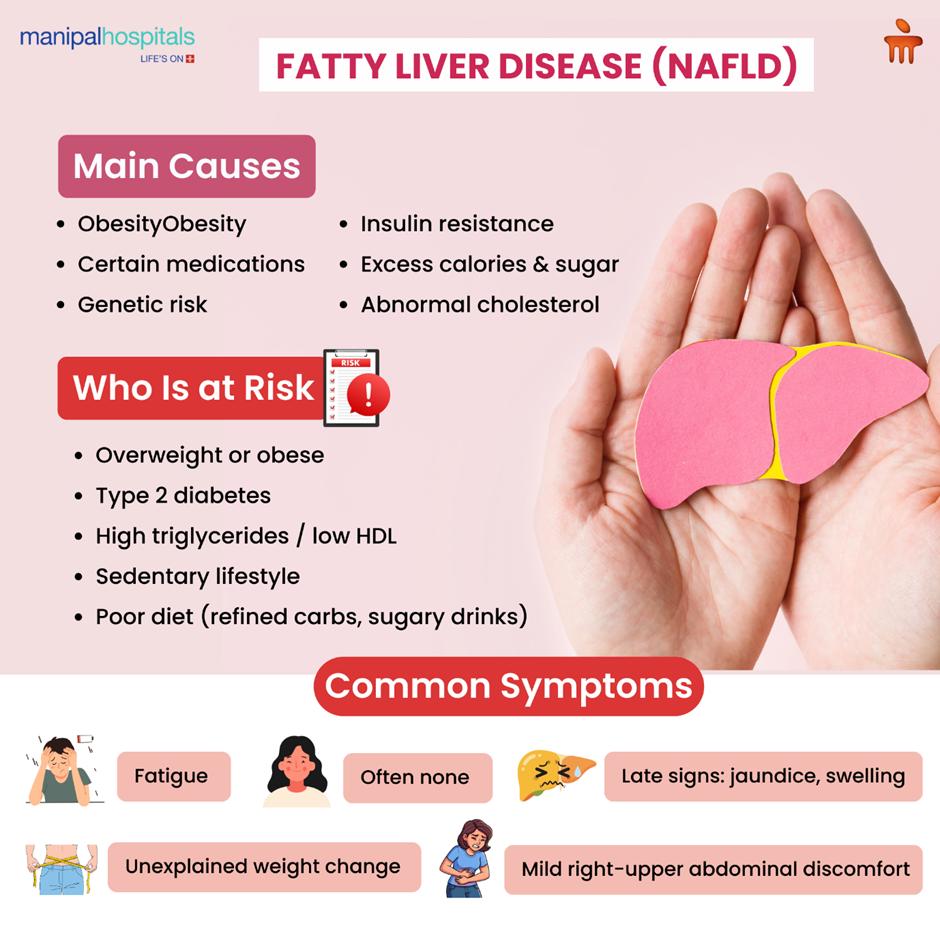
Understanding fatty liver causes is important for prevention and effective treatment. Common causes include:
-
Poor dietary habits: Diets high in sugar, refined carbs, and unhealthy fats lead to fat buildup in the liver. Frequent intake of processed foods increases the risk.
-
Obesity and overweight: Excess body fat increases the likelihood of fat accumulation in the liver, making it one of the most common fatty liver causes.
-
Insulin resistance and diabetes: These conditions lead to high blood sugar levels and increased fat storage in the liver.
-
Sedentary lifestyle: Lack of physical activity slows metabolism and contributes to weight gain and fat buildup.
-
Alcohol consumption: Excessive alcohol intake damages liver cells and leads to fat accumulation (especially in alcoholic fatty liver disease).
-
Genetic and metabolic factors: Some individuals may develop fatty liver despite a normal weight due to genetic or metabolic influences.
These factors often work together, increasing the risk of developing fatty liver disease.
Early Signs of Fatty Liver
Recognising the early signs of fatty liver can help in timely intervention. The problem is that in the early stages of fatty liver disease, many individuals lack any obvious symptoms. Early Symptoms of Fatty Liver Disease
-
Pain in the right upper abdomen
-
Feeling of fatigue
-
Unexplained weight gain
-
Elevated liver enzyme levels in blood tests
Nevertheless, early signs of fatty liver like these may very well go unnoticed in the early stage of developing the disease.
Fatty Liver Symptoms in Advanced Stages
As the disease advances, fatty liver symptoms become more apparent.
Symptoms to Note
-
Fatigue
-
Abdominal swelling
-
Nausea
-
Yellowing skin/eyes in severe conditions
Such symptoms suggest poor functioning of the liver, and prompt medical intervention is necessary.
Fatty Liver Problems and Complications
If untreated, fatty liver can progress to more serious conditions. Understanding potential fatty liver problems highlights the importance of early management.
-
Non-Alcoholic Steatohepatitis (NASH): It refers to the condition where there is inflammation and cellular damage in the liver.
-
Liver Fibrosis: Due to constant damage to the liver, fibrosis occurs.
-
Cirrhosis: It results from scar formation in the liver, which may cause problems such as liver failure.
-
Increased Risk of Cardiovascular Disease: Fatty liver disease may put one at greater risk for developing cardiovascular diseases. Addressing fatty liver early helps prevent these serious fatty liver problems.
How Is Fatty Liver Diagnosed?
Diagnosis involves various clinical evaluations and investigations.
-
Medical History and Physical Examination: Doctors assess risk factors such as obesity, diabetes, and alcohol intake.
-
Blood Tests: Liver function tests help detect abnormalities and assess liver health.
-
Imaging Studies: Ultrasound is commonly used to detect fat accumulation in the liver. Sometimes, a CT scan or MRI is necessary.
-
Liver Biopsy: In severe cases, a biopsy might be done to assess the level of damage. The early detection of the disease is important for selecting the right treatment method for fatty liver.
Fatty Liver Treatment Options
The cornerstone of fatty liver treatment is lifestyle modification. Unlike most diseases, fatty liver disease may actually be reversible if treated properly.
-
Weight Management: A slight decrease in weight is beneficial in reducing liver fat. A 5% or 10% reduction in weight is good enough to improve liver function.
-
Dietary Changes: A balanced diet is recommended. Eating healthy food containing plenty of vegetables, fruits, low-fat protein, and whole grains is required.
-
Physical Activity: Exercise helps improve metabolism and prevents fat buildup. Both cardiovascular and strength-training exercises can be advantageous.
-
Control of Underlying Conditions: Managing diabetes, cholesterol, and blood pressure is vital for effective fatty liver treatment.
-
Medications: Medicines can sometimes be prescribed by a physician in certain situations. Understanding how to treat fatty liver requires a comprehensive approach that addresses multiple factors.
How to Reduce Fatty Liver Quickly
Many patients ask about how to reduce fatty liver quickly, but it is important to focus on safe and sustainable methods.
-
Practical Steps
-
Adopt a low-sugar, high-fibre diet
-
Exercise daily for at least 30 minutes
-
Avoid alcohol completely
-
Maintain a consistent sleep routine
-
Stay hydrated
While quick fixes may seem appealing, gradual and consistent changes are the most effective way to improve liver health.
Lifestyle Tips for Long-Term Liver Health
The table below lists straightforward lifestyle tips to support lasting liver health and avoid extra damage.
|
Tip |
Description |
|
Avoid processed and fried foods |
Reduces excess fat intake and supports better liver function |
|
Include antioxidant-rich foods |
Fruits and vegetables help protect liver cells from damage |
|
Stay physically active |
Regular exercise improves metabolism and reduces fat accumulation in the liver |
|
Monitor weight regularly |
Helps in maintaining a healthy weight and preventing fat buildup |
|
Schedule routine health check-ups |
Enables early detection and management of liver-related issues |
These habits support long-term recovery and reduce the risk of future fatty liver problems.
When to Seek Specialist Advice
Consult a gastroenterologist if you experience:
-
Persistent fatigue or abdominal discomfort
-
Abnormal liver function tests
-
Risk factors such as obesity or diabetes
-
Symptoms suggestive of advanced liver disease
Timely medical attention ensures appropriate diagnosis and effective fatty liver treatment.
Conclusion
Fatty liver disease is a growing health issue, but it is also one of the few conditions that can be reversed with timely action. Understanding fatty liver causes, recognising early signs, and adopting the right lifestyle changes are key steps towards recovery.
If you are experiencing symptoms or have a diagnosis of fatty liver, do not delay care. For expert evaluation and advanced fatty liver treatment in Mysore, visit Manipal Hospital. Mysuru and take the first step towards better liver health.
FAQ's
Early signs of fatty liver include fatigue, fullness in the upper right abdomen, and mildly raised liver enzymes. These can be subtle, so regular health checkups are important.
For effective fatty liver treatment, focus on lasting lifestyle changes such as gradual weight loss, a fibre-rich diet, and regular exercise. Managing conditions like diabetes, high cholesterol, and hypertension is also essential.
The good news is that fatty liver disease can often be reversed, especially in its early stages. This involves maintaining a healthy diet, regular exercise, and avoiding alcohol.
Fatty liver can improve gradually with reduced intake of sugary and processed foods, regular exercise, and maintaining a healthy weight. Consistency in these habits is key to seeing results.
Common symptoms of fatty liver disease include fatigue, weakness, and mild abdominal discomfort. In more advanced stages, symptoms may include abdominal swelling, loss of appetite, and yellowing of the skin and eyes.
Share this article on:


5.png)