6 Min Read
A kidney transplant can offer a new lease of healthy life to many of those suffering from chronic kidney disease. The modern kidney transplant procedure has a high immediate success rate above 95%.
This kidney transplant process involves placing a healthy kidney from a donor into a person with diseased or non-functional kidneys. The donated kidney takes over the vital tasks of filtering waste products, balancing fluids, and maintaining electrolytes in the recipient’s body. This comprehensive guide elaborates on the essential aspects of kidney transplantation, including eligibility, procedure, and the recovery phase.
Synopsis
Eligibility for kidney transplantation
The decision to undergo a kidney transplant can ensure the best possible outcome if taken after careful consideration and a thorough evaluation to determine if it is the safest and most effective treatment option for an individual. Key factors considered during the eligibility assessment include:
-
Overall health- A complete medical history and physical examination is done to ensure the recipient is healthy enough to undergo major surgery.
-
Infections or cancers: The possibility of any active infection or malignancy must be resolved before proceeding with the kidney transplant process.
-
Cardiovascular health: Extensive heart and lung evaluations are essential to rule out significant risks.
-
Psychological status: An assessment of the mental and emotional state is done to ascertain their preparedness for the process.
-
Commitment to treatment: The willingness to follow a strict medication regimen and follow-up care is crucial for the long-term success of the procedure.
Kidney transplant procedure
The kidney transplant is a life-changing surgery performed by highly skilled surgeons to replace a failing kidney with a healthy donor kidney. The average surgery duration is between 3 and 4 hours.
During the kidney transplant procedure, the donor-kidney is placed on one side of the lower abdomen. The artery and vein of the new kidney are connected to the existing blood vessels of the recipient, while the donor-ureter (the tube that carries urine) is connected to the patient’s bladder. The native or diseased kidneys are usually left in place unless they cause complications.
Types of donors
The person donating their kidney/s (donor) to a person with a diseased or failing kidney/s (recipient) can be categorised as:
-
Living donors: In most cases, they are family members or close friends with a blood type and tissue type that match the recipient. Living donor kidney transplantation typically offers better long-term outcomes.
-
Deceased donors: These kidneys come from individuals who have recently passed away and have chosen to donate their organs. Recipients are enlisted in a national waiting list, where the waiting time can vary.
One-year graft survival rates are often seen to exceed 90-95% for deceased donor transplants and are even higher for living donor transplants.
Recovery after a kidney transplant
Recovery after a kidney transplant is a gradual but rewarding journey. Immediately after the transplant, the patient is closely monitored in the intensive care unit and then shifted to a specialised transplant ward. They typically stay in the hospital for 5-7 days, with rapid improvements that allow most of them to go home within a week. This phase focuses on:
-
Monitoring: Close observation of kidney function, fluid balance, and vital signs
-
Immunosuppressants: Starting lifelong medications to prevent the recipient’s body from rejecting the new kidney
-
Pain management: Ensuring the patient’s comfort with effective pain relief strategies
-
Early ambulation: Encouraging them to get out of bed and walk as soon as safely possible to facilitate the recovery process
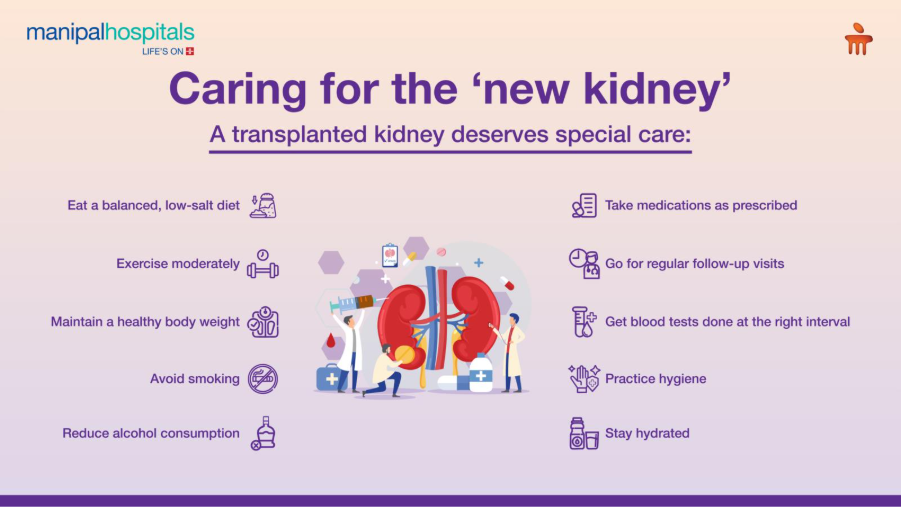
Long-term success of the transplantation largely depends on a consistent follow-up care and a healthy lifestyle. This includes:
-
Medication adherence- Taking immunosuppressants and other prescribed medicines as and when directed
-
Regular check-ups- Attending scheduled appointments for blood tests and physical examinations to monitor kidney function and detect any potential issues early
-
Healthy diet- Following dietary recommendations customised by the nutritionists
-
Physical activity- Engaging in a regular, moderate exercise regimen under professional guidance
-
Avoiding infections- Taking precautions to minimise exposure to illness, as immunosuppressants can weaken the immune system
Things to remember
After a kidney transplant, it is essential to follow a few golden rules for sound and functional kidney health.
|
Do |
Do not |
|
Take all medications exactly as prescribed, especially immunosuppressants |
Miss any doses of your medications or change dosages without consulting your transplant team |
|
Attend all scheduled follow-up appointments and laboratory tests |
Consume grapefruit or its juice, as it can interfere with immunosuppressant medications |
|
Maintain a healthy, balanced diet and stay well-hydrated |
Smoke or use recreational drugs |
|
Engage in regular, moderate physical activity as advised by your doctor |
Consume unpasteurised dairy products or raw/undercooked meat, fish, or eggs |
|
Practice good hygiene to prevent infections, including frequent hand washing |
Ignore any signs of infection (fever, chills, redness at the incision site) or rejection (decreased urine output, swelling, fatigue) |
|
Monitor your blood pressure and blood sugar regularly if advised |
Lift heavy objects or engage in strenuous activities until cleared by your surgeon |
|
Wear sunscreen and protective clothing when outdoors, as some medications can increase sun sensitivity |
Take any over-the-counter medications or herbal supplements without discussing with your transplant team |
Conclusion
A kidney transplant restores near-normal kidney function in people with end-stage renal disease, allowing the body to effectively remove waste and maintain fluid and electrolyte balance. It can significantly improve quality of life, survival rates, energy levels, and independence compared to long-term dialysis. If you are experiencing kidney failure or considering a kidney transplant, it is crucial to seek timely medical advice.
Our multidisciplinary team of nephrology experts at Manipal Hospitals Mukundapur is committed to guiding patients through every phase of the kidney transplant process with compassion and expertise by assessing each potential recipient comprehensively. Our dedicated post-transplant care team provides continuous support to ensure optimal healing and long-term graft function.
FAQ's
The lifespan of a transplanted kidney can vary. For deceased donor kidneys, the average is around 10-15 years, while living donor kidneys often function for 15-20 years or even longer.
Like any major surgery, risks include bleeding, infection, and blood clots. Specific risks in case of kidney transplantation can be organ rejection and side effects from immunosuppressant medications.
Yes. After a kidney transplant, lifelong immunosuppressant medications are necessary to prevent the body from rejecting the new kidney. These medicines lower immune response and require regular monitoring, dose adjustments, and strict adherence to maintain long-term transplant success.
The wait time for a deceased donor kidney can vary significantly, ranging from months to several years, depending on factors like blood type, tissue match, and the patient's medical urgency. For living donors, the process can be much quicker, as the evaluation and surgery can be scheduled.
For many patients, a transplant offers better quality of life, improved energy levels, fewer dietary restrictions, and longer survival compared to long-term dialysis. However, suitability depends on age, overall health, and medical evaluation.
Share this article on: