7 Min Read
.webp "High Blood Pressure: Causes, Treatment & How to Reduce BP")
High blood pressure is a widespread condition, affecting millions of individuals each year. The condition is not often noticed until a lot of damage occurs to the body. This blog will focus on hypertension, why we should pay adequate attention to its causes and symptoms, and the best ways to manage hypertension effectively, thus living a longer and healthier life.
Synopsis
What is Hypertension?
Hypertension is a condition in which the force of blood against the walls of your arteries is higher than it should be. Blood pressure is measured in two numbers: the pressure of the heart while it is beating (systolic) and while it is at rest (diastolic). Normal blood pressure is 120/80 mmHg, with anything over 130/80 always considered hypertensive.
It usually develops without signs and is known as the “silent killer”. People may be living with it for years without knowing and may suffer from heart disease, stroke, kidney damage, and even death. Hypertension, due to its stealth, makes attending to your health check-ups and being proactive a vital thing to do.
Hypertension can be effectively managed, and complications can be prevented if detected early. Regular monitoring of blood pressure is crucial, even in individuals without symptoms.
Causes of Hypertension
Several factors contribute to the development of hypertension, and they can be broadly classified as modifiable and non-modifiable:
Non-Modifiable Factors:
-
Age: The chances of suffering from hypertension increase with age.
-
Gender: The risk is higher for men earlier in life and yet higher for women after menopause.
-
Genetics: It also depends on your family history.
Modifiable Factors:
-
Unhealthy Diet: Processed foods, high salt intake, lack of potassium.
-
Physical Inactivity: Lack of exercise is one of the biggest causes of weight gain, and it also elevates blood pressure.
-
Obesity: The additional weight puts excess strain on the heart and arteries.
-
Excessive Alcohol Intake: Too much alcohol use can raise blood pressure levels.
-
Smoking: It damages blood vessels and may help cause hypertension.
-
Stress: Temporary spikes in blood pressure, however, can become permanent, especially with chronic stress.
Symptoms of Hypertension
Despite being largely asymptomatic, some people may experience BP symptoms, especially in severe or emergency cases, including:
-
Severe headaches
-
Shortness of breath
-
Vision problems
Symptoms themselves don’t develop until blood pressure is excessively high, which is referred to as a hypertensive crisis, and urgent medical attention is required to handle this emergency situation.
Blood Pressure Guidelines
To know if you may have high blood pressure, it’s important to know the four categories of blood pressure readings recommended by the American College of Cardiology and American Heart Association in 2017.
|
Blood Pressure Category |
Systolic (mm Hg) |
Diastolic (mm Hg) |
|
Normal Blood Pressure |
Less than 120 |
Less than 80 |
|
Elevated Blood Pressure |
120-129 |
Less than 80 |
|
Stage 1 Hypertension |
130-139 |
80-89 |
|
Stage 2 Hypertension |
140 or higher |
90 or higher |
High Blood Pressure Treatment
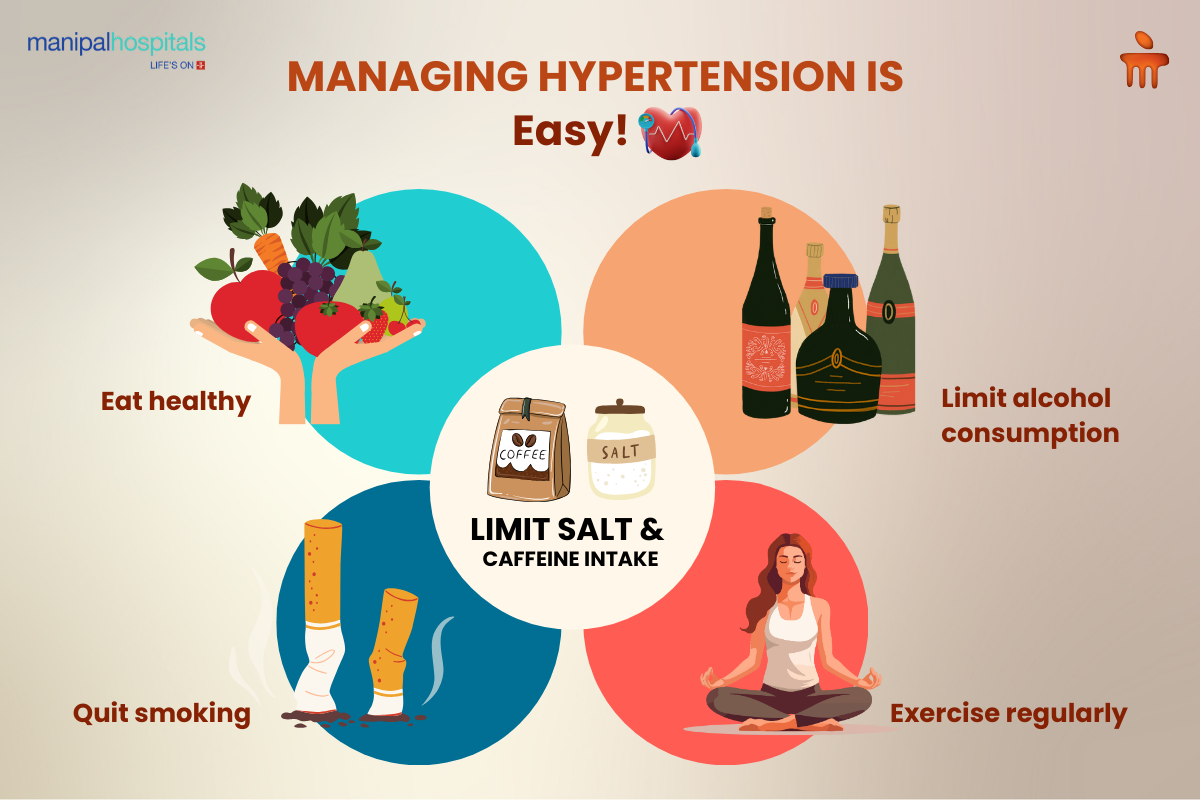
Management of hypertension requires lifestyle-related changes, dietary modifications, and medication prescribed by a doctor. Incorporating the following strategies into your daily routine can significantly lower the risk of developing complications of hypertension:
Lifestyle Changes
-
Exercise Regularly: Keep exercising as part of your daily schedule. Try 150 minutes (2.5 hrs) of moderate aerobic exercise a week. Walking, swimming, or cycling can help lower blood pressure.
-
Stress Management: Practice relaxation techniques like yoga, meditation, or deep breathing exercises.
-
Quit Smoking: Stopping smoking helps make the heart healthier and treats high blood pressure.
-
Monitor Blood Pressure Regularly: Bodily blood pressure should also be checked regularly with a home blood pressure monitor.
-
Maintain a Healthy Weight: Get your BMI (body mass index) in the recommended range.
Role of Diet
The diet plays a key role in high blood pressure treatment. The DASH (Dietary Approaches to Stop Hypertension) diet is highly recommended.
-
Reduce Sodium Intake: Limit salt consumption to less than 2,300 mg per day or less than 1,500 mg if you can. Avoid eating processed foods and read labels carefully to understand the sodium content in those packaged foods.
-
Increase Potassium-Rich Foods: Potassium helps keep your sodium levels balanced. Bananas, oranges, spinach, sweet potatoes, and beans are included.
-
Eat Whole Foods: Add fresh fruits, vegetables, lean protein, and whole grains.
-
Limit Sugary and Fatty Foods: Reduce sugary beverages, trans fats, and saturated fats.
Role of Medication
Changing our lifestyle may help in high blood pressure management, but not always. Doctors may prescribe medications such as:
-
Diuretics: Can help eliminate excessive sodium and water from the body.
-
Beta-blockers: The cardiovascular system is reduced.
-
ACE inhibitors: They prevent hormones from narrowing and relaxing blood vessels.
-
Calcium channel blockers: Relax blood vessels and lessen the strain on your heart.
However, it’s important that you follow the prescribed BP medication regimen and regularly visit your doctor for follow-up.
When to Seek Medical Help?
While lifestyle changes and regular monitoring can keep high blood pressure in check, some situations warrant immediate medical intervention:
-
Your blood pressure readings are 180/120 mmHg or higher more than three or four times. This means you have high blood pressure.
-
You have chest pain, trouble breathing, or vision problems.
-
You're pregnant and develop high blood pressure (called preeclampsia or gestational hypertension).
-
You have diabetes or kidney problems, which may add to the challenge of managing hypertension. Treatment early on can prevent life-threatening complications.
Visit the best internal medicine specialist in Jayanagar, Bangalore, today!
Hypertension may be silent, but it’s not undefeatable. Early detection and proactive management are key to controlling blood pressure and ensuring a healthier, longer life. Visit Manipal Hospital today for comprehensive blood pressure screening and expert care to take control of your health!
FAQ's
High blood pressure barely shows any noticeable symptoms; however, in some cases, people with hypertension may experience:
Headaches
Dizziness
Vision problems
Shortness of breath
Chest pain or tightness
Nosebleeds
High blood pressure, or hypertension, has many modifiable and non-modifiable causes. Age, family history, and race are non-modifiable causes of hypertension whereas lifestyle factors like diet, exercise, and weight can be managed to lower high blood pressure.
Your doctor may suggest daily or weekly monitoring if you already have hypertension.
For people with normal blood pressure with no risk factors, a BP check is recommended every 2 -5 years above the age of 18. But, you may need annual BP checks if you have a family history of hypertension or other risk factors or you’re 40 and older. Your doctor may advice more frequent monitoring if you have high blood pressure, diabetes, or kidney disease.
If you have high blood pressure, it's important to avoid foods that are high in sodium, unhealthy fats, and added sugars. These include processed foods, canned soups, salty snacks, fast food, and foods high in trans fats like fried foods. Additionally, limit your intake of red meat and full-fat dairy products, as they can contribute to high blood pressure and cholesterol levels. Instead, focus on eating more fruits, vegetables, whole grains, lean proteins, and low-fat dairy.
Yes, hypertension can run in families. If you have a family history of high blood pressure, you may be at a higher risk of developing it yourself. While genetics play a role, lifestyle factors like diet, exercise, and weight management can also influence whether or not you develop hypertension. Regular monitoring and healthy habits can help reduce the risk even if you have a family history of the condition.
Share this article on: