7 Min Read
When getting around hurts, when a short walk is a hassle, and even sitting or standing hurts, you can't help wondering if there's an exit. Hip issues can erode your freedom and self-assurance little by little. If this is ringing a bell, don't worry. Hip replacement surgery, especially total hip replacement, is today a routine and successful means to regain your life. It mitigates chronic pain, enhances mobility, and restores independence for many individuals each year. But as with any operation, it is necessary to know what the process entails, pre-, intra-, and post-surgery.
We're going to take you step by step through all you need to know about the procedure, with practical advice that prepares you psychologically and physically.
Synopsis
What Is Hip Replacement Surgery?
Hip replacement surgery is performed when your hip joint has been damaged beyond repair. Arthritis, injury, or wear-and-tear over time can break down the cartilage in your hip, creating stiffness and pain. In a total hip replacement, the damaged joint parts are removed and replaced with artificial parts. It may sound drastic, but this operation is one of the most successful and widely conducted joint operations today.
Individuals normally opt for surgery when drugs, physical therapy, or changes in their lifestyle no longer alleviate their pain. If pain limits your mobility and hinders your sleep or your daily activity, hip replacement surgery can provide great relief and enhance your quality of life.
When Should You Consider Hip Replacement Surgery?
It's not always easy to know when it's the right time to consider surgery. You might be trying everything from painkillers and physiotherapy to lifestyle changes. But here are some signs that your hip might need more than just rest:
-
Persistent pain that doesn’t improve with medication or rest
-
Difficulty in everyday movements like climbing stairs or getting into a car
-
Sleep disturbances due to hip discomfort
Limping or stiffness that’s getting worse over time
If you're ticking off more than a couple of these, have a conversation with your orthopaedic doctor in Jayanagar.
Before the Surgery: What You Should Know
Before jumping into the actual procedure, it's important to understand what to expect. Preparing for surgery both mentally and physically can make a big difference in your recovery.
If you've been recommended a total hip replacement, your surgeon will first assess your overall health, review your medical history, and possibly suggest a few pre-op tests like blood work or imaging. These checks ensure you’re fit for surgery and help plan for the best outcome.
In the weeks leading up to your surgery:
-
You might be advised to stop certain medications like blood thinners.
-
If you smoke, reducing or quitting can really help with recovery.
-
Eating a balanced diet and light physical activity can help build strength.
-
It’s also helpful to prepare your home, think grab bars, a raised toilet seat, or even rearranging your space so essential items are easy to reach.
A physiotherapist may also show you exercises you’ll be doing after surgery to support faster recovery.
During the Surgery
On the day of the procedure, you’ll be under anaesthesia, either general or spinal. The surgeon removes the damaged parts of your hip joint and replaces them with prosthetic components, usually made of metal, plastic, or ceramic.
The process usually lasts a few hours. Then, you'll be kept under observation in a recovery room before being moved to a hospital room. Pain management will start right away, and your care team will assist you with getting up and around as early as the following day.
After the Surgery: Recovery & Rehabilitation
Having a new hip isn't just about getting the surgery done. The surgery is just the beginning. What you do afterwards is important too. Recovery takes time, and your diligence has a tremendous amount to do with how well and fast you recover.
In the early days, you'll probably require help with walking, possibly with a walker or with crutches. A physiotherapist will show you exercises to restore movement and avoid stiffness. You should continue with these as regularly as possible, even after you're back home.
In the following weeks:
-
You'll walk more and more successfully
-
You'll develop muscle strength and flexibility in joints
-
You’ll learn how to move safely (like bending and sitting) to avoid stressing the new joint
Most people begin returning to their normal routines within a few months. However, complete healing and adjustment to the artificial joint can take up to a year. Staying consistent with rehab and being patient with your body is key.
Tips to Make Recovery Easier
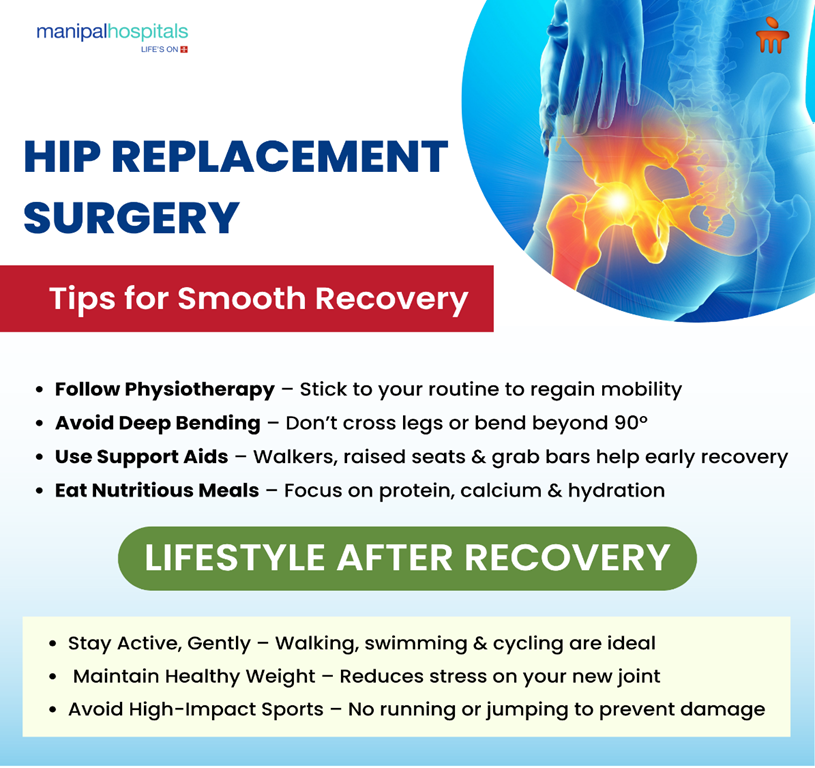
A smoother recovery relies partly on how well you adhere to post-op guidelines. Here are a couple of tips that assist:
-
Adhere to your physiotherapy program
-
Do not bend your hip beyond 90 degrees for the initial weeks
-
Utilize helping devices such as a grabber or walker at first
-
Stay hydrated and have a healthy diet
-
Patience and consistency pay off well in recovery.
-
Lifestyle Changes After a Total Hip Replacement
After you've recovered, life can be much improved, with pain-free walking, better sleeping, and greater mobility. However, making your new joint last requires working with it. The following lifestyle adjustments are worth considering:
-
Keep your weight stable to prevent extra stress on the hip
-
Resume low-impact activities such as swimming, cycling, or walking
-
Stay away from high-impact activities such as running or jumping
-
Listen to your body. If you feel pain, don't push through it
Routine visits to your orthopaedic surgeon are also necessary to ensure everything's working as planned.
Consult a top orthopaedician in Bangalore for expert treatment.
Conclusion
If you're thinking of getting hip replacement surgery, knowing what to expect can put your mind at ease. From pre-op preparation to post-op care, the process is manageable when you know what to expect. And with proper guidance, the result can be life-changing.
Schedule an appointment today at the orthopaedics department in Manipal Hospital Jayanagar and manage your joint well-being with assurance.
FAQ's
If your hip pain is persistent, interfering with your sleep or restricting your movement despite attempting medication or therapy, your orthopaedic surgeon might suggest a total hip replacement.
There is some discomfort at first, but pain is controlled with medications and physical therapy. Most individuals are able to get relief from pre-surgical pain within a few weeks.
It depends on your progress. Some people return to desk jobs in a few weeks, while physically demanding roles might need longer rest. Most people can drive again after 4–6 weeks, once they regain leg strength and coordination.
At first, yes. But over time, your body adjusts. Most people don’t even notice the prosthesis after a few months of healing.
With current technology and materials, most replacements last for 15–20 years or more. Being active and having a healthy weight will help extend its longevity.
Share this article on: