8 Min Read
Changes in digestion are something most people experience from time to time. Occasional bloating, constipation, or stomach discomfort often comes and goes without much concern. However, when bowel habits begin to change for weeks or unusual symptoms appear, it may signal something more serious that deserves attention. One such condition is colorectal cancer, a disease that develops in the large intestine or rectum. Although it often develops slowly over time, early awareness can make a significant difference in outcomes.
Understanding what is colorectal cancer, recognising the early symptoms of colorectal cancer, and learning about possible colorectal cancer causes can help people seek timely medical advice. This blog, by an experienced gastrointestinal surgeon in Hebbal, Bangalore, explains all about how the condition develops, what warning signs to look for, and the treatment approaches doctors commonly recommend.
Synopsis
- What Is Colorectal Cancer?
- Common Symptoms of Colorectal Cancer
- Early Signs People Often Overlook
- Understanding the Main Colorectal Cancer Causes
- Key Risk Factors and Their Impact
- How Doctors Diagnose the Condition
- Colorectal Cancer Treatment Options
- Supporting Recovery and Long-Term Health
- When to Seek Medical Advice
- Conclusion
What Is Colorectal Cancer?
To understand what is colorectal cancer, it helps to know how the disease develops. The colon and rectum form the final part of the digestive system. The main function of these organs is to absorb water and hold waste until it is eliminated from the body.
Colorectal cancer starts with the growth of abnormal cells within the lining of the colon or rectum. In most instances, the disease begins with the development of small growths known as polyps. While most polyps are benign, some may develop into cancer over time if they are not identified and removed.
Because the early stages of this condition often present no symptoms, screening tests like a colonoscopy are crucial in recognizing possible issues or early cancer before symptoms appear. If it is treated early, the treatment for colorectal cancer is often more successful and may not need to be as invasive.
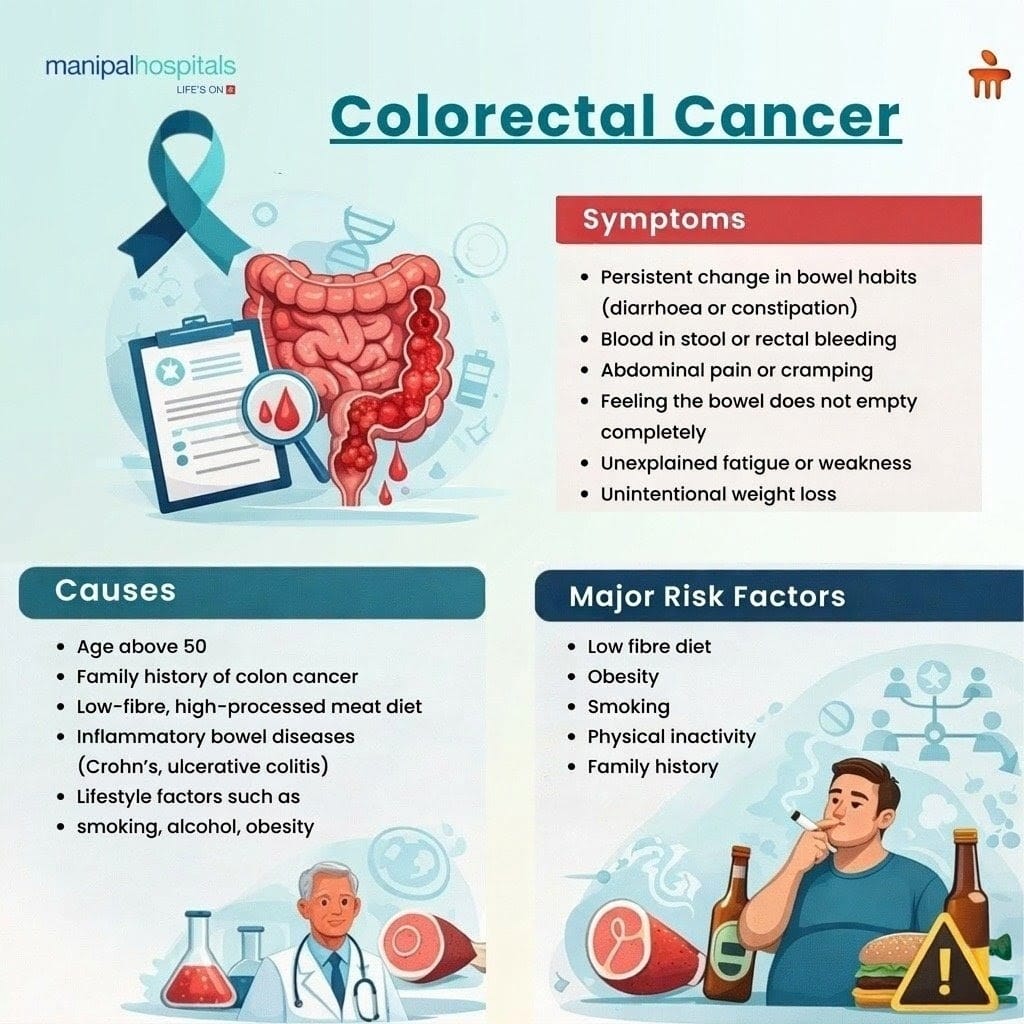
Common Symptoms of Colorectal Cancer
The symptoms of colorectal cancer can vary from person to person. Some people may notice digestive changes, while others experience fatigue or unexplained weight loss. The following are among the common warning signs to observe:
-
Persistent change in bowel habit, such as diarrhoea or constipation
-
Blood in the stool or rectal bleeding
-
Ongoing abdominal pain or cramping
-
Feeling that the bowel does not empty completely
-
Unexplained weakness or persistent fatigue
-
Unintentional weight loss
These symptoms of colorectal cancer commonly develop gradually. Because many digestive conditions share similar signs, people sometimes ignore them or assume they are related to diet or stress. However, persistent or progressive changes call for medical assessment.
Early Signs People Often Overlook
One reason colorectal cancer can go unnoticed is that early symptoms may appear mild or irregular. Many individuals attribute them to temporary digestive issues.
Some early signs that are frequently overlooked include:
-
Narrow or ribbon-shaped stools
-
Frequent urge to pass stool even after using the bathroom
-
Mild but persistent abdominal bloating
-
Occasional rectal bleeding mistaken for haemorrhoids
These subtle symptoms of colorectal cancer may appear long before severe symptoms develop. Paying attention to persistent changes in digestion can help detect the disease earlier.
Understanding the Main Colorectal Cancer Causes
There is rarely a single explanation for why someone develops colorectal cancer. Instead, a combination of genetic, environmental, and lifestyle factors usually contributes to the disease. Some of the most recognised colorectal cancer causes include:
-
Age: The risk increases after the age of 50, although younger individuals can also develop the disease.
-
Family history: People with close relatives who have had colon or rectal cancer may have a higher risk.
-
Dietary patterns: Diets high in processed meat and low in fibre may contribute to long-term intestinal changes that increase the risk of colorectal cancer.
-
Inflammatory bowel conditions: Chronic conditions such as ulcerative colitis or Crohn’s disease may increase cancer risk over time.
-
Lifestyle factors: Smoking, excessive alcohol consumption, obesity, and physical inactivity can all contribute to the development of colorectal tumours.
Understanding these colorectal cancer causes can help individuals make lifestyle adjustments that may reduce long-term risk.
Key Risk Factors and Their Impact
Doctors often assess risk by examining a combination of lifestyle habits, medical history, and genetic factors. The following are some important contributors linked to
colorectal cancer:
|
Risk Factor |
How It May Influence Cancer Development |
Practical Preventive Measures |
|
Low fibre diet |
Slower transit may prolong mucosal exposure to carcinogens |
Increase fruit, vegetables, and whole grains. |
|
Obesity |
Associated with chronic inflammation and hormonal changes |
Achieve and maintain a healthy weight |
|
Smoking |
Tobacco-related toxins can damage intestinal cells |
Stop smoking |
|
Sedentary lifestyle |
Reduced bowel motility and metabolic effects |
Adopt regular physical activity |
|
Family history |
Heritable mutations may increase susceptibility |
Earlier and more frequent screening |
While not everyone with these risk factors develops cancer, understanding them can help guide preventive strategies.
How Doctors Diagnose the Condition
When persistent symptoms of colorectal cancer are present, your doctor will usually begin with a careful clinical review of your symptoms, medical history, and any family risks. If there is reason for concern, they will recommend one or more diagnostic tests to investigate further and reach a clear diagnosis.
Common diagnostic procedures include:
-
Colonoscopy: A flexible tube with a camera lets the clinician inspect the entire colon and rectum. Polyps can be removed during the procedure, and suspicious areas can be sampled.
-
Stool tests: Non-invasive tests can detect hidden blood or abnormal DNA markers in stool, helping identify people who need further investigation.
-
CT scan and other imaging: Cross-sectional imaging helps to map the extent of the disease and whether it has spread outside the bowel.
-
Biopsy: If a visual abnormality is found during colonoscopy, a small tissue sample is taken and examined under a microscope to confirm whether cancer cells are present.
Early diagnosis matters because colorectal cancer treatment started at an early stage is often more effective and associated with more favourable outcomes.
Colorectal Cancer Treatment Options
Treatment depends on factors such as tumour size, stage of disease, and overall patient health. In many cases, a combination of therapies is used to achieve the best outcome. The following are the treatment options available:
-
Surgery: Surgery remains one of the most common forms of colorectal cancer treatment. The goal is to remove the tumour along with nearby lymph nodes to prevent further spread.
-
Chemotherapy: Chemotherapy uses medications to destroy cancer cells or slow their growth. It is often recommended after surgery or when cancer has spread.
-
Radiation Therapy: Radiation therapy uses high-energy radiation beams to destroy tumour cells. It is commonly used for rectal cancers to shrink tumours before surgery.
-
Targeted Therapy: These treatments focus on specific molecules that help cancer grow. By blocking these pathways, targeted therapy can slow tumour progression.
Doctors carefully design colorectal cancer treatment plans based on each patient’s specific condition, ensuring that therapy addresses both tumour control and overall well-being.
Supporting Recovery and Long-Term Health
Treatment is only one part of recovery. Small but consistent lifestyle changes help your body heal and reduce the risk of recurrence.
Your care team will often recommend that you:
-
Maintain a balanced, high-fibre diet rich in fruits, vegetables, and whole grains.
-
Keep active with regular physical activity appropriate to your recovery stage.
-
Attend scheduled follow-up appointments and surveillance colonoscopies.
-
Limit alcohol and avoid tobacco.
-
Seek support to manage stress, sleep problems, or emotional distress.
These measures support physical recovery, help rebuild strength, and make it easier to recover after colorectal cancer treatment.
When to Seek Medical Advice
Digestive problems can be caused by many things, and most of these are not serious. However, some symptoms should never be ignored. Seek medical attention from best cancer doctors in Manipal Hospitals Hebbal, Bangalore if you have:
-
Persistent changes in bowel habit lasting more than two weeks.
-
New or unexplained rectal bleeding.
-
Rapid changes in bowel habits, unexplained weight loss, or ongoing abdominal pain.
-
Significant new fatigue or symptoms that interfere with daily life.
Early assessment permits prompt investigation and treatment if required.
Conclusion
Digestive health changes can sometimes be subtle, yet they may signal underlying issues that require attention. Recognising the early symptoms of colorectal cancer, understanding what is colorectal cancer, and learning about common colorectal cancer causes can help individuals seek medical care at the right time. Fortunately, advances in screening, diagnosis, and colorectal cancer treatment have made this condition far more manageable when detected early. If you notice unusual or persistent digestive changes, Consult with the best cancer care hospital in Hebbal, Bangalore is the safest step toward protecting your health.
FAQ's
Early symptoms of colorectal cancer frequently include persistent changes in bowel habit, new rectal bleeding, unexplained fatigue, or mild abdominal discomfort. If these persist beyond two weeks, arrange a clinical review.
Several factors increase the risk of colon cancer and are also considered causes of colorectal cancer, also considered causes of colorectal cancer, which include advancing age, family history, chronic inflammatory bowel disease, diets low in fiber and high in processed meats, obesity, smoking, and excess alcohol.
Colorectal cancer treatment is usually a combination of surgery, chemotherapy, and, for rectal tumours, radiotherapy. Targeted therapy may be used for advanced disease. The team personalises treatment to the tumour stage and your health.
Yes. Eating more fibre, staying active, maintaining a healthy weight, avoiding smoking, and limiting alcohol all lower risk and support recovery after treatment.
Routine screening is generally advised from age 45 for average-risk individuals; those with a family history or predisposing conditions may need earlier or more frequent screening. Discuss timing with your clinician.
Share this article on: