8 Min Read
Blood carries oxygen, nutrients, and immune cells throughout the body. Platelets are a key part of blood because they help stop bleeding by forming clots when you are injured. However, it may pose several risks to the body when the platelet count exceeds the required count. Thrombocytosis is a condition where the body makes too many platelets. A high platelet count may not always show clear symptoms, but it can quietly increase the risk of serious complications, such as blood clots, stroke, or heart problems.
Through this blog a leading cancer specialist in Hebbal discusses everything you need to know about thrombocytosis, including what thrombocytosis is, why platelet levels can rise, how doctors diagnose it, and the safe and effective ways to treat it.
Synopsis
- What Is Thrombocytosis?
- Thrombocytosis Causes
- Thrombocytosis Symptoms
- How Thrombocytosis Is Diagnosed
- Thrombocytosis Treatment Options
- Medications to Reduce Platelet Count
- Risk Factors for Complications in Thrombocytosis
- When Should You Worry About High Platelets?
- When Does Thrombocytosis Become a Health Concern?
- When Should You See a Doctor?
- Conclusion
What Is Thrombocytosis?
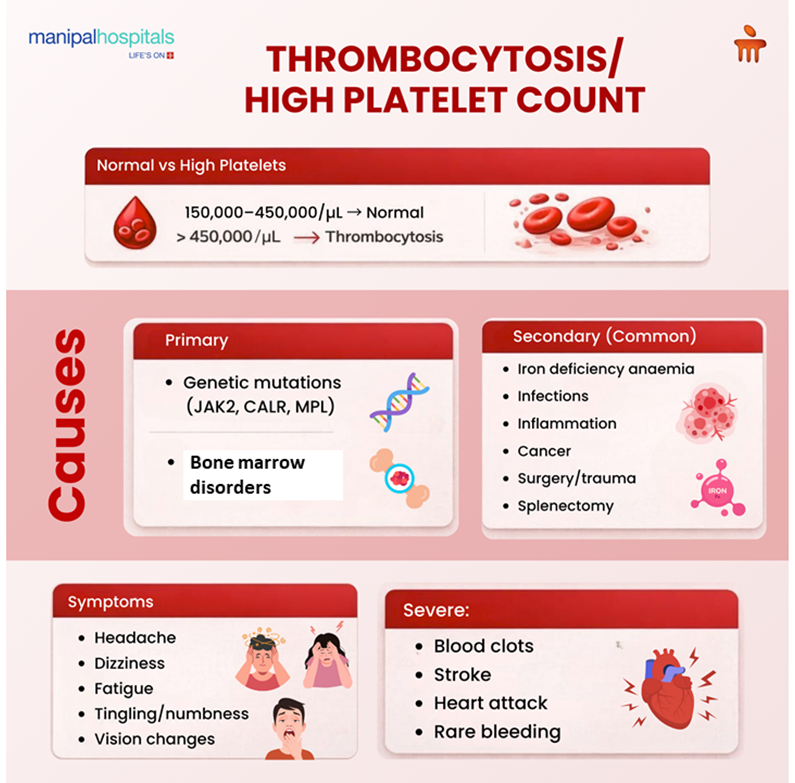
Thrombocytosis means there are too many platelets in the blood. Platelets or thrombocytes are small blood cells made in the bone marrow that help the blood clot and prevent excessive bleeding.
Normal Platelet Levels
|
Platelet Count |
Interpretation |
|
150,000 – 450,000 per microlitre |
Normal range |
|
Above 450,000 per microlitre |
Thrombocytosis |
When platelet levels are high, there is an increased tendency for abnormal clot formation, which can make it harder for blood to flow normally.
Types of Thrombocytosis
Doctors usually divide thrombocytosis into two main types based on what caused it.
|
Type |
Description |
|
Primary thrombocytosis |
Caused by abnormal bone marrow production of platelets |
|
Secondary thrombocytosis |
Occurs due to another medical condition |
Essential thrombocythemia is the most common type of primary thrombocytosis and a rare bone marrow disease. Reactive thrombocytosis, or secondary thrombocytosis, is much more common and occurs when other health problems cause it.
Thrombocytosis Causes
Finding the cause of thrombocytosis is important for choosing the right treatment. Some of the most common causes of secondary thrombocytosis are:
-
Iron deficiency anaemia
-
Infections
-
Inflammatory diseases
-
Certain cancers
-
Surgical procedures
-
Trauma or injury
-
Removal of the spleen (splenectomy)
These conditions lead the body to produce more platelets in response to stress or inflammation.
Causes of Primary Thrombocytosis
Primary thrombocytosis happens when genetic changes in the bone marrow cause it to produce excess platelets. Some common reasons are:
-
Essential thrombocythemia
-
JAK2, CALR, or MPL gene mutations
-
Other myeloproliferative neoplasms
These conditions change how blood cells grow in the bone marrow.
Thrombocytosis Symptoms
Routine blood tests often detect thrombocytosis in people who do not notice any symptoms. However, when platelet counts become very high, some symptoms may appear. Common thrombocytosis symptoms include:
-
Feeling dizzy or lightheaded
-
Pain in the chest
-
Weakness or fatigue
-
Tingling or numbness in the hands and feet
-
Vision changes
How Thrombocytosis Is Diagnosed
A complete blood count (CBC), which checks the levels of platelets, is usually the first step in making a diagnosis.
Diagnostic Tests Used
|
Test |
Purpose |
|
Complete blood count (CBC) |
Measures platelet levels |
|
Peripheral blood smear |
Examines blood cells under a microscope |
|
Iron studies |
Checks for iron deficiency |
|
Genetic testing |
Detects mutations linked to bone marrow disorders |
|
Bone marrow biopsy |
Evaluates platelet production in bone marrow |
Doctors may recommend further tests to find out whether the thrombocytosis is primary or secondary. If thrombocytosis is not detected and treated promptly, it may lead to serious complications (as listed below), some of which may be life-threatening.
|
Complication |
Explanation |
|
Blood clots |
It can block blood flow to organs |
|
Stroke |
Clots may affect the blood supply to the brain |
|
Heart attack |
Clots can obstruct the coronary arteries |
|
Excessive bleeding |
Rarely occurs due to abnormal platelet function, especially when platelet counts are extremely high (>1 million/µL), due to acquired von Willebrand factor dysfunction |
Thrombocytosis Treatment Options
The main goal of treating thrombocytosis is to reduce the risk of blood clots and address the underlying cause. The type of treatment depends on:
-
Levels of platelet count
-
Underlying medical conditions
-
Age and general health
-
Risk factors for blood clots
Treating the Underlying Cause
When the underlying condition is treated, platelet levels usually return to normal in cases of secondary thrombocytosis. The following can be the possible causes:
-
Infections
-
Inflammatory diseases
-
Iron deficiency anaemia
-
Post-surgery recovery
Platelet levels often return to normal on their own once the underlying condition improves.
Medications to Reduce Platelet Count
For people with primary thrombocytosis, doctors may prescribe medicine to lower the number of platelets produced.
-
Common Medications
-
Hydroxyurea
-
Anagrelide
-
Interferon therapy
These drugs help prevent the bone marrow from making too many platelets and reduce the risk of clotting.
Blood-thinning Medications
-
Low-dose aspirin may be recommended in selected patients based on clotting risk and bleeding profile. These medicines prevent platelets from sticking together and forming dangerous clots.
-
Plateletpheresis (Emergency Treatment)
Doctors may use plateletpheresis in rare cases when platelet counts are extremely high and cause serious problems. In this process, a needle is placed in the arm to draw blood from the patient. Thereafter, the machine separates platelets from blood, and excess platelets are removed from the blood. After that, the remaining blood components are returned to the patient’s body. This procedure quickly reduces the number of platelets in the blood and is used in emergencies.
Risk Factors for Complications in Thrombocytosis
Certain factors increase the risk of developing serious complications, such as blood clots in people with thrombocytosis. Identifying these helps doctors decide the treatment approach.
Common risk factors include:
-
Age above 60 years
-
Previous history of blood clots (thrombosis)
-
Presence of JAK2 gene mutation
-
Smoking
-
High blood pressure
-
Diabetes
-
High cholesterol levels
Patients with these risk factors may require closer monitoring and more aggressive treatment.
When Should You Worry About High Platelets?
A slightly higher platelet count may not always need treatment. However, medical evaluation is important when:
Platelet count stays persistently high.
Symptoms like headaches or dizziness appear.
There is a history of blood clots.
The patient has cardiovascular risk factors.
Early diagnosis allows doctors to start the right treatment for thrombocytosis before complications develop.
When Does Thrombocytosis Become a Health Concern?
Not all cases of high platelet count require immediate treatment. However, thrombocytosis becomes a health concern when platelet levels remain significantly elevated or when symptoms and risk factors are present.
Doctors usually become more concerned when:
-
Platelet count is persistently above 450,000 per microlitre.
-
Platelet levels exceed 1,000,000 per microlitre.
-
The patient develops symptoms such as headaches, dizziness, or chest pain.
-
There is a history of blood clots or strokes.
-
The patient has underlying cardiovascular risk factors.
In such cases, timely evaluation and treatment are important to prevent complications.
When Should You See a Doctor?
It is important to seek medical attention if you notice symptoms that may be linked to high platelet levels. Watch out for:
-
Persistent headaches
-
Unexplained dizziness
-
Vision problems
-
Numbness or tingling in the limbs
Even if you do not have symptoms, you should still consult a doctor if your blood tests show consistently high platelet counts. Early evaluation helps identify the cause and reduces the risk of serious complications.
Conclusion
Thrombocytosis happens when your blood has more platelets than usual. If this condition lasts a long time, it can raise the risk of serious issues like blood clots. Learning about the causes and symptoms and getting medical advice from an expert oncology specialist at Manipal Hebbal, Bangalore can help prevent problems and make sure you get the right treatment. At Manipal Hospitals, Hebbal, experienced specialists offer thorough evaluations and personalisation at the Best Hemato oncology hospital in Hebbal, Bangalore.
FAQ's
Thrombocytosis is a condition in which there are too many platelets in the blood. This can make blood clots more likely to happen.
Headaches, dizziness, tiredness, chest pain, and numbness in the hands or feet are all common signs of thrombocytosis.
Infections, inflammation, iron deficiency anaemia, some cancers, and bone marrow disorders are all common causes of thrombocytosis.
Treatment for thrombocytosis may include treating the cause, taking drugs to lower the number of platelets, or using blood-thinning drugs to stop clots from forming.
If you have thrombocytosis, you can get specialised care at Manipal Hospitals, Hebbal in Bangalore. The doctors there will do a full diagnosis and create a treatment plan that fits your needs.
Share this article on: