7 Min Read
What really happens inside the heart during a “heart attack”? A myocardial infarction, commonly known as a heart attack, occurs when blood flow to a part of the heart muscle is abruptly blocked, leading to tissue damage if not treated immediately. While it does seem scary and is one of the leading causes of death worldwide, early recognition and proper myocardial infarction treatment can majorly improve survival and recovery outcomes.
Through this blog, a top interventional cardiologist in Hebbal, Bangalore, talks about the different myocardial infarction symptoms, the different types of myocardial infarctions, and what recovery truly involves. Understanding these aspects can help you act quickly and protect your heart health.
Synopsis
- What is a Myocardial Infarction?
- Why does MI happen?
- Myocardial Infarction Symptoms: What Should You Watch For?
- Types of Myocardial Infarction
- Emergency Myocardial Infarction Treatment
- Hospital Care and Stabilisation
- Complications of Myocardial Infarction
- Recovery After a Heart Attack
- When Should You Seek Immediate Help?
- Conclusion
What is a Myocardial Infarction?
A myocardial infarction (MI) happens when one or more coronary arteries become blocked, usually due to a blood clot forming over a ruptured cholesterol plaque. The heart muscle depends on a steady oxygen supply. When this supply is cut off, the affected muscle begins to die if circulation is not restored quickly. The damage can range from small and limited to extensive and life-threatening.
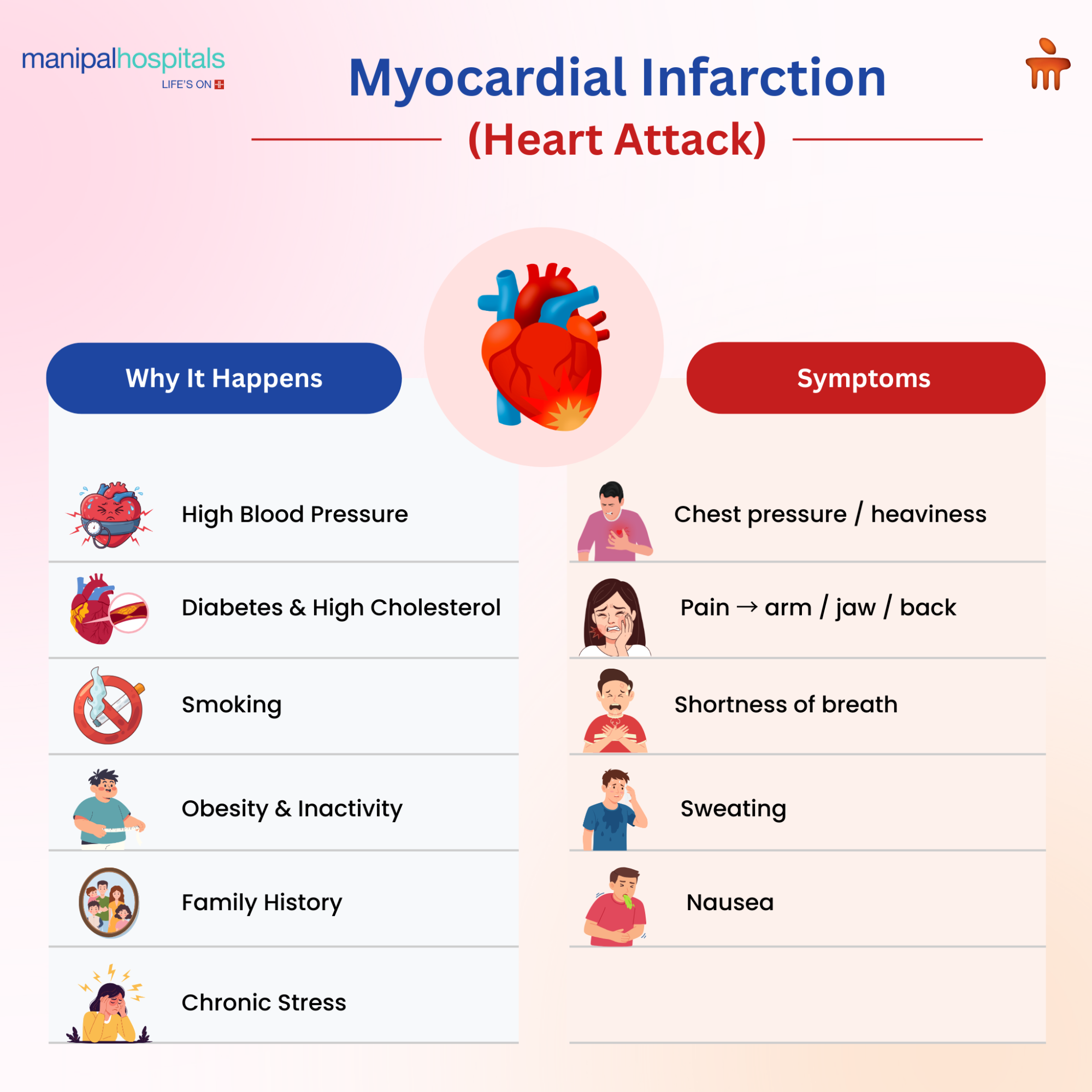
Why does MI happen?
It's crucial to remember that most heart attacks don't just happen out of the blue. Coronary artery disease is a condition that causes the coronary arteries to slowly narrow over the course of several years. Unfortunately, some highly common factors make this narrowing happen faster and make a blockage more likely, such as:
-
High Blood Pressure: When blood pressure remains elevated over time, it damages the inner lining of the arteries. This lets cholesterol deposits attach to the walls of the blood vessels and create plaques, which makes the heart work harder to pump.
-
Diabetes and High Cholesterol: Excess LDL cholesterol can accumulate inside the coronary arteries. Similarly, high blood sugar levels also affect the arterial lining and promote inflammation. Both these conditions make it easy for plaque to build up inside the arteries and vessels.
-
Smoking: Smoking directly injures blood vessels, increases clot formation, reduces oxygen levels in the blood, and raises heart rate and blood pressure.
-
Obesity and Sedentary Lifestyle: Excess body weight often coexists with high blood pressure, diabetes, and abnormal cholesterol levels. Additionally, a sedentary lifestyle weakens the heart muscle and reduces overall cardiovascular resilience.
-
Family History of Heart Disease: If a close relative developed heart disease at a young age, your risk may be higher. Genetic factors can influence cholesterol metabolism, blood pressure regulation, and clotting tendencies.
-
Chronic Stress: Long-term stress increases stress hormones such as cortisol and adrenaline. These hormones can inadvertently raise blood pressure, increase heart rate, and promote inflammation.
Myocardial Infarction Symptoms: What Should You Watch For?
Many people imagine crushing chest pain as the only warning sign. While chest discomfort is common, symptoms can vary widely. Common myocardial infarction symptoms include:
-
Pressure, heaviness, tightness, or burning sensation in the chest
-
Pain spreading to the left arm, neck, jaw, shoulder, or back
-
Shortness of breath, even without severe chest pain
-
Cold sweats
-
Nausea or vomiting
-
Sudden unexplained fatigue
-
Light-headedness or fainting
Women, older adults, and people with diabetes may experience atypical symptoms such as breathlessness, unusual tiredness, or mild chest discomfort. Because presentations can be subtle, any persistent or unusual chest-related symptom should prompt urgent medical evaluation.
Types of Myocardial Infarction
Not all heart attacks are the same - ECG findings and an investigation of underlying causes can help identify exactly the type they are dealing with. Understanding the different types of myocardial infarction helps guide treatment decisions, especially since each type requires a tailored approach executed under expert supervision.
-
STEMI (ST-Elevation Myocardial Infarction): This is a severe form where a coronary artery is completely blocked. It requires immediate restoration of blood flow, usually through emergency angioplasty or clot-dissolving medication.
-
NSTEMI (Non-ST-Elevation Myocardial Infarction): In this type, the artery is partially blocked. Although less dramatic on ECG, it still causes heart muscle damage and requires urgent treatment.
-
Type 2 Myocardial Infarction: This occurs when there is a mismatch between oxygen supply and demand, such as during severe anaemia, infection, or very low blood pressure. It is not always caused by a clot but still leads to heart injury.
Emergency Myocardial Infarction Treatment
Time is critical; more precisely, 90-minute Door-to-Balloon (D2B) time is the benchmark that care providers aim to maintain. Within 90 minutes, the first goal of myocardial infarction treatment is to restore blood flow to the affected heart muscle as quickly as possible. In the case of a delayed emergency response, chewing aspirin tablets can be a good way to further delay additional cardiovascular risks, unless allergic.
Immediate treatment may include:
-
Antiplatelet medications to prevent further clot formation
-
Blood thinners to reduce clot expansion
-
Thrombolytic therapy to dissolve clots (if angioplasty is not immediately available)
-
Primary angioplasty (PCI) to mechanically open the blocked artery
-
Stent placement to keep the artery open
In advanced cardiac centres, rapid access to cardiac catheterisation labs can significantly improve outcomes. The faster the artery is opened, the more heart muscle can be saved.
Consult the cardiology specialists at Manipal hospital, Hebbal, Bangalore where experienced cardiologists provide comprehensive emergency and interventional cardiac care.
After the blocked artery is opened, patients are monitored in a coronary care unit (CCU). Continuous heart rhythm monitoring is essential because dangerous arrhythmias are most likely to occur within the first 24–48 hours.
Hospital Care and Stabilisation
Once blood flow is restored, treatment focuses on stabilising heart function and preventing further complications. Doctors may prescribe:
-
Beta-blockers to reduce the heart workload
-
ACE inhibitors or ARBs to support heart recovery
-
Statins to lower cholesterol
-
Dual antiplatelet therapy to prevent new clots
Cardiac imaging tests assess how well the heart is pumping and identify areas of damage. Close monitoring during this period is essential, as rhythm disturbances can occur in the first 24–48 hours.
Complications of Myocardial Infarction
While many people recover well, a heart attack can lead to serious complications, especially if treatment is delayed.
Possible complications of myocardial infarction include:
-
Heart failure due to weakened heart muscle
-
Dangerous heart rhythm disturbances (arrhythmias)
-
Cardiogenic shock (when the heart cannot pump enough blood)
-
Structural damage, such as valve dysfunction
-
Formation of blood clots inside the heart
-
Sudden cardiac arrest
Early and appropriate myocardial infarction treatment reduces the risk of these complications, but long-term follow-up remains essential.
Recovery After a Heart Attack
A heart attack does not mean life stops. In fact, for many people, recovery becomes a turning point toward better heart health. We focus the days and weeks after discharge on healing the heart muscle, rebuilding strength, and learning how to reduce the risk of another event. Understanding what to expect can make this period feel more manageable and less overwhelming. The following is what the recovery usually looks like:
1. Cardiac Rehabilitation - Structured cardiac rehabilitation programs include supervised exercise, nutritional counselling, stress management, and education about heart-healthy living. These programs significantly reduce the risk of future events.
2. Lifestyle Modifications - Patients are advised to:
-
Quit smoking completely
-
Maintain controlled blood pressure and blood sugar
-
Follow a heart-friendly diet low in saturated fats and salt
-
Engage in regular physical activity as advised
-
Maintain a healthy body weight
3. Emotional Well-being - It is common to feel anxiety or fear after a heart attack. Psychological support and counselling can be beneficial. Addressing emotional recovery is just as important as physical healing.
Most people gradually return to daily activities, including work and moderate exercise, within weeks to months, depending on the extent of heart damage.
When Should You Seek Immediate Help?
Call emergency medical services immediately if you experience:
-
Chest discomfort lasting more than 10–15 minutes
-
Symptoms that worsen or return after resting
-
Severe breathlessness
-
Collapse or loss of consciousness
Do not attempt to drive yourself to the hospital during suspected myocardial infarction symptoms. Early emergency care can save heart muscle and lives.
Conclusion
A myocardial infarction is a medical emergency that demands rapid action. Recognising early warning signs, understanding the types of myocardial infarction, and seeking prompt myocardial infarction treatment can significantly improve survival and recovery. For this, consult experts, our expert cardiologists at Manipal Hospital Hebbal, Bangalore, for timely care and a structured rehabilitation plan for long-term benefits. With such planned intervention, many individuals go on to lead fulfilling lives after a heart attack.
FAQ's
Yes. Some individuals, particularly older adults, women, and people with diabetes, may experience what is known as a “silent” myocardial infarction. Instead of classic chest pain, they may report unexplained fatigue, mild breathlessness, indigestion-like discomfort, or dizziness.
Healing begins immediately after blood flow is restored, but scar formation typically takes several weeks. Follow-up imaging helps assess long-term pumping ability and guide ongoing treatment decisions.
While exercise is encouraged, it must be medically supervised initially. Cardiac rehabilitation programs provide structured guidance, gradually increasing activity levels while monitoring heart rhythm and blood pressure. Over time, regular physical activity improves circulation, strengthens the heart muscle, and reduces future cardiac risk. The type and intensity of exercise should always be personalised.
While myocardial infarctions occur due to underlying coronary artery disease rather than stress alone. Severe emotional stress can trigger a cardiac event in susceptible individuals by increasing heart rate, blood pressure, and stress hormone release. In rare cases, extreme stress may lead to a temporary heart condition called stress-induced cardiomyopathy.
Although more common in older adults, myocardial infarction can occur in younger individuals, especially those with risk factors such as smoking, obesity, diabetes, high cholesterol, or a strong family history of heart disease. Certain genetic conditions and lifestyle factors can accelerate plaque formation in coronary arteries. Early screening and preventive care are essential even for younger adults with risk factors.
Share this article on: