6 Min Read
Is your newborn feeding constantly, barely giving you time to catch your breath between sessions? It can be exhausting when your baby wants to nurse every hour, especially just when you’ve finally found a rhythm that seems to work. You start to wonder if something’s not right. Is your milk supply enough? Is your baby still hungry? Those thoughts creep in quickly, and they can feel heavy. The truth is, frequent feeding is often completely normal. It’s usually part of a natural phase known as cluster feeding.
It’s also important to remember that in the early days, feeding patterns do not always follow the clock. Babies often feed based on need rather than fixed schedules, and this variability is a normal part of newborn adjustment. In this blog, an experienced child care expert and neonatologist in Hebbal will help you understand what cluster feeding is, how feeding patterns shift as your baby grows, and when (if ever) you might need to think about cluster feeding treatment.
Synopsis
What is Cluster Feeding?
Before jumping to solutions or worrying about what to change, it helps to understand what cluster feeding really means. In simple terms, cluster feeding is when your baby wants to feed multiple times in a short period of time, sometimes every 30 minutes or so, and then suddenly settles into a longer stretch of sleep.
Instead of neat, evenly spaced feeds, it tends to come in waves. Your baby may latch on, come off, fuss a little, and then want to feed again. They might seem extra clingy and eager to stay close, not just for milk but for comfort too.
During these phases, feeding is not only about nutrition. Babies also seek closeness, warmth, and reassurance, which is why staying physically close and responding calmly can make a significant difference.
As tiring as it can feel, this pattern is usually not a sign that something is wrong. It’s often connected to growth spurts, developmental changes, or your body adjusting milk supply to match your baby’s needs.
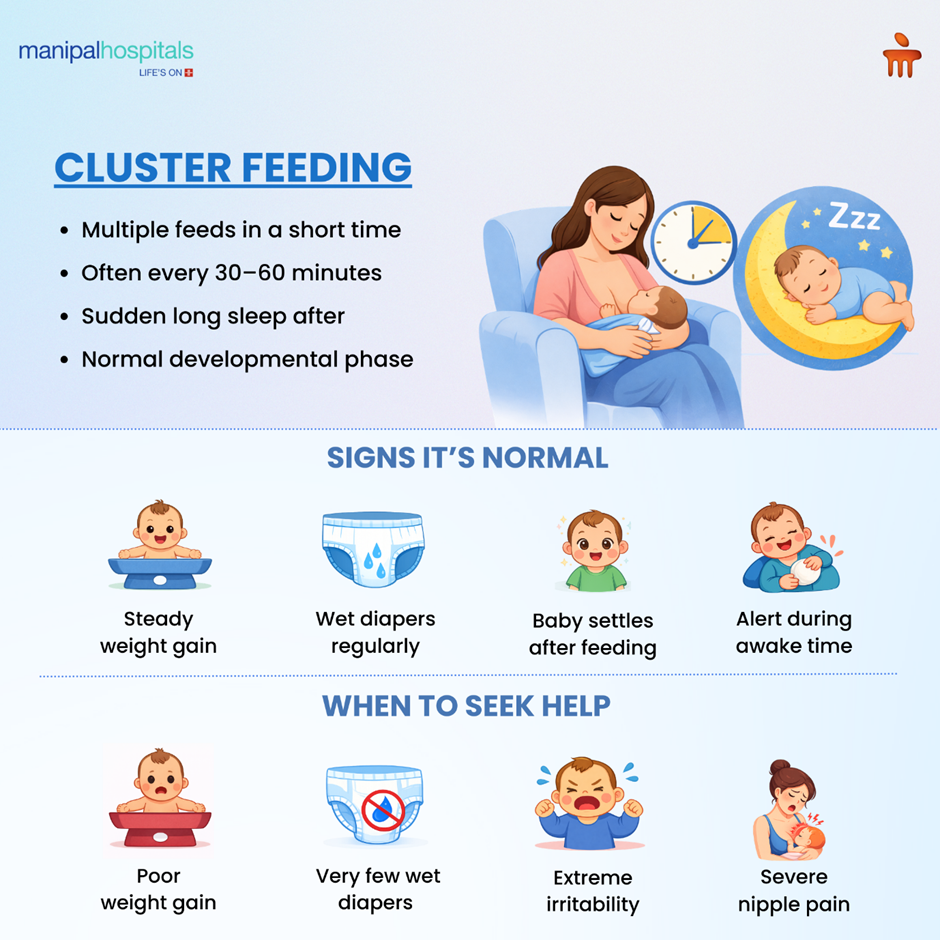
Newborn Cluster Feeding: The Early Weeks
Newborn cluster feeding is most common in the first few weeks after birth. During this period, babies are adjusting to life outside the womb. Although their stomach capacity is small, they have very high nutritional demands in the early days, as their primary physiological goal is rapid growth. They digest milk quickly. Because of this, frequent feeding, even when it feels intense, is often expected rather than abnormal. Feeding often and in clusters helps meet their nutritional needs while supporting healthy weight gain.
You may notice:
-
Frequent evening feeds
-
Increased fussiness during late hours
-
Short naps between feeds
-
A longer sleep stretch after a cluster
Even though it can feel exhausting, this pattern plays an important biological role, as it helps establish milk supply and supports rapid brain and body development during the neonatal phase.
Ages of Cluster Feeding: When Does It Happen?
Baby cluster feeding doesn’t occur randomly. It often aligns with predictable growth phases. Understanding the ages of cluster feeding helps parents anticipate changes rather than feel alarmed.
-
2–3 weeks: Early growth spurt
-
6 weeks: Increased calorie needs
-
3 months: Developmental changes and awareness
-
6 months: Transition toward solids while still needing breastmilk
At each stage, feeding frequency may temporarily increase. However, this should not cause any concern, as the pattern usually settles within a few days; babies are simply signalling both their bodies and yours to adapt to their growing demands.
Why Do Babies Cluster Feed?
Cluster feeding isn’t random or a sign that something is wrong. In most cases, it happens because your baby is growing, adjusting, or simply needing extra comfort.
Common reasons include:
-
Growth Spurts: Babies grow rapidly during the first year. Increased feeding supports muscle, bone, and brain development.
-
Milk Supply Regulation: Frequent nursing sends signals to the body to produce more milk.
-
Comfort and Emotional Security: Feeding provides warmth, closeness, and nervous system regulation.
-
Evening Fussiness: Many infants naturally become more unsettled in the evening.
Babies are often more alert and active during the evening and night in the early days. These feeds are not only normal but also helpful, as night-time feeding supports hormonal signals involved in milk production.
Cluster Feeding Treatment: Practical and Medical Approaches
When parents search for cluster feeding treatment, they are often looking for relief, both for the baby and themselves. In most cases, treatment does not mean stopping the behaviour but supporting both mother and child through it.
Support Milk Supply
-
Ensure proper latching and positioning
-
Avoid unnecessary formula supplementation unless advised
-
Stay hydrated and nourished
Effective breastfeeding depends largely on correct positioning and good latching, which improve with practice rather than medication.
Create a Calm Feeding Environment
-
Dim lights during evening feeds
-
Reduce noise and stimulation
-
Practice skin-to-skin contact
Skin-to-skin contact, cuddling, gentle talking, and observing your baby’s cues (such as hunger signals, wet diapers, and settling patterns) help keep both baby and mother calm during frequent feeding phases.
Feeding Technique Support
Allow your baby to decide the length of each feeding session, rather than ending feeds based on the clock. Many babies feed effectively for around 20 minutes or until they naturally drift into deep sleep. Feeding from one breast per session may be helpful, but flexibility is key; strict rules are rarely necessary.
Protect Maternal Well-being
-
Rest whenever possible
-
Share responsibilities with family
-
Use nipple care strategies to prevent soreness
Medical Consultation: If feeding seems excessive without weight gain, a paediatrician or lactation consultant may assess feeding technique, milk transfer, or other concerns. Consult Paediatric And Child Care in Manipal Hospital, Hebbal, Bangalore. Seeking reassurance early can prevent unnecessary stress.
Conclusion
Cluster feeding is one of the most misunderstood phases of early infancy. If you feel unsure about feeding patterns, seeking professional cluster feeding support from Paediatric and Child Care consultants at Manipal Hospital Hebbal can help navigate this stage with greater confidence. Early guidance in this manner prevents unnecessary stress and ensures babies continue to thrive.
FAQ's
Cluster feeding does not permanently disrupt sleep patterns. In fact, many babies sleep longer after a cluster session because they have taken in more milk. As neurological development progresses, sleep becomes more structured regardless of early feeding bursts.
Pumping may help maintain milk supply, but it does not fully replace the hormonal and emotional feedback loop created by direct breastfeeding. Babies regulate supply more effectively through direct nursing.
Yes, it is more noticeable in breastfed infants because breast milk digests faster and milk production responds dynamically to demand. Formula-fed babies may feed more frequently during growth spurts but typically show less pronounced clustering.
Maternal diet does not usually change feeding frequency. However, severe caloric restriction or dehydration can impact milk supply, indirectly affecting how often a baby feeds.
No. Cluster feeding, which refers to a pattern where infants feed more frequently in short bursts, is not predictive of future feeding disorders. It reflects developmental changes during infancy and generally resolves as feeding patterns mature.
Share this article on:


.webp "Kids' Screen Time")