8 Min Read
Found a patch of skin that’s suddenly red, tender, and warm to the touch? It’s easy to brush it off as a minor irritation or an insect bite. But sometimes, what seems small at first can deepen beneath the surface. Cellulitis is one such infection - a bacterial condition that affects the deeper layers of the skin and nearby tissues, and it can worsen faster than many people expect. Recognising the need for timely diagnosis and treatment makes all the difference. Early care not only eases pain and swelling but also lowers the risk of complications.
In this blog, we present insights from a top dermatology expert in Hebbal. We’ll walk through how cellulitis begins, the signs that shouldn’t be ignored, the treatment options doctors rely on, what recovery typically looks like, and how you can reduce the chances of it happening again.
Synopsis
What Is Cellulitis?
Cellulitis is a bacterial infection that travels beneath the surface of the skin, reaching into the deeper layers, where it can spread more easily. While it most commonly shows up in the legs, it can develop anywhere on the body. Unlike a mild superficial infection, cellulitis affects the deeper layers of skin (dermis and subcutaneous fat). Because cellulitis spreads beneath the skin rather than remaining on the surface, it can expand more quickly than it appears. What looks like a small red patch in the morning may double in size by evening. That is why early medical evaluation is important.
The infection typically begins when bacteria enter through a break in the skin. That break might be obvious, such as a cut, insect bite, surgical incision, or ulcer. In some cases, however, the entry point is so small that it goes unnoticed.
What Causes Cellulitis?
Knowing what causes cellulitis can genuinely help you lower the chances of dealing with it.In most cases, the infection is triggered by common bacteria such as Streptococcus and Staphylococcus. These organisms often live quietly on the skin without causing harm. Trouble begins only when they find a way in—usually through a break or weakness in the skin barrier.
Certain situations make that entry easier and increase the risk of infection:
-
Cracks or open areas from eczema, wounds/cuts or other minor breaks in the skin
-
Diabetes that is not well-controlled
-
Persistent swelling in the legs, such as lymphoedema or venous problems
-
A recent surgical procedure or physical injury
-
A reduced immune response due to illness or medication
Sometimes, the opening is so small you may not even notice it. Dry, split skin is enough. That’s why regular skincare isn’t just about appearance - it quietly acts as one of your body’s first lines of defence.
Recognising Cellulitis Symptoms
Spotting cellulitis symptoms early allows treatment to begin before the infection worsens. The signs are often localised at first but may become systemic if the infection spreads.
-
Common features include:
-
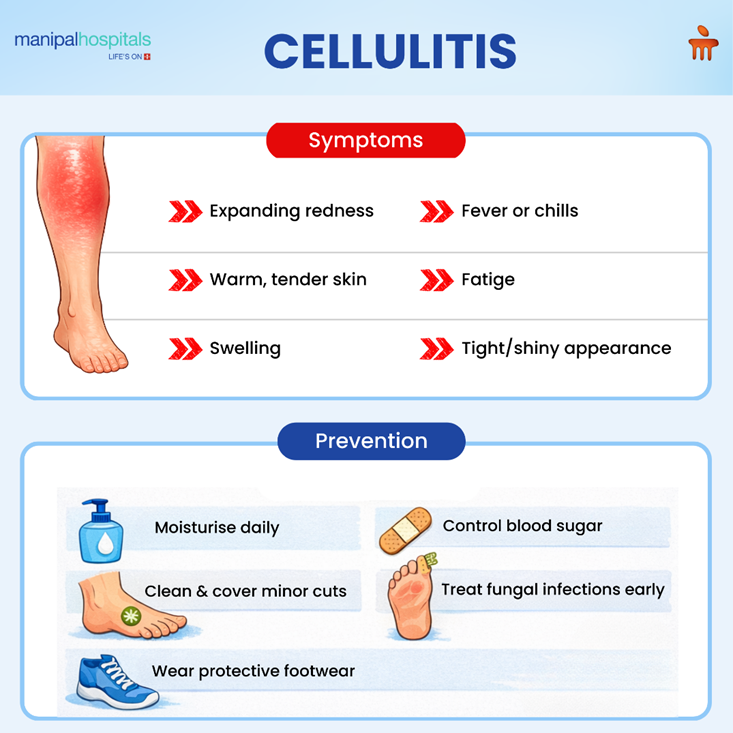
Redness that gradually expands
-
Swelling and tenderness in the affected area
-
Warmth when you touch the skin
-
Tight or shiny appearance of the skin
-
Pain that may increase with movement
As the infection progresses, some people develop fever, chills, fatigue, or swollen lymph nodes. If you notice rapid spreading redness or increasing pain, it should never be ignored.
Best Treatment Options for Cellulitis
Antibiotics are the mainstay of cellulitis management. The approach, however, is never identical for everyone. Doctors consider how advanced the infection is, your medical background, and any conditions that might influence recovery before deciding on the right course. The following are the most common treatment options:
|
Treatment |
How to Administer |
|
Oral Antibiotics |
For infections that are mild to moderate, antibiotic tablets are prescribed for about 5 to 14 days. These medicines are chosen to target the bacteria most commonly responsible. Even if the redness and pain start settling within a couple of days, finishing the full course is essential. Stopping early can allow the infection to return or become harder to treat. |
|
Intravenous Antibiotics |
If the infection is advancing quickly, causing high fever, or not responding to tablets, hospital care may be needed. In such cases, antibiotics are given through a vein. This method allows the medication to work faster and is used when stronger, more immediate control is required. |
|
Managing Pain and Swelling |
Alongside antibiotics, medications to ease pain and inflammation are given. Simple measures, such as elevating the affected arm or leg, can significantly reduce swelling and discomfort. Small adjustments like these often make a noticeable difference. |
Delaying cellulitis treatment increases the risk of the infection spreading into the bloodstream or deeper tissues. In severe cases, complications such as abscess formation or systemic infection can develop.
Home Support During Recovery
Antibiotics do the heavy lifting when it comes to clearing the infection, but what you do at home can make recovery smoother and more comfortable. Small, consistent steps often help the body bounce back more quickly.
Use the following tips:
-
Raise the affected arm or leg whenever you can. Elevation helps ease swelling and reduces that tight, throbbing feeling.
-
Give yourself proper rest. Fighting an infection takes energy, and your body needs downtime to recover.
-
Avoid tight clothing around the affected area, as pressure can worsen discomfort and swelling.
-
Clean the area with normal soap and water
Everyone heals at a slightly different pace. Many people begin to feel better within two or three days of starting cellulitis treatment, though the skin may remain slightly discoloured or firm for a while longer. That part can take patience.
Preventing Future Episodes
For some, cellulitis can return, especially if the underlying triggers aren’t addressed. Prevention focuses on strengthening the skin’s natural barrier and managing health conditions that increase risk.
-
Treat infections, particularly on the feet, without delay
-
Apply moisturiser regularly to prevent dryness and cracking
-
Keep blood sugar levels under control if you have diabetes
-
Wear protective footwear outdoors to avoid unnoticed injuries
-
Clean even minor cuts promptly and cover them until healed
-
Do not self-medicate with antibiotics, as you may end up with antibiotic-resistant infections in the future due to an incorrect choice of medicine or dosage.
If infections keep recurring despite precautions, a doctor may recommend a preventive course of antibiotics in certain situations. The approach is tailored carefully, balancing benefits with long-term safety.
When to Seek Urgent Care
Most people respond well once treatment begins, but there are times when waiting is not the right choice. Certain warning signs suggest the infection may be worsening or behaving more aggressively, and they need immediate medical attention from the best dermatologists in Hebbal, Bangalore.
Seek urgent care if you notice:
-
Redness that is spreading quickly over hours rather than days
-
Intense pain that feels far worse than the skin looks
-
A high fever, shivering, or feeling unusually confused or disoriente
-
Areas of numbness, darkening, or blackened skin
These changes can signal that the infection is moving deeper or affecting the body more widely. In such situations, prompt medical intervention is not just helpful - it is essential.
Conclusion
Cellulitis may begin as a simple patch of redness, but it should never be underestimated. Prompt cellulitis treatment reduces the risk of complications and ensures faster recovery. Individuals requiring specialised assessment or follow-up support can book an appointment at the dermatology centre in Hebbal for expert-led cellulitis wound care in Hebbal.
FAQ's
Yes. If untreated, bacteria can enter the bloodstream and travel to other tissues. This may lead to more serious infections requiring hospital care. Early antibiotic therapy greatly reduces this risk.
Cellulitis itself is not usually contagious through casual contact. However, the bacteria that cause it can spread through open wounds. Good hygiene and proper wound care minimise transmission risk.
Even after the infection clears, mild redness or darker pigmentation may remain for several weeks. Swelling can also take time to settle, especially in the legs.
Older adults and individuals with chronic illnesses are at higher risk. This is mainly since they have thinner, more fragile skin and weaker immune responses. However, while they are at a greater risk, cellulitis can occur at any age if bacteria gain entry through broken skin.
If cellulitis is active, prolonged sitting during travel may increase swelling in the legs. It is advisable to complete treatment and ensure stability before long journeys. Always consult your doctor if travel cannot be postponed.
Share this article on: